
U.S. and Iran Exchange Military Strikes in Strait of Hormuz
Here's what it means for you.
The recent military exchanges between the U.S. and Iran in the Strait of Hormuz signal a significant escalation in hostilities that could have far-reaching implications for global oil markets and international diplomacy. As both nations accuse each other of violating a ceasefire agreement, the potential for further conflict raises concerns about the stability of one of the world's most critical maritime routes. Stakeholders in energy markets should prepare for possible disruptions, while policymakers may need to engage in urgent diplomatic efforts to de-escalate tensions. The fragility of the interim peace deal, signed just two weeks ago, highlights the precarious nature of relations in the region. With both sides testing each other's limits, the situation demands close monitoring to assess the impact on global trade and security.
What happened
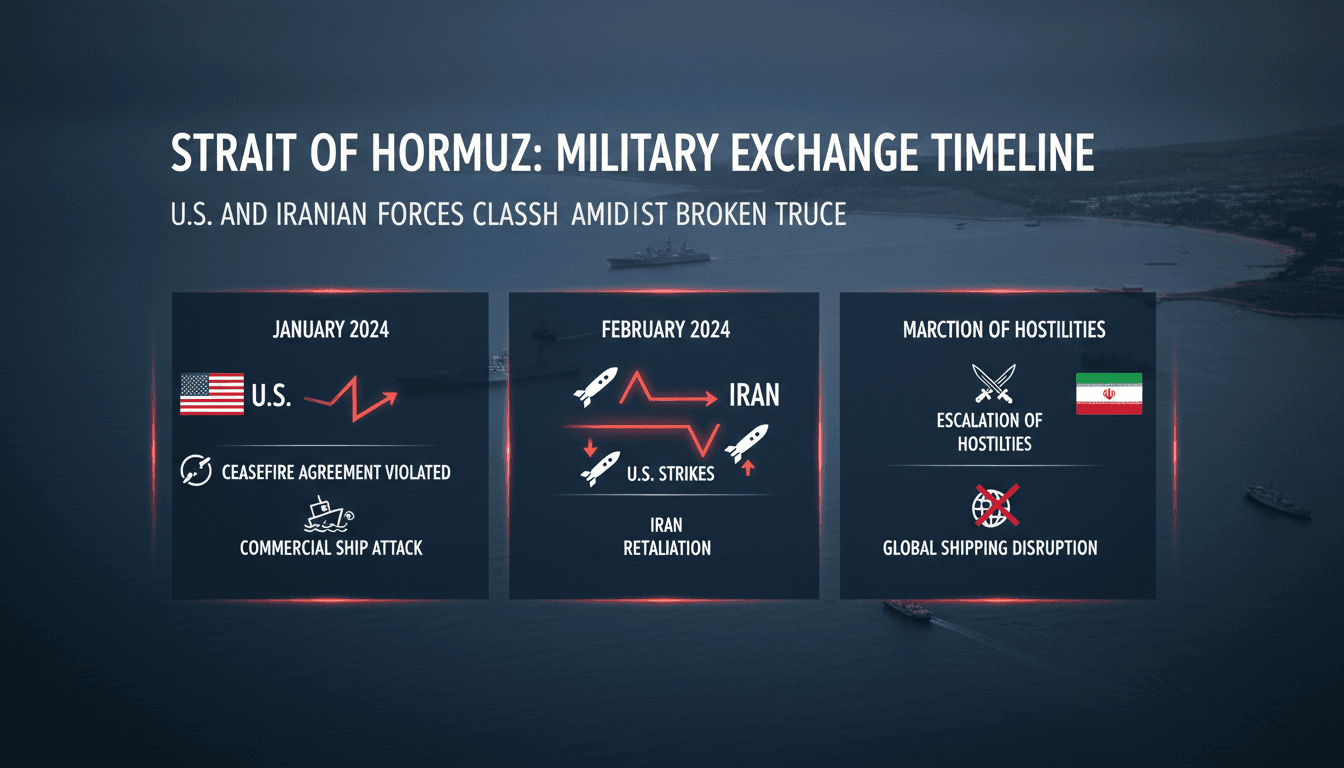
Tensions escalated over the weekend as the U.S. and Iran engaged in military strikes against each other in the Strait of Hormuz. The U.S. military conducted strikes on Iranian targets in response to an attack on a commercial ship, which the U.S. accused Iran of orchestrating. In retaliation, Iran targeted U.S.-linked military installations, marking a severe escalation of hostilities.
This exchange of fire undermines a recent ceasefire agreement, raising alarms about the potential for further military actions. The situation remains fluid, with both nations demonstrating a willingness to engage in aggressive posturing.
The Context
The Strait of Hormuz is a vital energy shipping route, and Iran has been attempting to assert control over this strategic area. The recent military actions come amid accusations from both sides of violating the terms of a peace deal signed just two weeks prior. The U.S. claims that Iran's attack on a commercial vessel constitutes a breach of the ceasefire, while Iran maintains that its actions are justified in response to U.S. provocations.
The ongoing conflict not only threatens regional stability but also poses risks to global oil shipping, which relies heavily on this narrow passage. As both nations continue to escalate their military presence, the international community is likely to respond with diplomatic efforts aimed at restoring peace.
Takeaway
The ongoing military exchanges between the U.S. and Iran suggest that maintaining the ceasefire may become increasingly difficult. Observers should monitor further military actions in the Strait of Hormuz, as both nations appear poised to continue testing each other's limits. The potential for escalation remains high, which could disrupt global oil shipping and provoke international diplomatic responses.
As the situation develops, stakeholders should remain vigilant for any signs of a shift in military strategy or diplomatic overtures from either side. The fragility of the current peace agreement underscores the need for proactive measures to prevent further conflict.
Capitol Hill news, legislation, and policy insight.
"The Hill specializes in U.S. politics and policy, with a focus on Capitol Hill developments and a reputation for insider reporting."
— A47 Editor
US, Iran test each other’s red lines in new fighting
The fragile ceasefire between the U.S. and Iran faced a significant challenge when the U.S. military resumed airstrikes against Iranian targets following an attack by Iran's Islamic Revolutionary Guard Corps on a commercial ship in the Strait of Horm...
International news coverage curated for readers in the UAE and Gulf region.
"Emirates 24|7 world coverage presents global developments through a UAE-facing and Gulf-relevant editorial lens."
— A47 Editor
Tanker struck in Hormuz as Iran, US trade attacks in worst escalation since peace deal
A tanker was struck by a projectile in the Strait of Hormuz, marking a significant escalation in tensions between Iran and the United States, who have both accused each other of violating a recent peace agreement. The U.S. military conducted strikes ...
Corporate leadership, finance, technology, and market trends.
"Fortune covers financial trends, leadership, and innovation with a pragmatic editorial approach."
— A47 Editor
Forget the ceasefire — The U.S. and Iran are still exchanging attacks over the Strait of Hormuz as Tehran tries to shut down a competing route
The ongoing tensions between the U.S. and Iran have escalated as both nations continue to exchange attacks over the strategically vital Strait of Hormuz, with recent U.S. military actions in response to Iranian drone strikes on cargo ships. The U.S. ...