
U.S. cancels Iran's crude sales license and conducts air strikes
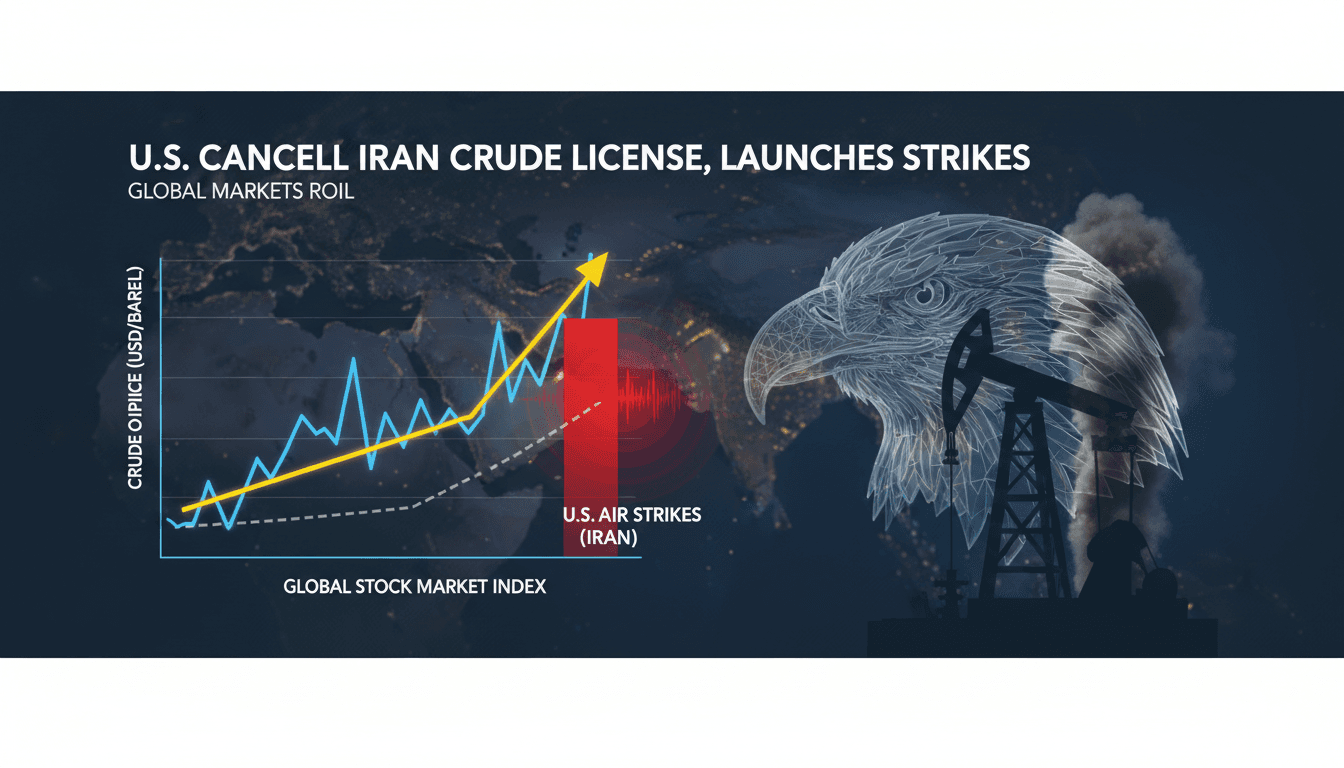
Here's what it means for you.
The recent U.S. actions against Iran have significant implications for global markets, particularly in the energy sector. Investors are likely to experience increased volatility as oil prices surge and Asian stock markets react to the heightened geopolitical tensions. This situation underscores the interconnectedness of international relations and economic stability, prompting stakeholders to reassess their strategies in light of rising risks. As the U.S. takes a hard stance on Iran's oil sales, market participants should prepare for potential disruptions in oil supply and broader economic impacts. The ongoing conflict may lead to further fluctuations in oil prices, affecting both consumers and businesses worldwide.
What happened
On July 7, 2026, the U.S. government canceled Iran's crude oil sales license and conducted air strikes against the country. This decisive action resulted in a significant rise in oil prices, reflecting the immediate market response to the escalation. Concurrently, Asian stock markets experienced a decline as investors reacted to the increased risk associated with the situation.
The cancellation of the sales license is part of a broader strategy by the U.S. to exert pressure on Iran amid ongoing geopolitical tensions. The combination of military action and economic sanctions highlights the U.S. government's commitment to curbing Iran's influence in the region.
The Context
The U.S. government's recent actions are set against a backdrop of long-standing geopolitical tensions in the Middle East. These tensions often lead to fluctuations in oil prices and stock markets, as seen in the immediate aftermath of the air strikes. Stakeholders, including investors and policymakers, are closely monitoring the situation, recognizing its potential to disrupt global economic stability.
The date of July 7, 2026, marks a critical moment in U.S.-Iran relations, with implications that extend beyond the immediate conflict. As the U.S. adopts a more aggressive stance, the potential for further escalation remains a concern for regional and global stakeholders alike.
Takeaway
Looking ahead, market participants should closely monitor oil price trends in response to the ongoing U.S.-Iran relations. The potential for further military actions or economic sanctions could lead to additional volatility in oil markets and stock exchanges. Investors are advised to remain cautious as geopolitical risks continue to shape the economic landscape.
Additionally, reactions from other countries in the region may further influence market dynamics. The interconnected nature of global economies means that developments in this conflict will likely have far-reaching consequences.
Macro commentary, policy analysis, growth/inflation themes, and global outlooks.
"Contextual macro coverage that complements day-to-day market headlines."
— A47 Editor
Oil climbs, bonds slide on Mideast hostilities
Oil prices have climbed amid escalating hostilities in the Middle East, particularly due to renewed tensions between the U.S. and Iran. This surge in oil prices is accompanied by a decline in bond values, reflecting market reactions to geopolitical i...
Business, investment, entrepreneurship, leadership, and innovation.
"Forbes is known for its coverage of business leaders, market trends, and entrepreneurial ventures with a pro-business editorial stance."
— A47 Editor
Oil Prices Up As U.S. Cancels Iran’s Sales License, Launches Strikes
Oil prices increased on July 7, 2026, following the U.S. government's decision to revoke Iran's license to sell crude oil and conduct air strikes against Iranian targets. This move is a direct response to recent Iranian attacks on vessels in the stra...
Global markets, investing, and macroeconomics from a premier financial newsroom.
"Bloomberg is respected for in-depth financial reporting and data-driven analysis."
— A47 Editor
Oil Climbs, Asian Stocks Drop as US Strikes Iran: Markets Wrap
Oil prices have surged while Asian stocks have declined amid escalating geopolitical tensions following U.S. strikes on Iran. This development has heightened risk aversion among investors, reflecting concerns over stability in the Middle East.