
Iran reopens international internet access after 90-day blackout
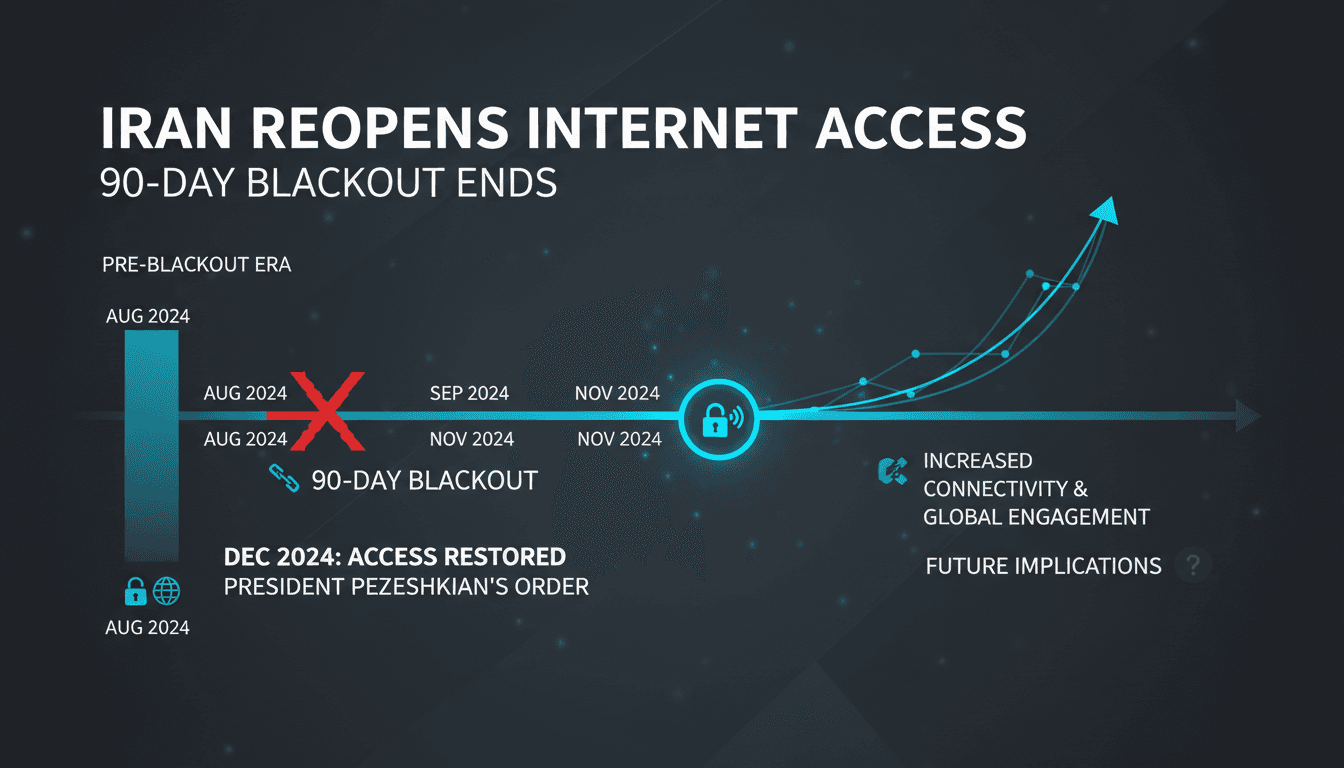
Here's what it means for you.
The restoration of international internet access in Iran signals a potential shift in the government's approach to digital freedoms. This move may enhance communication and information exchange, impacting both citizens and businesses. As the country re-engages with the global community, the implications for domestic policies and public sentiment could be significant. The decision reflects growing demands for connectivity and may influence future government policies regarding internet governance. Stakeholders will be closely monitoring the public response to this change.
What happened
On May 25, 2026, Iranian President Masoud Pezeshkian ordered the reopening of international internet access after a nearly 90-day blackout. This significant decision was reported by Iranian state media and marks a pivotal moment in the country's internet policy. The blackout had profound implications for communication and information access within Iran, affecting both citizens and businesses.
The restoration of access is seen as a response to increasing calls for digital freedoms. By allowing international connectivity, the Iranian government may be acknowledging the importance of information flow in today's digital age.
The Context
The nearly 90-day internet blackout in Iran was a period marked by restricted access to international online platforms. This decision to restore access comes amid rising demands from the public for greater digital freedoms and transparency. The timing of this move suggests a potential easing of restrictions on digital communication, which has been a contentious issue in Iran.
International access to the internet is crucial for fostering connectivity and information exchange. As the Iranian government navigates these demands, the implications for domestic policies and public sentiment remain to be seen.
Takeaway
The reopening of international internet access in Iran may lead to increased connectivity and engagement with the global community. Observers should monitor the public response to this decision, as it could indicate a shift in the government's stance on digital freedoms. Additionally, potential changes in government policy regarding internet governance may emerge as a result of this development.
As the situation evolves, the long-term impact on communication and information exchange within Iran will be critical to watch. The implications for both citizens and businesses could reshape the digital landscape in the country.
Curated tech headlines including AI stories.
"Influential aggregator surfacing the day’s top tech/AI links."
— A47 Editor
Iranian state media reports that President Masoud Pezeshkian has issued an order to reopen international internet access after a near-90-day blackout (Reuters)
Iranian President Masoud Pezeshkian has ordered the reopening of international internet access after a nearly 90-day blackout, as reported by state media. This decision comes after a prolonged period of restricted access that significantly affected t...
Arabic-language coverage of international news and geopolitics.
"RT Arabic is a Russian state-funded outlet often criticized for promoting Kremlin-aligned narratives."
— A47 Editor
بزشكيان يصدر أمرا بإعادة فتح الإنترنت في البلاد للوصول إلى المواقع الدولية
Iranian President Masoud Bezhakian issued an order today to reopen internet access in the country, allowing citizens to reach international websites, as reported by Iranian state media. This decision marks a significant shift in the country's interne...
Pan-Arab news coverage spanning politics, business, sports, and regional affairs.
"Asharq Al-Awsat reflects a broad Arab editorial perspective with strong attention to regional geopolitics."
— A47 Editor
إعلام إيراني: بزشكيان يصدر قراراً بإعادة خدمة الإنترنت
Iranian media reported that President Masoud Bezhakian has issued an order to restore internet access to international websites, signaling a significant policy shift. This decision comes amid ongoing discussions about internet freedom and access in t...