
First live observation of goblin shark in Tonga Trench marks significant marine discovery
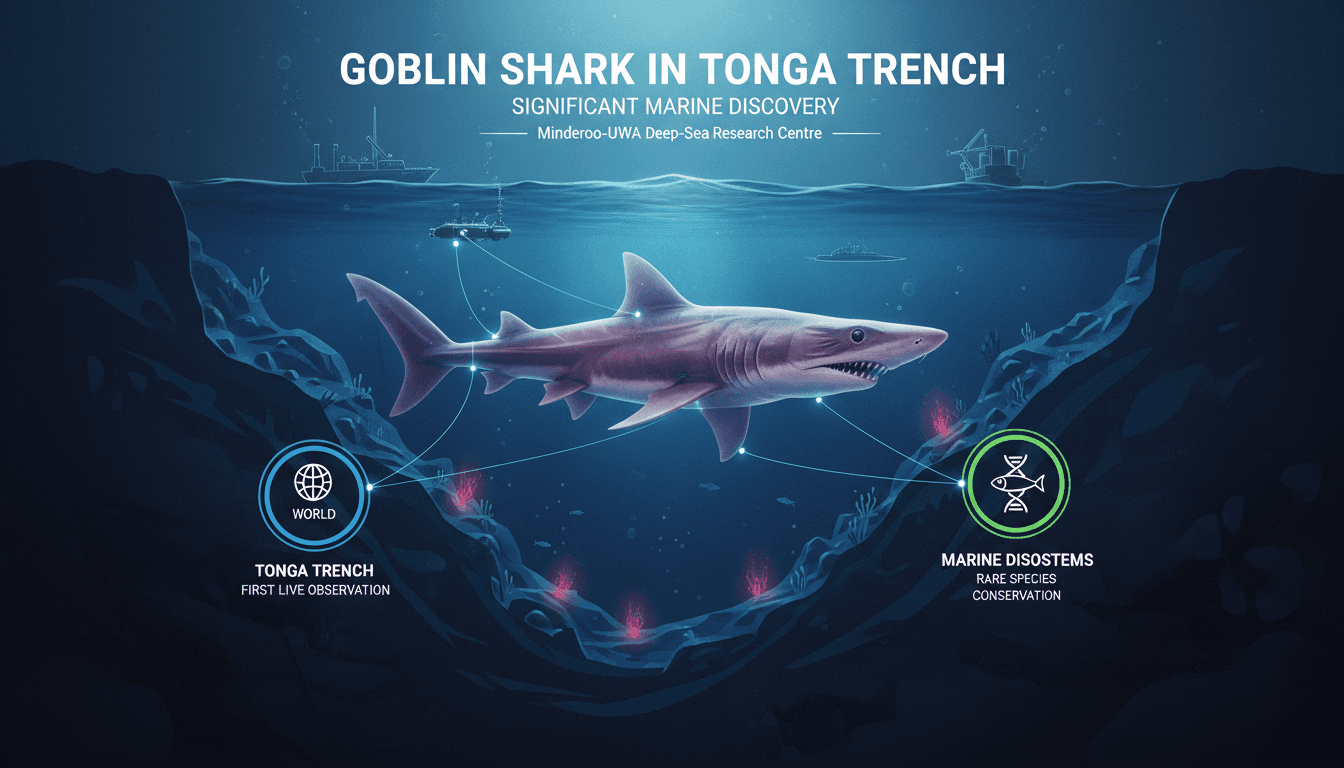
Here's what it means for you.
The first live observation of a goblin shark in its natural habitat represents a pivotal moment in marine research, highlighting the potential for deeper understanding of elusive species. This discovery could catalyze increased funding and interest in deep-sea ecosystems, which are often overlooked. As researchers gain insights into the behavior and ecology of such rare species, conservation efforts may also be enhanced, benefiting marine biodiversity.
What happened
For the first time, researchers have documented the rare goblin shark alive in its natural habitat within the Tonga Trench. This elusive species, known for its unusual appearance, has typically only been seen when accidentally caught by fishermen. The observation was made possible through advancements in deep-sea research techniques by the Minderoo-UWA Deep-Sea Research Centre.
Prof Alan Jamieson emphasized the almost mythological quality of these creatures, underscoring their rarity and the significance of this finding. The event marks a crucial milestone in marine biology, providing valuable insights into the behavior and ecology of the goblin shark.
The Context
Goblin sharks are rarely seen alive, making this observation particularly noteworthy. The study was conducted by the Minderoo-UWA Deep-Sea Research Centre, which has been at the forefront of deep-sea exploration. The timing of this discovery aligns with a growing interest in understanding deep-sea ecosystems and the unique species that inhabit them.
This finding not only sheds light on the goblin shark but also highlights the importance of continued research in the depths of our oceans. As scientists explore these uncharted territories, they may uncover more about the mysteries of marine life and the conservation challenges that lie ahead.
Takeaway
The successful observation of the goblin shark could lead to further studies focused on its behavior and ecology, as well as other rare deep-sea species. Researchers are likely to explore the implications of this discovery on marine biodiversity and conservation efforts. The event serves as a reminder of the vast unknowns that still exist in our oceans and the importance of deep-sea research.
As interest in deep-sea ecosystems grows, we can expect more initiatives aimed at understanding and protecting these unique environments. This breakthrough may pave the way for enhanced conservation strategies that prioritize the preservation of rare marine species.
Tech industry news, innovation, gadgets, and startups from a UK broadcaster.
"Sky News is often seen as a center-right outlet in the UK, known for its rolling coverage and breaking stories."
— A47 Editor
Rare shark studied in its natural habitat for first time - and it wasn't where researchers thought
A rare goblin shark has been studied alive in its natural habitat for the first time, specifically in the Tonga Trench, marking a significant milestone in marine biology. This observation was facilitated by the Minderoo-UWA Deep-Sea Research Centre a...
International news, politics, and culture.
"Sky News is a UK-based 24-hour channel known for fast-breaking news and political coverage."
— A47 Editor
Rare shark studied in its natural habitat for first time - and it wasn't where researchers thought
A rare goblin shark has been studied alive in its natural habitat for the first time, specifically in the Tonga Trench, marking a significant milestone in marine biology. This observation was facilitated by the Minderoo-UWA Deep-Sea Research Centre a...
Pan-Arab news coverage spanning politics, business, sports, and regional affairs.
"Asharq Al-Awsat reflects a broad Arab editorial perspective with strong attention to regional geopolitics."
— A47 Editor
«أبشع سمكة قرش على وجه الأرض» تظهر حيّةً في أعماق المحيط
Scientists have documented a rare sighting of the 'goblin shark' in its natural habitat deep in the ocean, marking the first direct observation of this mysterious species alive in its original environment.
Top international stories selected by The Guardian editors.
"The Guardian is known for its progressive editorial stance and in-depth analysis."
— A47 Editor
Goblin shark with face ‘not even a mother would love’ seen alive in natural habitat for first time
Rare goblin sharks have been observed alive in their natural deep ocean habitat for the first time, a significant development as these creatures have previously only been seen when accidentally caught on fishing lines. Prof Alan Jamieson, director of...