
Israel Launches Airstrikes in Southern Lebanon Following Hezbollah's Ceasefire Rejection
Here's what it means for you.
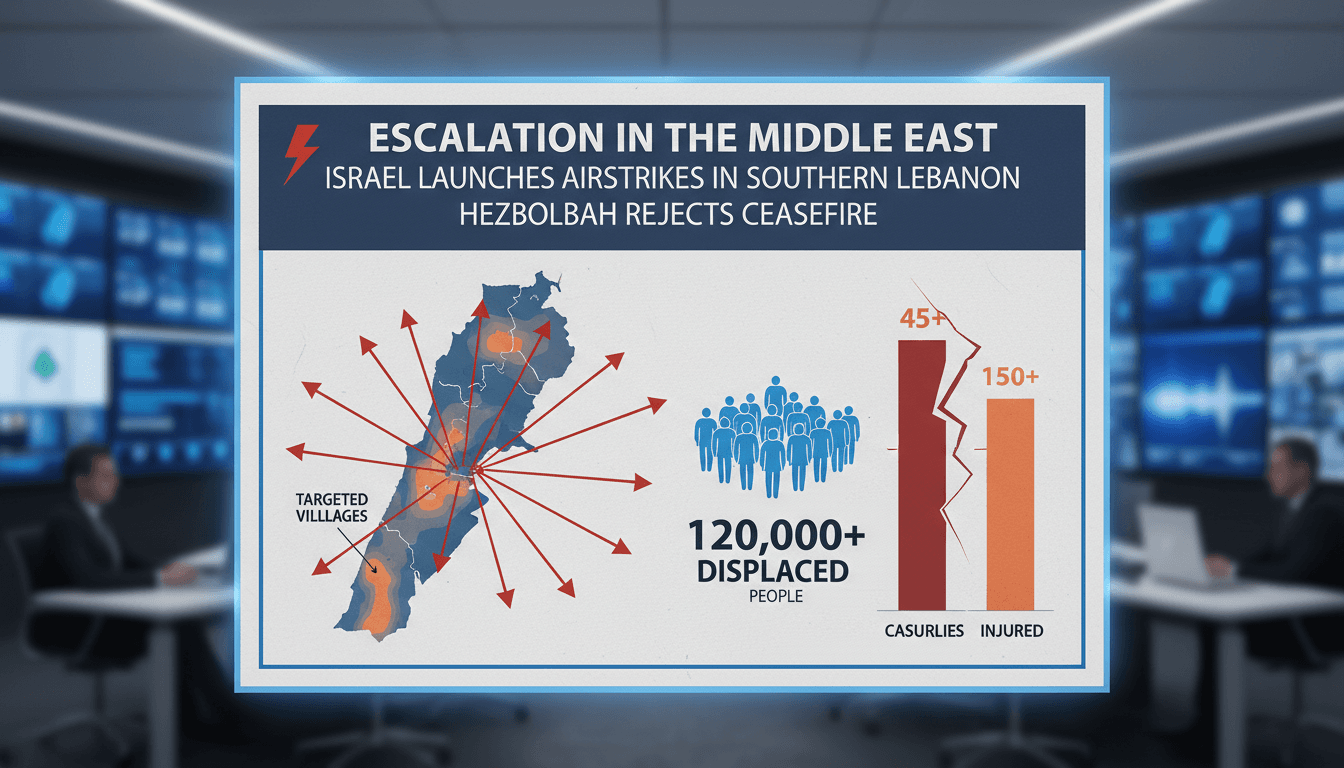
The recent airstrikes by Israel in southern Lebanon signal a significant escalation in the ongoing conflict with Hezbollah. This development has immediate implications for regional stability and humanitarian conditions, as thousands are displaced from their homes. Stakeholders, including international organizations, will need to closely monitor the situation to address the humanitarian crisis and potential military engagements. The rejection of a ceasefire by Hezbollah has intensified tensions, raising concerns about further violence and instability in the region. The situation underscores the fragility of peace efforts and the urgent need for diplomatic interventions.
What happened
Israel's military conducted airstrikes in southern Lebanon after issuing evacuation orders for nine villages, prompting thousands to flee their homes. The strikes occurred on June 5, 2026, following Hezbollah's rejection of a ceasefire agreement the day before. Among the affected areas was Anqoun village, which had been sheltering approximately 2,500 displaced individuals.
The airstrikes resulted in at least six fatalities, further escalating the humanitarian crisis in the region. Roads leading to Sidon became congested as families sought safety from the violence, highlighting the immediate impact of the military actions.
The Context
The conflict between Israel and Hezbollah has a long and complex history, with recent events marking a significant escalation. Hezbollah's rejection of the ceasefire agreement on June 4, 2026, set the stage for Israel's military response. This rejection not only intensified the conflict but also exacerbated the humanitarian situation, as many civilians were caught in the crossfire.
The evacuation orders issued by Israel reflect a strategic response to the perceived threat from Hezbollah, which has been a longstanding adversary. The situation is further complicated by the involvement of various regional and international stakeholders, all of whom have vested interests in the outcome of this conflict.
Takeaway
As tensions continue to rise, the potential for further military actions and humanitarian crises in southern Lebanon increases. Observers should monitor developments regarding ceasefire negotiations between Israel and Hezbollah, as any progress could significantly alter the current trajectory of violence. Additionally, the humanitarian response to the displacement of thousands will be critical in addressing the immediate needs of affected populations.
The situation remains volatile, necessitating close attention to both military developments and diplomatic efforts aimed at restoring peace in the region.
International coverage from The Guardian's global desks.
"The Guardian is known for its progressive editorial stance and in-depth analysis."
— A47 Editor
Israel strikes southern Lebanon after ordering evacuations of nine villages
Israel has intensified its military operations in southern Lebanon, issuing evacuation orders for nine villages, including Anqoun, which is home to 2,500 displaced individuals. This escalation follows Hezbollah's rejection of a ceasefire agreement, l...
Conservative-leaning political and national coverage.
"The Washington Times is a conservative-leaning newspaper known for its political coverage and advocacy of right-of-center viewpoints."
— A47 Editor
Israel strikes southern Lebanon after evacuation warnings to several villages
Israel's air force conducted airstrikes across southern Lebanon on Friday, following evacuation warnings issued to residents of nine villages, including one that has been a refuge for thousands displaced by ongoing conflict. This escalation is part o...
UAE-based English-language newspaper covering regional politics, economics, and global affairs.
"The National reflects Emirati policy perspectives while maintaining international editorial standards."
— A47 Editor
Iran war latest: Residents flee after Israel warns of strikes in south Lebanon
Residents in southern Lebanon are fleeing their homes following warnings from Israel about imminent airstrikes targeting Hezbollah positions. This escalation comes amid ongoing military operations and heightened tensions in the region, particularly a...