
Extreme rainfall causes significant loss in Tapanuli orangutan population in Indonesia
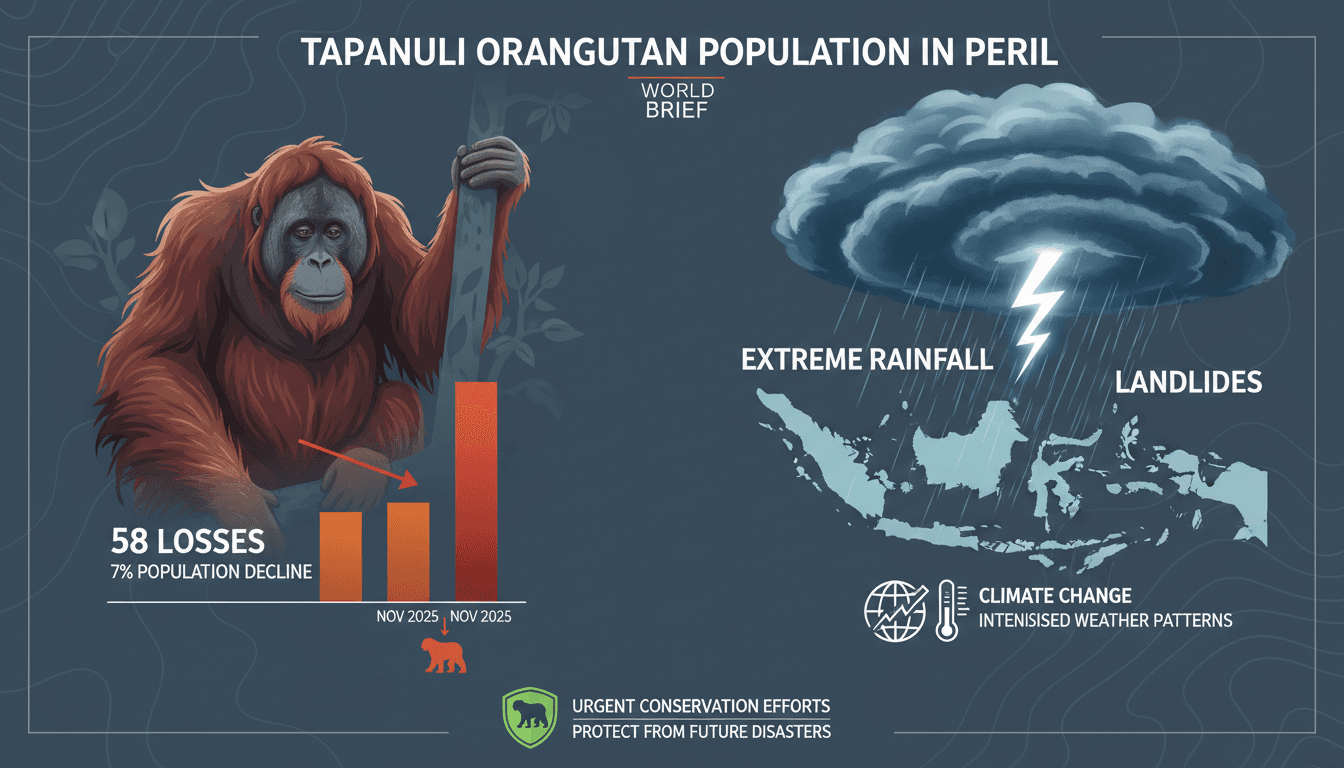
Here's what it means for you.
The recent loss of 58 Tapanuli orangutans due to extreme weather highlights the urgent need for enhanced conservation strategies. As climate change continues to intensify, the survival of critically endangered species like the Tapanuli orangutan is increasingly at risk. This event serves as a wake-up call for policymakers and conservationists to prioritize habitat protection and climate resilience. The implications extend beyond wildlife; they affect local communities and ecosystems that depend on biodiversity. Stakeholders must collaborate to address the challenges posed by climate change and implement effective conservation measures.
What happened
In November 2025, severe weather in North Sumatra, Indonesia, resulted in over 1,000mm of rain falling within just four days. This extreme rainfall triggered landslides that led to the tragic loss of 58 Tapanuli orangutans, representing a significant 7% of the remaining population. The event underscores the vulnerability of this critically endangered species to climate-induced disasters.
The Tapanuli orangutan, recognized as the world's rarest great ape, now faces an even more precarious future. The loss of these individuals raises alarms about the species' viability and the urgent need for conservation efforts.
The Context
The Tapanuli orangutan population is estimated to be around 800 individuals, making this loss particularly devastating. The extreme weather event is directly linked to climate change, which has been intensifying weather patterns globally. This incident not only highlights the immediate threat to the Tapanuli orangutan but also reflects broader concerns regarding wildlife vulnerability in the face of climate change.
As stakeholders assess the impact of this event, the urgency for conservation initiatives becomes clear. Protecting the remaining population of Tapanuli orangutans is critical, as their survival is intertwined with the health of their habitat and the overall ecosystem.
Takeaway
The ongoing impact of climate change poses a severe threat to the survival of the Tapanuli orangutan and other endangered species. Conservation initiatives aimed at protecting this rare ape will be crucial in the coming months. Monitoring developments in climate change policies will also be essential, as these can significantly affect wildlife habitats.
As the situation evolves, stakeholders must remain vigilant and proactive in their conservation efforts. The loss of 7% of the Tapanuli orangutan population serves as a stark reminder of the urgent need for action to safeguard the future of this species.
Scientific discoveries, health, technology, and natural phenomena.
"Live Science reports on scientific discoveries, health, technology, and natural phenomena with a popular science tone."
— A47 Editor
World's rarest great ape decimated by 4 days of extreme rain, with 7% of population lost to cyclone
The Tapanuli orangutan population in Indonesia has suffered a devastating loss, with approximately 58 individuals killed due to landslides triggered by Cyclone Senyar, resulting in a 7% decline in their numbers. This rare great ape, known as the worl...
International coverage of politics, culture, and current affairs.
"BBC News is widely regarded as a reputable international news organization, known for its impartial tone and public service mandate."
— A47 Editor
Four days of extreme rain killed 7% of world's rarest orangutans, study says
A recent study has revealed that four days of extreme rainfall have resulted in the death of 7% of the world's rarest orangutans, highlighting the severe impact of climate change on these vulnerable populations. The findings underscore the urgent nee...
Reports on climate change, environmental science, sustainability, and nature.
"BBC News is widely regarded as a reputable international news organization, known for its impartial tone and public service mandate."
— A47 Editor
Four days of extreme rain killed 7% of world's rarest orangutans, study says
A recent study indicates that extreme rainfall over four days has resulted in the death of 7% of the world's rarest orangutans, highlighting the severe impact of climate change on their populations. This alarming statistic underscores the urgent need...
Top international stories selected by The Guardian editors.
"The Guardian is known for its progressive editorial stance and in-depth analysis."
— A47 Editor
Four days of extreme rain in Indonesia killed 7% of world’s rarest great apes, study finds
A recent study revealed that extreme rainfall and landslides in North Sumatra, Indonesia, resulted in the death of 58 critically endangered Tapanuli orangutans, accounting for 7% of the global population of this rare species. The heavy rains, exceedi...
Scientific research, space, environment, and health coverage.
"The New York Times is a globally recognized newspaper offering authoritative reporting with a center-left editorial stance."
— A47 Editor
Indonesia Landslides Devastated Endangered Orangutans, Study Finds
A recent study has revealed that climate-fueled storms in Indonesia have led to devastating landslides, resulting in an estimated loss of over 5 percent of the endangered orangutan population. The torrential rains unleashed torrents of water, mud, an...