
Spain wins the 2026 FIFA World Cup in historic tournament
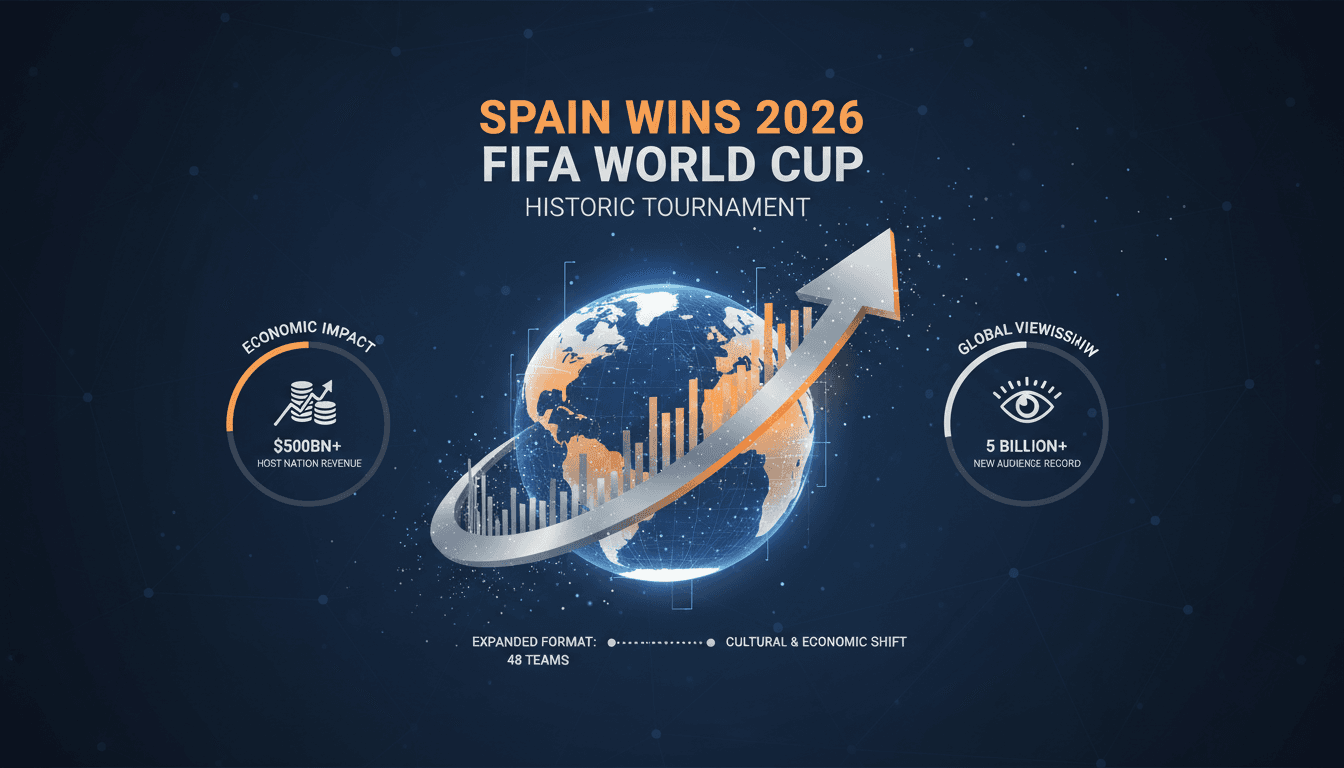
Here's what it means for you.
The 2026 FIFA World Cup has set a new benchmark in global sports, showcasing the potential for expanded formats to engage wider audiences. With Spain's victory, the tournament not only celebrates athletic prowess but also signals a shift in how international events can drive economic and cultural growth in host nations. The implications for media and sports industries are profound, as they adapt to the changing landscape of global viewership and participation. As the world reflects on this historic event, stakeholders in sports and media will need to consider the long-term effects of such a large-scale tournament. The success of this World Cup could influence future tournament formats and the economic strategies of host countries.
What happened
The 2026 FIFA World Cup, co-hosted by the United States, Canada, and Mexico, concluded with a grand closing ceremony that crowned Spain as the champion. This tournament marked a significant milestone as it was the first to feature an expanded format of 48 teams, allowing for greater participation than ever before. The event attracted a massive global audience, with expectations of nearly two billion viewers tuning in.
Spain's victory represents the nation's second World Cup title, further solidifying its place in football history. The closing ceremony was a vibrant celebration, showcasing the cultural richness of the host nations and the spirit of the tournament.
The Context
The 2026 World Cup was a landmark event, not only for its expanded format but also for the collaborative effort of three host countries. This unprecedented partnership aimed to enhance the tournament's reach and economic impact, drawing in fans from around the globe. The timing of the event, following a period of global uncertainty, provided a much-needed boost to the sports industry and local economies.
The tournament's success is expected to have lasting cultural and economic implications for the host nations. With diverse revenue streams generated for FIFA and the local economies, the event has set a precedent for future international sporting events.
Takeaway
As the dust settles on the 2026 World Cup, attention will shift to analyzing its long-term effects on sports culture and media engagement. Economic reports from the host countries will be closely monitored to assess the tournament's impact on local economies. Additionally, FIFA's announcements regarding future tournaments and formats will be pivotal in shaping the landscape of international football.
The cultural significance of this World Cup will likely resonate for years to come, influencing how future tournaments are structured and marketed. Stakeholders in the sports industry should remain vigilant as the implications of this historic event unfold.
Arabic-language UAE news coverage spanning domestic, public-interest, and current affairs reporting.
"Emarat Al Youm is a major UAE newspaper with broad mainstream coverage and strong attention to national developments."
— A47 Editor
رياضيون: كأس العالم 2026 أعادت تعريف نجاح البطولات الكبرى رياضيون: كأس العالم 2026 أعادت تعريف نجاح البطولات الكبرى
The 2026 FIFA World Cup, hosted by the United States, Canada, and Mexico, concluded recently, with athletes stating that the tournament has redefined the success of major championships. They noted that FIFA diversified its revenue sources and maximiz...
Pan-Arab news coverage spanning politics, business, sports, and regional affairs.
"Asharq Al-Awsat reflects a broad Arab editorial perspective with strong attention to regional geopolitics."
— A47 Editor
الأرقام القياسية تتهاوى في «كأس العالم 2026»
The 2026 FIFA World Cup concluded last Sunday in the United States, Mexico, and Canada, with Spain winning the title for the second time in its history. This tournament showcased remarkable performances and shattered several records, highlighting the...
Business, investment, entrepreneurship, leadership, and innovation.
"Forbes is known for its coverage of business leaders, market trends, and entrepreneurial ventures with a pro-business editorial stance."
— A47 Editor
World Cup 2026 Wraps Up But Cultural Impacts Will Linger
The 2026 FIFA World Cup has concluded, leaving a significant cultural and economic impact on media-related businesses both in the U.S. and globally. Despite the tournament's end, the effects on tourism, local economies, and media rights are expected ...
Pan-Arab news coverage spanning politics, business, sports, and regional affairs.
"Asharq Al-Awsat reflects a broad Arab editorial perspective with strong attention to regional geopolitics."
— A47 Editor
إسدال الستار على المونديال بحفل ختام راقص
The 2026 FIFA World Cup concluded on Sunday in the United States, Mexico, and Canada with a vibrant closing ceremony that featured lively performances. The event marked the end of a tournament that brought together nations and showcased the spirit of...
Canadian and global sporting news, events, and athlete updates.
"Global News is a mainstream Canadian media outlet generally considered to have a centrist editorial stance, with clear factual reporting."
— A47 Editor
Canada’s months-long World Cup party comes to an end with final
The 2026 FIFA World Cup, co-hosted by Canada, the United States, and Mexico, culminated in a championship match that attracted a global television audience of nearly two billion viewers, marking the end of Canada's hosting duties.
National coverage of politics and current events across Canada.
"Global News is a mainstream Canadian outlet with a centrist editorial stance, focusing on factual reporting."
— A47 Editor
Canada’s months-long World Cup party comes to an end with final
The 2026 FIFA World Cup, co-hosted by Canada, the United States, and Mexico, culminated in a championship match that attracted a global television audience of nearly two billion viewers, marking the end of Canada's hosting duties.