
U.S. Nationals Sentenced for North Korean IT Worker Fraud Scheme
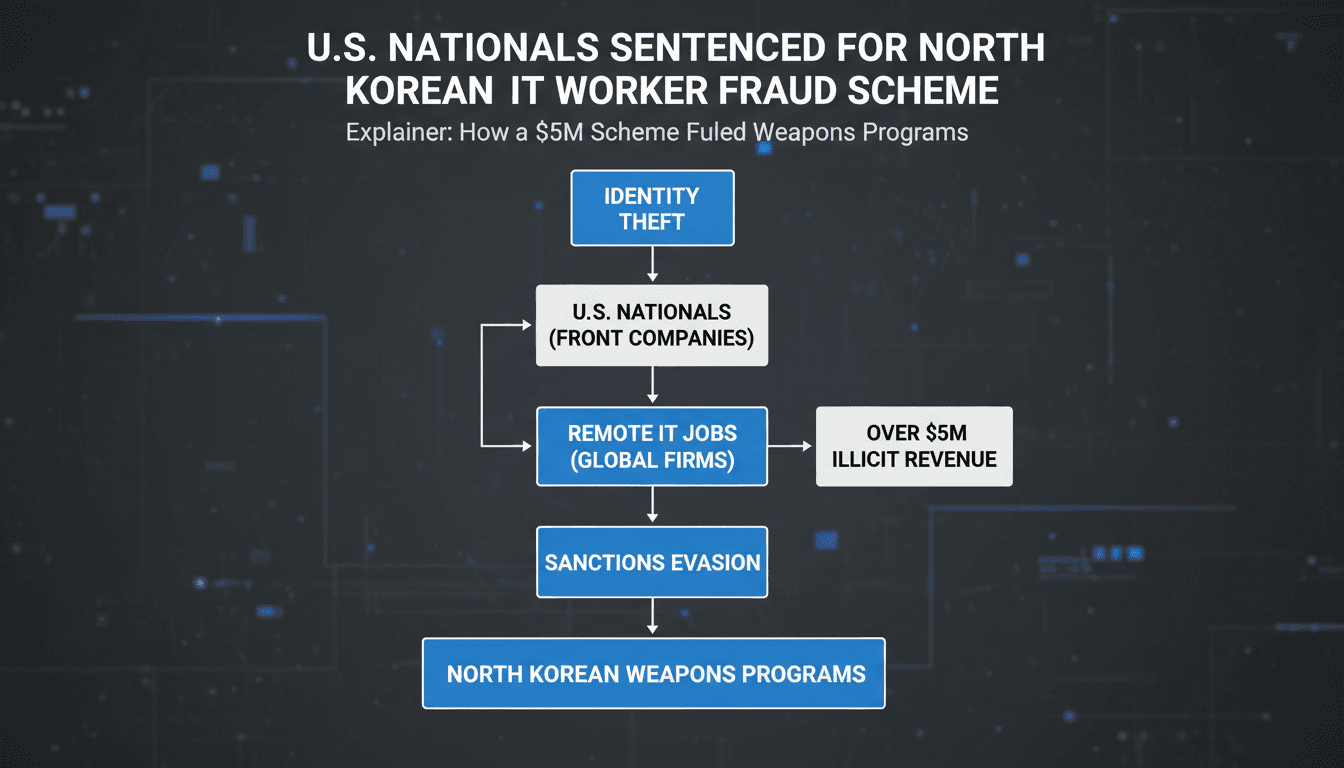
Here's what it means for you.
Increased scrutiny on remote work practices could impact your hiring and operational strategies.
Why it matters
This case highlights vulnerabilities in remote work systems that can be exploited for illicit gains, affecting national security and corporate integrity.
What happened (in 30 seconds)
- Two U.S. nationals were sentenced to a combined 16 years for facilitating a fraudulent IT worker scheme that funneled over $5 million to North Korea.
- Kejia and Zhenxing Wang operated laptop farms using stolen identities, deceiving over 100 employers, including Fortune 500 companies.
- The operation exploited remote work trends from 2021 to 2024, leading to significant legal actions and ongoing investigations.
The context you actually need
- North Korea has been using stolen identities to secure remote jobs at U.S. firms, generating hundreds of millions annually for its weapons programs.
- Previous U.S. actions included coordinated indictments and the seizure of 29 laptop farms across 16 states, indicating a broader crackdown on such schemes.
- The Wangs' operation involved sophisticated methods like shell companies and KVM switches, showcasing the lengths to which fraudsters will go to exploit remote work technologies.
What's really happening
From 2021 to 2024, Kejia Wang and Zhenxing Wang orchestrated a complex scheme that allowed North Korean operatives to impersonate U.S. IT workers. This operation was not just a simple case of identity theft; it was a well-structured enterprise that leveraged the post-pandemic shift to remote work. The Wangs created shell companies, such as Hopana Tech LLC, to mask their activities and facilitate the hiring of North Korean operatives who worked remotely under false identities.
The use of KVM (Keyboard, Video, Mouse) switches enabled these operatives to access employer-issued laptops from overseas, effectively bypassing traditional security measures. This method allowed them to maintain a façade of legitimate employment while generating substantial revenue—over $5 million—directly funneled to North Korea's weapons of mass destruction programs.
The U.S. Department of Justice and the FBI have recognized the severity of this issue, launching initiatives like the DPRK RevGen: Domestic Enabler Initiative to combat such fraudulent activities. The indictments of the Wangs and their co-conspirators are part of a broader strategy to dismantle networks that exploit remote work for illicit purposes. The legal repercussions faced by the Wangs, including significant prison sentences and financial restitution, serve as a warning to others who might consider similar schemes.
This case also underscores the vulnerabilities inherent in remote work systems. As companies increasingly rely on remote employees, the potential for exploitation grows. The Wangs' operation is a stark reminder that without robust verification processes and security measures, organizations can become unwitting participants in international fraud schemes. The fallout from this case may lead to stricter regulations and oversight in the hiring processes for remote workers, particularly in sectors sensitive to national security.
Who feels it first (and how)
- Corporate HR departments: Increased scrutiny on hiring practices and identity verification processes.
- IT security teams: Heightened focus on securing remote access technologies and monitoring for fraudulent activities.
- Government agencies: Ongoing investigations and potential policy changes to address vulnerabilities in remote work systems.
What to watch next
- Increased regulatory scrutiny: Expect new guidelines for remote hiring practices aimed at preventing identity fraud.
- Corporate security investments: Companies may ramp up investments in cybersecurity measures to protect against similar schemes.
- Legal repercussions for facilitators: Watch for further indictments and legal actions against individuals and entities involved in similar fraudulent operations.
The Wangs were sentenced for their roles in the scheme, and over $5 million was funneled to North Korea.
Companies will implement stricter hiring protocols and invest in enhanced security measures.
The long-term impact on remote work policies and practices across various sectors.
Insights by A47 Intelligence
Curated tech headlines including AI stories.
"Influential aggregator surfacing the day’s top tech/AI links."
— A47 Editor
The US DOJ says a judge sentenced two US citizens to a combined 16 years in prison for running laptop farms that let North Korean IT workers pose as US workers (Jowi Morales/Tom's Hardware)
The U.S. Department of Justice announced that a judge has sentenced two American citizens to a combined 16 years in prison for operating laptop farms that enabled North Korean IT workers to impersonate U.S. employees. This scheme reportedly generated...
Startup news with frequent AI coverage.
"Covers launches, funding, and product updates in AI."
— A47 Editor
Two Americans sentenced for helping North Korea steal $5 million in fake IT worker scheme
Two Americans have been sentenced to a combined 16 years in prison for facilitating a scheme that allowed North Korean operatives to impersonate U.S. IT workers, resulting in the theft of approximately $5 million. The U.S. Department of Justice annou...