
Microsoft announces strategic shift to in-house AI models reducing reliance on OpenAI
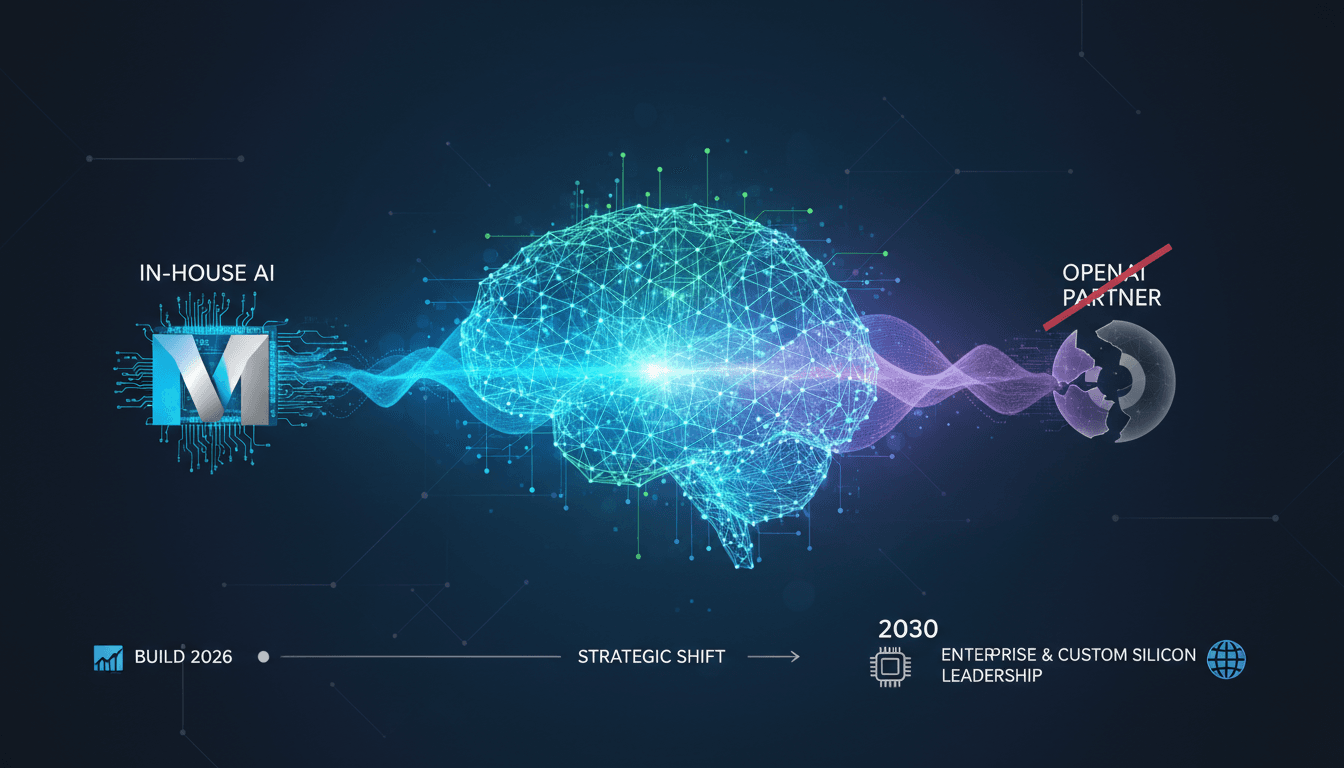
Here's what it means for you.
Microsoft's recent announcement to develop its own in-house AI models signifies a pivotal shift in the enterprise AI landscape. By reducing its reliance on OpenAI, Microsoft is positioning itself to lead in AI solutions tailored for business applications. This strategic move could enhance competition among AI providers and redefine how enterprises leverage AI technologies. As Microsoft embarks on this journey, businesses can expect more customized AI solutions that cater specifically to their needs. The implications of this shift may extend beyond technology, influencing market dynamics and partnerships in the AI sector.
What happened
At the Build 2026 conference, Microsoft unveiled a new family of in-house AI models, marking a significant strategic shift towards AI independence. This announcement follows a recent renegotiation of its contract with OpenAI, which previously limited Microsoft's ability to develop its own AI technologies. The new models, branded as MAI, are designed to enhance Microsoft's capabilities in the AI space.
The MAI-Thinking-1 model, featuring 35 billion active parameters, is specifically tailored for advanced reasoning tasks. This launch represents a major step in Microsoft's ambition to establish itself as a self-sufficient AI powerhouse. The company aims to leverage its extensive enterprise ecosystem to lead in AI applications focused on business needs.
The Context
Microsoft's partnership with OpenAI involved a substantial $13 billion investment, which restricted its ability to create independent AI models. The recent renegotiation of this contract has opened the door for Microsoft to pursue its own AI research and development initiatives. By 2030, Microsoft aims to become one of the top four AI labs globally, focusing on enterprise-specific AI solutions.
This strategic pivot is crucial as it allows Microsoft to capitalize on its existing infrastructure and resources. The company's commitment to developing custom silicon and enhancing performance through proprietary AI chips further underscores its long-term vision in the AI domain.
Takeaway
Microsoft's push for AI independence is poised to reshape the competitive landscape in enterprise AI solutions. As the company continues to develop its MAI models, stakeholders should monitor their performance and adoption in various enterprise settings. Additionally, developments in Microsoft's partnerships and collaborations for AI training will be critical to watch.
The implications of this shift could lead to significant advancements in how businesses utilize AI technology, potentially setting new standards in the industry. As Microsoft forges ahead, its strategies will likely influence the direction of AI development across the sector.
Focuses on transformative tech, AI, gaming, and startup innovation.
"VentureBeat is respected for its in-depth reporting on AI, startups, and disruptive technologies in Silicon Valley and beyond."
— A47 Editor
Microsoft AI chief says company was “set free” from OpenAI to pursue superintelligence
Microsoft AI's CEO, Mustafa Suleyman, announced that the company has gained independence from OpenAI, allowing it to pursue its own vision of superintelligence. This shift follows a contractual change that grants Microsoft the authority to develop AI...
Opinionated AI coverage for general audiences.
"TNW’s AI vertical covering tools, ethics, and trends."
— A47 Editor
Microsoft’s AI chief says the company wants to “eliminate” what it pays Anthropic
Mustafa Suleyman, Microsoft's AI chief, has indicated that the company aims to reduce its financial commitments to Anthropic, citing the high costs associated with its AI models. He expressed concerns about Anthropic's pricing during a recent intervi...
Curated tech headlines including AI stories.
"Influential aggregator surfacing the day’s top tech/AI links."
— A47 Editor
Mustafa Suleyman says Microsoft aims to become "one of the top four labs in the world", and "the pivotal moment was renegotiating our contract with OpenAI" (The Verge)
Mustafa Suleyman, CEO of Microsoft AI, announced that Microsoft aims to become one of the top four AI labs globally, emphasizing that a pivotal moment in this ambition was the renegotiation of its contract with OpenAI. This strategic shift was highli...
Consumer tech and culture with frequent AI coverage.
"Influential tech outlet covering AI products and policy."
— A47 Editor
Microsoft and OpenAI broke up — now they’re ready to fight
At Microsoft's Build 2026 conference, the company unveiled a series of AI initiatives, including a super app, in-house reasoning models, and a cybersecurity tool, signaling a strategic shift as it moves away from its partnership with OpenAI. This dev...
Tech news, reviews, and analysis of consumer electronics, science, art, and culture.
"The Verge is a technology-focused media outlet known for in-depth reporting, product reviews, and coverage of the intersection between technology and culture."
— A47 Editor
Microsoft and OpenAI broke up — now they’re ready to fight
At Microsoft's Build 2026 conference, the company unveiled a series of AI initiatives, including a super app, in-house reasoning models, and a cybersecurity tool, signaling a strategic shift as it moves away from its partnership with OpenAI. This dev...
Global business headlines with AI angles.
"General business outlet that frequently covers AI."
— A47 Editor
Microsoft Reveals New AI Models Aimed At Relying Less on OpenAI
Microsoft has announced a significant shift in its artificial intelligence strategy by unveiling a new series of in-house AI models, including the advanced reasoning model MAI-Thinking-1, during the Build 2026 conference. This move is part of Microso...