
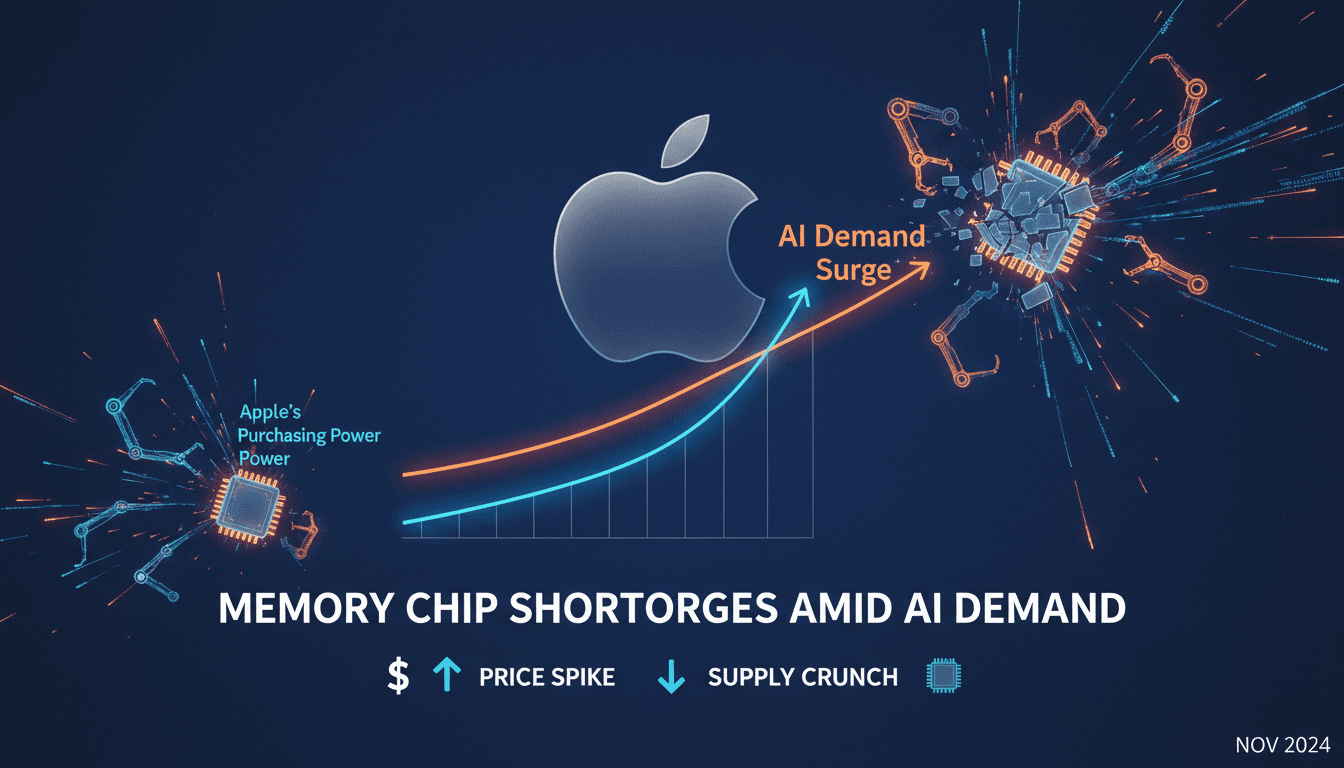
Apple Faces Memory Chip Shortages Amid AI Demand Surge
Here's what it means for you.
The surge in demand for memory chips driven by the AI sector is reshaping the competitive landscape for tech companies, particularly Apple. As the company grapples with diminished purchasing power, consumers may experience delays in product launches and increased prices for new devices. This situation underscores the necessity for Apple and its peers to innovate and adapt their supply chain strategies to navigate these challenges effectively.
What happened
Apple's purchasing power for memory chips has significantly decreased amid the booming demand from the AI sector. This shift has led to challenges in maintaining competitive pricing and product development, impacting the company's ability to launch new devices. Reports indicate that Apple's planned product launches, including budget-friendly phones, are being affected by ongoing memory shortages.
The situation reflects broader trends in the tech industry, where other companies are also struggling to secure the necessary memory resources. As competition intensifies, the implications of these shortages extend beyond Apple, affecting the entire consumer electronics market.
The Context
The AI industry's rapid growth has created an unprecedented demand for memory chips, leading to increased prices and supply constraints. This surge in demand is not only impacting Apple but also other tech companies that rely on these critical components for their products. As a result, many firms are facing delays in their product launches, further complicating the market dynamics.
The timing of this shortage is particularly challenging for Apple, as it seeks to introduce new devices to maintain its competitive edge. The ongoing memory crunch highlights the need for companies to rethink their supply chain strategies in response to evolving market conditions driven by AI.
Takeaway
As AI continues to drive demand for memory chips, companies like Apple may need to adapt their strategies to remain competitive. Monitoring developments in AI's impact on hardware production will be crucial for understanding future market trends. Additionally, observing potential shifts in Apple's product strategy in response to these memory shortages will provide insights into how the company plans to navigate this challenging landscape.
The ongoing memory crunch is likely to persist, compelling Apple and other tech firms to innovate and rethink their supply chain approaches to mitigate risks associated with memory shortages.
Opinionated AI coverage for general audiences.
"TNW’s AI vertical covering tools, ethics, and trends."
— A47 Editor
AI’s memory crunch just killed a phone. Even Apple flinched.
The recent surge in demand for memory chips driven by artificial intelligence (AI) has led to significant challenges in the tech industry, culminating in the cancellation of the CMF Phone 3 Pro by its co-founder, who cited an inability to create a bu...
Markets desk coverage, trading insights, and investor updates.
"WSJ’s markets reporting provides in-depth analysis and context for investors."
— A47 Editor
Why Apple’s War Chest Can’t Win the Memory War
Apple is facing significant challenges in the memory chip market, as the company's purchasing power has diminished due to the rapid growth of artificial intelligence (AI), which has driven up chip costs. This situation has prompted Apple to announce ...
Tech business coverage, major deals, product launches, and Silicon Valley trends.
"WSJ’s tech section offers authoritative reporting on the intersection of technology and business, including exclusive industry analysis."
— A47 Editor
Why Apple’s War Chest Can’t Win the Memory War
Apple is facing significant challenges in the memory market as the surge in artificial intelligence (AI) demand has diminished its purchasing power, impacting its ability to secure necessary memory components for its products. This situation has been...