
UC Berkeley Develops Electronic Nose to Detect Food Spoilage and Allergens
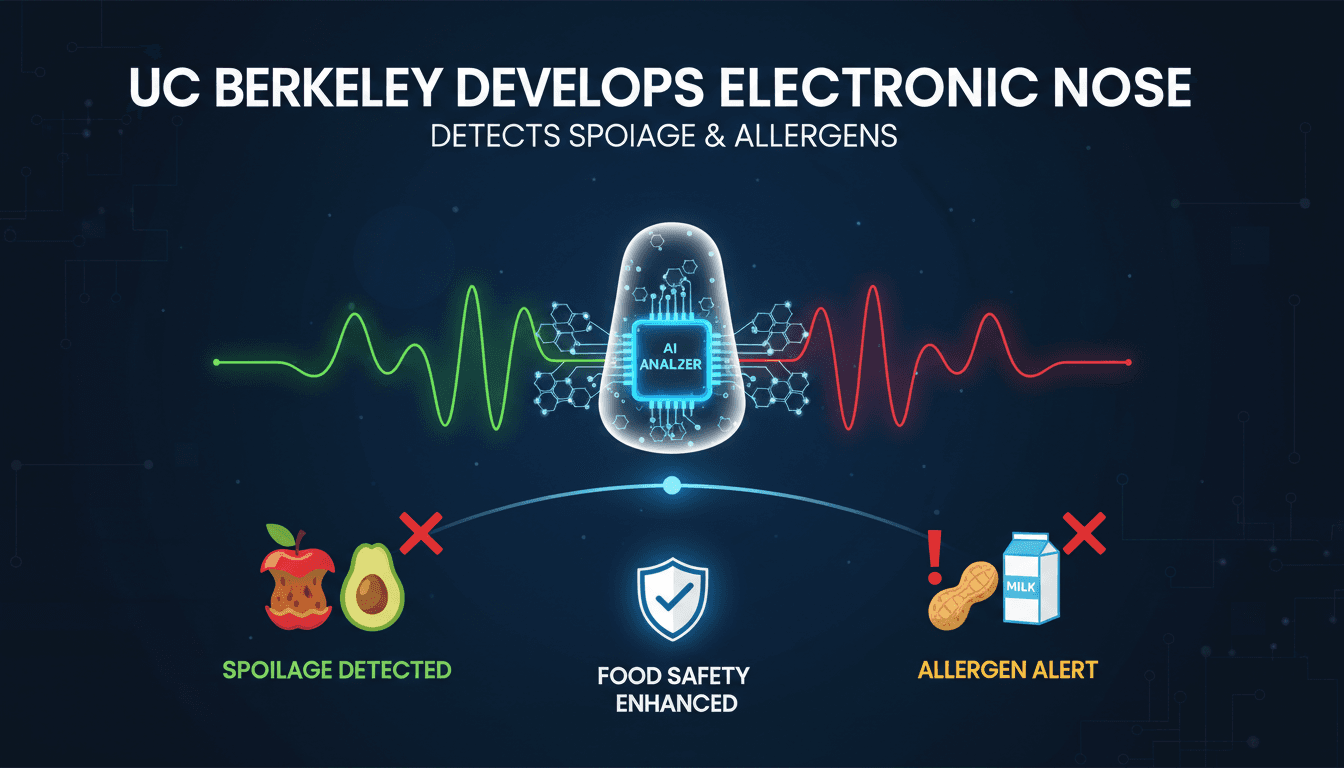
Here's what it means for you.
The development of an electronic nose by researchers at UC Berkeley could significantly enhance food safety in households. This innovative technology aims to address common concerns regarding food spoilage and allergens, potentially transforming consumer practices. As the technology progresses through testing, it may lead to safer food consumption and improved public health outcomes.
What happened
Researchers at the University of California, Berkeley, have created an electronic nose designed to detect food spoilage and allergens. This cutting-edge technology employs advanced sensors and machine learning techniques to enhance food safety. Currently, the electronic nose is in the testing phase, with no confirmed applications yet, as researchers work to refine its capabilities.
The goal of this development is to provide consumers with a reliable method for identifying food safety issues in their homes. If successful, the electronic nose could become an essential tool for households, addressing both spoilage and allergy concerns in everyday life.
The Context
The electronic nose technology represents a significant advancement in food safety practices. With increasing awareness of foodborne illnesses and allergies, the need for effective detection methods has never been more critical. This innovation is particularly relevant as consumers seek more reliable ways to ensure the safety of their food.
As the technology continues to be tested, stakeholders in the food industry, including manufacturers and retailers, may find new opportunities to enhance their safety protocols. The timeline for further developments includes an initial announcement in June 2026, followed by additional details about its capabilities and testing phase.
Takeaway
Looking ahead, the electronic nose could pave the way for safer food consumption practices. As testing progresses, researchers will likely explore potential commercial applications that could benefit both consumers and the food industry. The success of this technology could lead to a paradigm shift in how food safety is managed in households.
Future developments in food safety technology will be crucial to watch, as they may provide insights into the broader implications of this electronic nose. The ongoing research at UC Berkeley could set the stage for innovative solutions to address spoilage and allergy concerns effectively.
Pan-Arab news coverage spanning politics, business, sports, and regional affairs.
"Asharq Al-Awsat reflects a broad Arab editorial perspective with strong attention to regional geopolitics."
— A47 Editor
أنف مدعوم بالذكاء الاصطناعي يرصد الغذاء الفاسد
Researchers at the University of California, Berkeley, have developed an innovative device known as the 'electronic nose,' which has exceptional capabilities in detecting spoiled food. This advancement highlights the potential for technology to enhan...
Pan-Arab news coverage spanning politics, business, sports, and regional affairs.
"Asharq Al-Awsat reflects a broad Arab editorial perspective with strong attention to regional geopolitics."
— A47 Editor
«أنف إلكتروني» يكتشف فساد الطعام والحساسيات بالذكاء الاصطناعي
Researchers have developed an electronic nose that utilizes sensors and machine learning to identify food items, detect spoilage, and recognize allergens, paving the way for safer future home applications.
Latest tech news, product reviews, and analysis for consumers and professionals.
"CNET delivers accessible and detailed technology reporting, including trusted product reviews and how-to guides."
— A47 Editor
'Electronic Nose' Shows Promise for Detecting Food Allergens and Spoilage
Researchers at the University of California, Berkeley, have developed an 'Electronic Nose' technology that shows promise for detecting food allergens and spoilage. This innovative device is currently in the testing phase, indicating ongoing efforts t...