
Broadcom's Stock Plummets Despite Record AI Sales Amid Investor Concerns Over Valuation
Here's what it means for you.
Broadcom's recent stock decline highlights the growing anxiety among investors regarding the sustainability of AI-driven growth. Despite reporting record revenue and significant gains in AI sales, the company's disappointing forward guidance has raised fears of an impending AI bubble. This situation serves as a cautionary tale for investors in the tech sector, prompting a reassessment of valuations and future growth prospects. As the market reacts to these developments, stakeholders will need to remain vigilant. The interconnectedness of major players like Broadcom and Nvidia suggests that shifts in one company's outlook can have widespread implications across the sector.
What happened
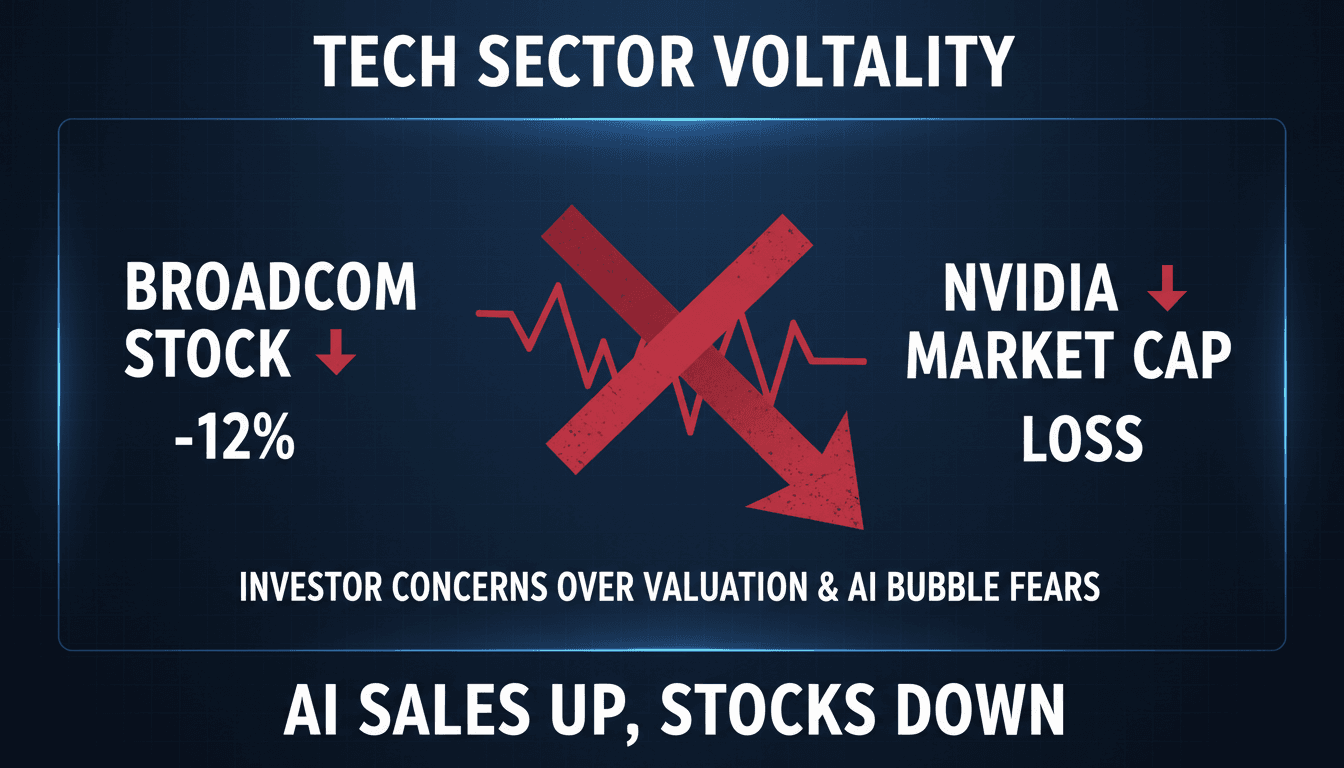
Broadcom's stock experienced a sharp decline of over 12% following its earnings report, despite showcasing record revenue and impressive growth in AI sales. The company's stock dropped 12.59% on June 4, marking its steepest one-day decline in over a year. This reaction was primarily triggered by disappointing forward guidance, which raised concerns about the potential for an AI bubble.
In the wake of Broadcom's announcement, Nvidia also felt the impact, with its market capitalization decreasing by $330 billion. This significant loss underscores the interconnected nature of the AI sector and investor sentiment, as fears of overvaluation ripple through the market.
The Context
Broadcom's earnings report revealed record revenue and triple-digit growth in AI sales, yet the market's reaction indicates a growing unease about the sustainability of such growth. Investors are increasingly wary of potential overvaluation in the tech sector, particularly as companies like Nvidia are also affected by Broadcom's guidance. The timing of this decline is critical, as it coincides with a broader reassessment of AI investments.
The tech sector is currently navigating a landscape marked by rapid advancements in AI technology, but this progress has led to heightened volatility. Stakeholders must consider how these developments will influence future earnings reports and overall market stability.
Takeaway
Investors will be closely monitoring upcoming earnings reports from major tech companies for signs of stability in the AI market. The recent volatility suggests that the tech sector, particularly those involved in AI, may face increased scrutiny as valuations are reassessed. Continued attention to market reactions and developments in the AI sector will be essential in determining the trajectory of these companies.
As the landscape evolves, stakeholders should remain alert to shifts in investor sentiment and the potential implications for future growth. The interconnectedness of major players in the AI space will likely continue to shape market dynamics.
Consumer tech news, reviews, and buying guides for gadgets and electronics.
"TechRadar is known for comprehensive buying advice, hardware reviews, and consumer tech news targeted at mainstream audiences."
— A47 Editor
A knee-jerk reaction or something more? Nvidia's market cap dropped by almost $330 billion in 24 hours as the AI giant reeled from Broadcom's poor guidance
Nvidia's market capitalization plummeted by nearly $330 billion within 24 hours following Broadcom's disappointing guidance on its AI chip revenue, which fell short of investor expectations. This sharp decline reflects the heightened sensitivity of t...
Stock market news, investing ideas, and trading analysis.
"TheStreet provides market news and retail-investor-focused analysis."
— A47 Editor
Broadcom CEO unnerves biggest AI backers in rattling pivot
Broadcom recently reported a record revenue of $19.3 billion for Q1 2026, driven by a significant increase in AI semiconductor sales. However, the company's stock fell by 12.59% on June 4, marking its steepest one-day decline in over a year, closing ...
Consumer tech news, reviews, and buying guides for gadgets and electronics.
"TechRadar is known for comprehensive buying advice, hardware reviews, and consumer tech news targeted at mainstream audiences."
— A47 Editor
Nvidia next? Broadcom's value dropped by more than $440 billion as it posts disappointing forward outlook, prompting fears of AI bubble burst
Broadcom's market value has plummeted by over $440 billion following a disappointing forecast for its artificial intelligence chip revenue, which fell short of investor expectations. Despite reporting strong earnings, the company's outlook projected ...