
AI adoption leads to mixed employment outcomes in tech sector
Here's what it means for you.
The integration of artificial intelligence (AI) into workplaces is reshaping employment landscapes, presenting both opportunities and challenges. While some companies experience growth in overall employment, higher-educated tech workers are facing significant layoffs. This duality underscores the need for adaptive workforce strategies and reskilling initiatives to navigate the evolving job market. As AI technologies continue to advance, the implications for job security and workforce dynamics become increasingly critical. Stakeholders must prioritize education and training to prepare for an AI-driven economy.
What happened
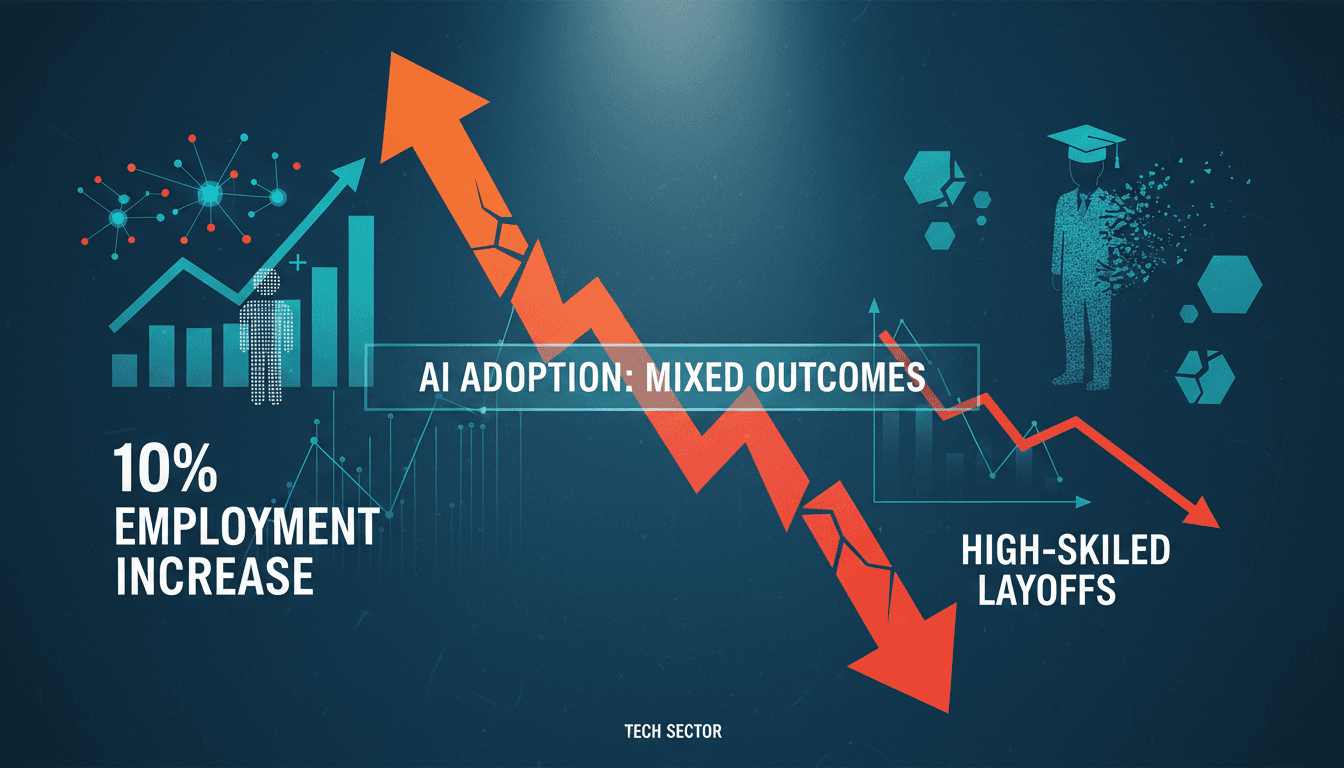
Recent studies indicate that AI adoption is reshaping job markets with mixed effects on employment. Companies that have embraced AI technologies have reported a 10% increase in overall employment within the first two years. However, this growth comes at a cost, as higher-educated tech workers are disproportionately affected by layoffs.
The rapid integration of AI into various sectors is altering job dynamics and security perceptions among workers. As AI continues to evolve, concerns about job displacement are prevalent across the workforce.
The Context
The relationship between AI adoption and employment trends is complex and multifaceted. High-intensity AI adopters have seen notable employment growth, yet this has not translated uniformly across all job levels. Higher-educated workers, particularly in tech sectors, are facing significant risks of job loss, raising alarms about the future of work.
This situation necessitates a reevaluation of workforce strategies and educational pathways to prepare for the challenges posed by AI advancements. As companies adjust their approaches to workforce management, the implications for job training and education will be crucial.
Takeaway
Looking ahead, the ongoing integration of AI into various industries will continue to reshape job markets. Companies and workers alike must adopt adaptive strategies to mitigate the impact of AI on employment. Reskilling and upskilling initiatives will be essential to ensure that the workforce is equipped to thrive in an AI-driven economy.
Monitoring how organizations adjust their workforce strategies in response to AI advancements will provide valuable insights into future employment trends. Observing trends in job training and education will also be critical as the landscape evolves.
U.S. national news with a West Coast perspective.
"The Los Angeles Times is a major West Coast newspaper offering in-depth reporting with a liberal editorial tone and strong regional focus."
— A47 Editor
Want an AI-proof job? New research says you may be safer at companies embracing the technology
Recent studies indicate that workers may find greater job security at companies that actively embrace artificial intelligence (AI), as the dynamics of competition and collaboration with AI in the workplace evolve.
International news with cultural insight.
"The Los Angeles Times is a major West Coast newspaper offering in-depth reporting with a liberal editorial tone and strong regional focus."
— A47 Editor
Want an AI-proof job? New research says you may be safer at companies embracing the technology
Recent studies indicate that workers may find greater job security at companies that actively embrace artificial intelligence (AI), as the dynamics of competition and collaboration with AI in the workplace evolve.
Consumer tech news, reviews, and buying guides for gadgets and electronics.
"TechRadar is known for comprehensive buying advice, hardware reviews, and consumer tech news targeted at mainstream audiences."
— A47 Editor
New report claims companies which embrace AI also add more workers (eventually)
A new report indicates that companies adopting high-intensity artificial intelligence (AI) have experienced a 10% increase in employment within the first two years of implementation, despite the productivity gains associated with AI.
Consumer tech news, reviews, and buying guides for gadgets and electronics.
"TechRadar is known for comprehensive buying advice, hardware reviews, and consumer tech news targeted at mainstream audiences."
— A47 Editor
New report claims AI is leading to job layoffs — but higher-level more educated workers are being hit hardest
A new report highlights that job layoffs due to artificial intelligence (AI) are disproportionately impacting higher-level, more educated tech workers in California, raising concerns about the future of employment in the sector.