
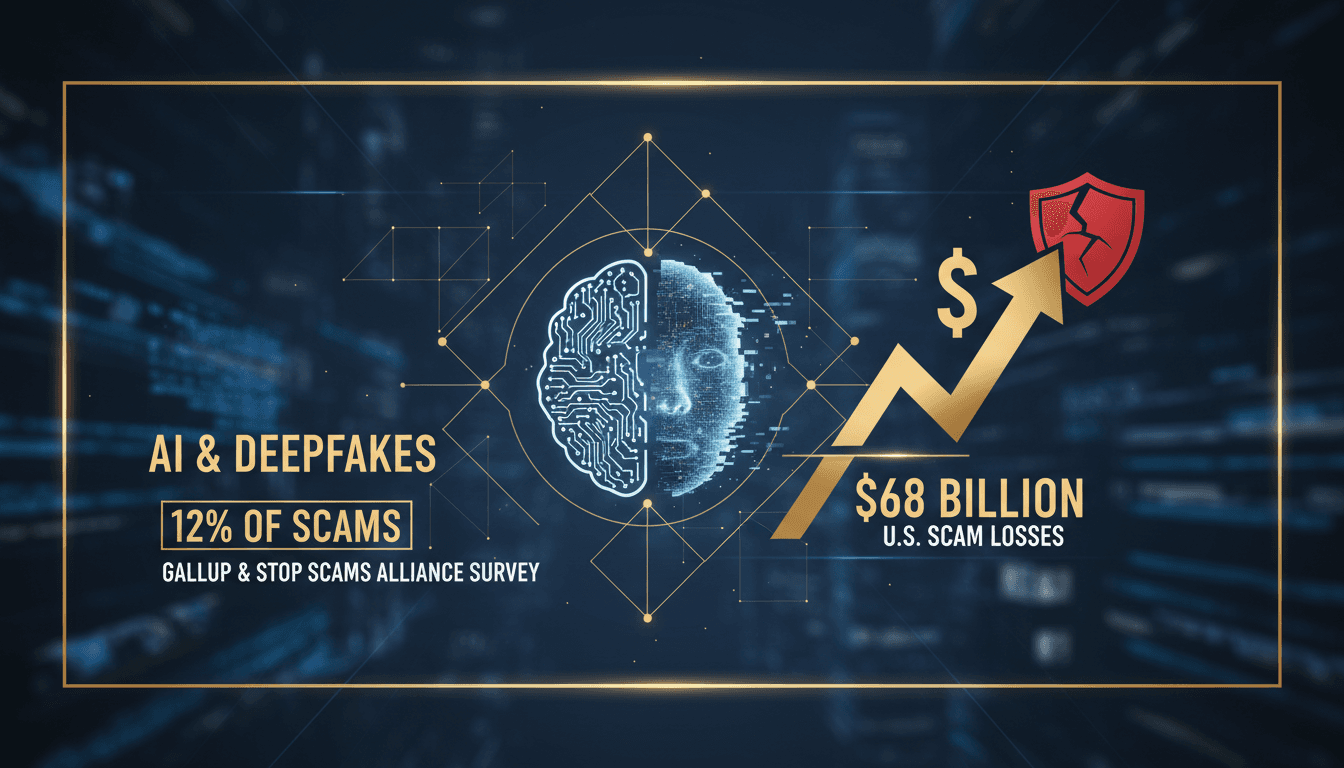
AI and deepfakes contribute to $68 billion in U.S. scam losses
Here's what it means for you.
The integration of AI and deepfake technologies into scams represents a significant shift in the landscape of fraud, impacting both individuals and businesses. As these sophisticated tactics become more prevalent, there is an urgent need for enhanced regulatory measures and public awareness initiatives. The staggering financial losses underscore the importance of vigilance and proactive strategies to combat these evolving threats.
What happened
A recent survey conducted by Gallup and the Stop Scams Alliance revealed that artificial intelligence and deepfake technologies played a role in 12 percent of successful scams in the U.S. last year. This alarming statistic contributed to an estimated total loss of $68 billion due to scams in 2025. The report highlights a growing trend in the use of advanced technologies by scammers, indicating that the actual impact may be even greater than reported.
The findings suggest that 15 million Americans fell victim to scams in 2025, representing about 6 percent of U.S. adults. The increasing sophistication of these scams raises concerns about detection and prevention, as the use of AI and deepfakes may be underreported due to their complex nature.
The Context
The rise of AI and deepfake technologies has transformed the landscape of scams, making them more difficult to identify and combat. Stakeholders, including law enforcement and regulatory bodies, face ongoing challenges in addressing these sophisticated fraud tactics. The timing of this report is critical, as it coincides with a growing awareness of the need for protective measures against such threats.
The financial implications are severe, with billions lost and millions affected, highlighting the urgent need for public awareness and preventive strategies. As technology continues to evolve, so too do the tactics employed by scammers, necessitating a coordinated response from various sectors.
Takeaway
Looking ahead, the increasing sophistication of scams driven by AI and deepfakes poses ongoing challenges for individuals and authorities alike. Potential regulatory responses to combat these AI-driven scams are essential, as is the development of emerging technologies that could help detect and prevent deepfake fraud. Continued vigilance and innovation in detection and prevention will be crucial in mitigating these risks.
As the landscape of scams evolves, public awareness and education will play a vital role in protecting individuals from falling victim to these advanced tactics.
RT is a Russian state-funded network covering global events from a Russian perspective.
"RT is widely criticized for promoting pro-Kremlin narratives and is considered by many to be a state propaganda outlet."
— A47 Editor
AI and deepfakes driving $68 bn US scam epidemic – survey
A recent Gallup survey reveals that AI deepfake scams contributed significantly to a staggering $68 billion fraud epidemic in the United States last year. The rise of sophisticated AI technologies has enabled criminals to create convincing fake ident...
Capitol Hill news, legislation, and policy insight.
"The Hill specializes in U.S. politics and policy, with a focus on Capitol Hill developments and a reputation for insider reporting."
— A47 Editor
AI, deepfakes used in 12 percent of successful scams: Survey
A recent survey conducted by Gallup and the Stop Scams Alliance revealed that 12 percent of successful scams in the past year utilized artificial intelligence or deepfakes, indicating a concerning trend in the evolution of fraudulent activities.
Global business headlines with AI angles.
"General business outlet that frequently covers AI."
— A47 Editor
AI Deepfake Scams Tricking Americans Out Of Dozens Of Billions. And It's Not Just The Elderly.
A recent report from Gallup and the Stop Scams Alliance reveals that Americans lost an estimated $68 billion to scams in 2025, with approximately 15 million individuals falling victim, highlighting the widespread impact of fraudulent activities, incl...