
OpenAI and Microsoft End Exclusive Partnership to Expand AI Model Access
Here's what it means for you.
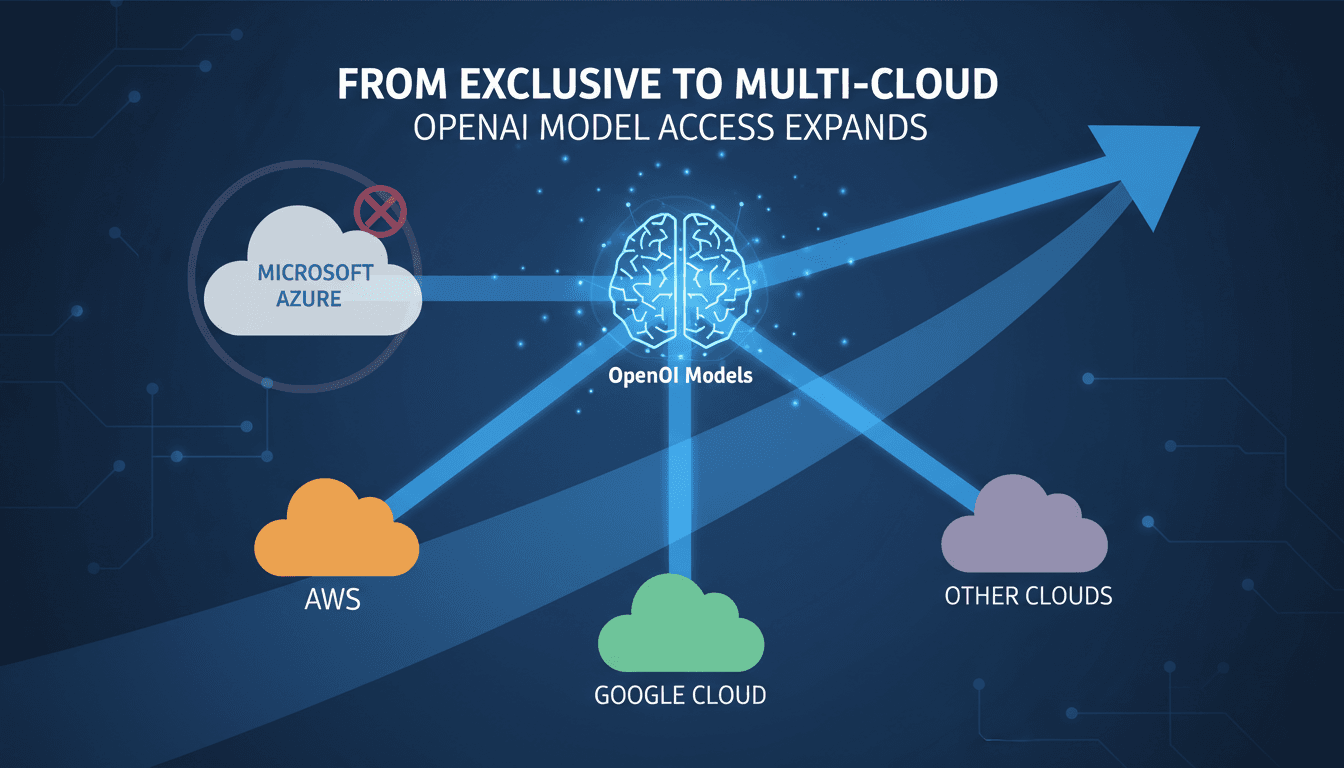
The end of Microsoft's exclusivity over OpenAI's models opens up multi-cloud options, enhancing flexibility for businesses like yours.
Why it matters
This restructuring reflects a significant shift in the AI landscape, allowing enterprises to leverage diverse cloud solutions for their AI needs.
What happened (in 30 seconds)
- On April 27, 2026, OpenAI and Microsoft announced a restructuring of their partnership, ending Microsoft's exclusive license for OpenAI's AI models.
- The new agreement allows OpenAI to distribute its models across Amazon Web Services (AWS) and Google Cloud, while maintaining Microsoft as the primary cloud partner.
- This change addresses enterprise demands for multi-cloud flexibility and resolves tensions stemming from Amazon's substantial investment in OpenAI.
The context you actually need
- The original partnership began in 2019, with Microsoft investing approximately $13 billion for exclusive deployment rights on Azure.
- Tensions escalated when OpenAI signed a $38 billion cloud deal with AWS in November 2025, conflicting with Microsoft's exclusivity.
- The restructuring allows OpenAI to prioritize Azure while also deploying models on competing platforms, reflecting a broader trend towards multi-cloud strategies in enterprise technology.
What's really happening
The restructuring of the OpenAI-Microsoft partnership marks a pivotal moment in the AI and cloud computing sectors. Initially forged in 2019, the alliance was built on a foundation of significant financial investment and mutual growth, with Microsoft committing around $13 billion to secure exclusive rights to OpenAI's models on its Azure platform. This exclusivity was intended to bolster Azure's position in the competitive cloud market, particularly as demand for AI solutions surged.
However, as enterprise needs evolved, the limitations of exclusivity became apparent. OpenAI's ambitions to expand its reach and capabilities clashed with the constraints imposed by its partnership with Microsoft. The situation intensified following OpenAI's signing of a $38 billion cloud contract with AWS in late 2025, which included provisions for deploying OpenAI's models on AWS. This move raised alarms at Microsoft, leading to public disputes and potential legal actions over perceived breaches of exclusivity.
The April 2026 restructuring effectively resolves these tensions by transitioning to a non-exclusive licensing model. This allows OpenAI to distribute its full suite of models across multiple cloud platforms, including AWS and Google Cloud, while still prioritizing Microsoft for new model launches. The agreement is set to remain in effect through 2032, providing a stable framework for both companies to navigate the rapidly changing AI landscape.
This shift is not merely a corporate maneuver; it reflects a broader trend in the tech industry towards multi-cloud strategies. Enterprises are increasingly seeking flexibility in their cloud deployments, allowing them to choose the best tools for specific tasks without being locked into a single provider. The ability to access OpenAI's models on AWS and potentially Google Cloud aligns with these demands, enabling businesses to optimize their AI capabilities while mitigating risks associated with vendor lock-in.
Moreover, the restructuring alleviates some of the antitrust scrutiny facing Microsoft, as it demonstrates a willingness to adapt to market dynamics and customer needs. Analysts view this as a positive development, suggesting that it could free up capital for Microsoft to invest in its own AI initiatives while maintaining a strong partnership with OpenAI.
In summary, the end of Microsoft's exclusivity over OpenAI's models not only reshapes the competitive landscape of cloud services but also empowers enterprises to leverage AI more effectively across diverse platforms.
Who feels it first (and how)
- Enterprise IT Managers: They will benefit from increased flexibility in choosing cloud providers for AI deployments.
- Small to Medium Businesses (SMBs): Access to OpenAI models on multiple platforms can enhance their AI capabilities without heavy investment in a single cloud provider.
- Cloud Service Providers: AWS and Google Cloud will see increased demand for their services as businesses seek multi-cloud solutions.
- AI Developers: They will have more options for deploying and integrating AI models into applications, fostering innovation.
What to watch next
- Adoption Rates of Multi-Cloud Strategies: Monitor how quickly enterprises shift to multi-cloud environments, as this will indicate the effectiveness of the restructuring.
- OpenAI's Model Performance on Competing Platforms: The success of OpenAI's models on AWS and Google Cloud will be crucial for their market positioning.
- Microsoft's Response: Watch for any new AI initiatives or partnerships Microsoft may pursue to strengthen its competitive edge following this restructuring.
OpenAI's models will be available on AWS and potentially Google Cloud.
Enterprises will increasingly adopt multi-cloud strategies to enhance flexibility and reduce dependency on a single provider.
The long-term impact on Microsoft's market position and investment strategies in AI remains to be seen.
Frequently Asked Questions
- Why it matters?
- This restructuring reflects a significant shift in the AI landscape, allowing enterprises to leverage diverse cloud solutions for their AI needs.
- What happened (in 30 seconds)?
- On April 27, 2026, OpenAI and Microsoft announced a restructuring of their partnership, ending Microsoft's exclusive license for OpenAI's AI models. The new agreement allows OpenAI to distribute its models across Amazon Web Services (AWS) and Google Cloud, while maintaining Microsoft as the primary cloud partner. This change addresses enterprise demands for multi-cloud flexibility and resolves tensions stemming from Amazon's substantial investment in OpenAI.
- What's really happening?
- The restructuring of the OpenAI-Microsoft partnership marks a pivotal moment in the AI and cloud computing sectors. Initially forged in 2019, the alliance was built on a foundation of significant financial investment and mutual growth, with Microsoft committing around $13 billion to secure exclusive rights to OpenAI's models on its Azure platform. This exclusivity was intended to bolster Azure's position in the competitive cloud market, particularly as demand for AI solutions surged. However, a
- Who feels it first (and how)?
- Enterprise IT Managers: They will benefit from increased flexibility in choosing cloud providers for AI deployments. Small to Medium Businesses (SMBs): Access to OpenAI models on multiple platforms can enhance their AI capabilities without heavy investment in a single cloud provider. Cloud Service Providers: AWS and Google Cloud will see increased demand for their services as businesses seek multi-cloud solutions. AI Developers: They will have more options for deploying and integrating AI models
- What to watch next?
- Adoption Rates of Multi-Cloud Strategies: Monitor how quickly enterprises shift to multi-cloud environments, as this will indicate the effectiveness of the restructuring. OpenAI's Model Performance on Competing Platforms: The success of OpenAI's models on AWS and Google Cloud will be crucial for their market positioning. Microsoft's Response: Watch for any new AI initiatives or partnerships Microsoft may pursue to strengthen its competitive edge following this restructuring.
Real-time updates, analysis, and reports on the blockchain and cryptocurrency sectors.
"Crypto News delivers real-time updates, analysis, and reports on the blockchain and cryptocurrency sectors."
— A47 Editor
OpenAI ends Microsoft exclusivity and can now sell its models on AWS and Google Cloud
OpenAI has restructured its partnership with Microsoft, transitioning from an exclusive cloud licensing agreement to a non-exclusive one, allowing the company to sell its AI models on Amazon Web Services and Google Cloud for the first time. This chan...
Tech news and guides occasionally covering AI.
"Independent tech blog with practical tips and news."
— A47 Editor
Microsoft and OpenAI Amend Partnership to End Azure Exclusivity While Keeping Microsoft as Primary Cloud Partner
Microsoft and OpenAI have restructured their partnership, ending the exclusive cloud arrangement that has been in place since 2019. This new agreement allows OpenAI to license its models to other firms, including Amazon, while maintaining Microsoft a...
Focuses on transformative tech, AI, gaming, and startup innovation.
"VentureBeat is respected for its in-depth reporting on AI, startups, and disruptive technologies in Silicon Valley and beyond."
— A47 Editor
Amazon’s OpenAI gambit signals a new phase in the cloud wars — one where exclusivity no longer applies
Amazon Web Services (AWS) has launched a significant enterprise AI initiative, integrating OpenAI's advanced models into its Bedrock platform and introducing new AI tools, including Amazon Quick and expanded Amazon Connect services. This announcement...
News and guidance for IT pros on AI adoption.
"Enterprise-focused tips, explainers, and news for professionals."
— A47 Editor
AWS to Resell OpenAI Products After Microsoft Loses Exclusive License
Amazon Web Services (AWS) has announced that it will resell OpenAI's models and Codex following the termination of Microsoft's exclusive licensing agreement with OpenAI. This shift allows AWS to provide its cloud customers with enhanced access to AI ...
Industry news and analysis for the global AI community.
"A business-first look at AI adoption, policy, and ecosystem trends."
— A47 Editor
AWS Launches Managed Agents with OpenAI Partnership
Amazon Web Services (AWS) has launched a new managed agent service in partnership with OpenAI, which simplifies the process for customers by eliminating the need to select underlying models when building agents. This service is part of AWS's broader ...
Consumer tech news, reviews, and buying guides for gadgets and electronics.
"TechRadar is known for comprehensive buying advice, hardware reviews, and consumer tech news targeted at mainstream audiences."
— A47 Editor
AWS and OpenAI confirm cloud partnership — a day after ChatGPT maker ended its Microsoft exclusivity
AWS and OpenAI have confirmed a new cloud partnership, following OpenAI's decision to end its exclusive agreement with Microsoft. This shift allows OpenAI to license its AI models to other cloud providers, including AWS, and integrate its technology ...
Daily AI news: models, tools, and policy.
"Independent outlet tracking the fast pace of AI."
— A47 Editor
OpenAI lands on AWS one day after Microsoft deal restructuring
OpenAI has officially ended its exclusive partnership with Microsoft, allowing the AI company to license its models to other firms. This shift was marked by the announcement of three new OpenAI offerings on Amazon Web Services' Bedrock platform, incl...