
U.S. Federal Research Funding Redirected to Individual Scientists and AI Initiatives
Here's what it means for you.
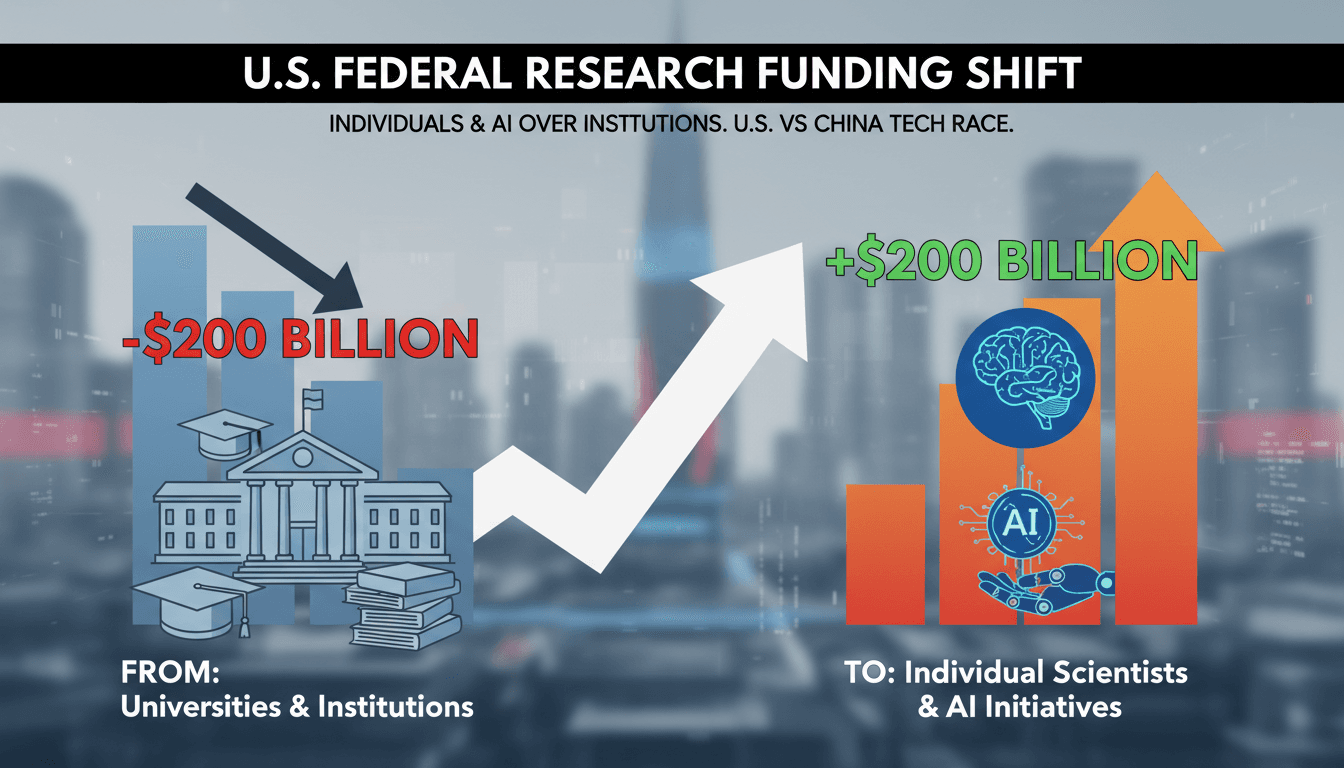
The Trump administration's decision to redirect approximately $200 billion in federal research funding marks a pivotal shift in the landscape of scientific inquiry. By prioritizing individual scientists and artificial intelligence projects over traditional university-led research, this move aims to bolster U.S. competitiveness against China. However, it raises significant concerns regarding the integrity and credibility of scientific research in the long term. As funding flows directly to individual researchers, the dynamics of collaboration and peer review may change dramatically. This could lead to faster research outcomes but may also challenge established norms in scientific practices.
What happened
The Trump administration has announced a significant overhaul of federal research funding priorities, reallocating approximately $200 billion from universities to individual scientists and artificial intelligence initiatives. This strategic shift is designed to enhance the U.S. competitive edge in technology and innovation, particularly in the face of rising challenges from China. The announcement was made on July 21, 2026, with further discussions on its implications following the next day.
This funding overhaul emphasizes the importance of individual researchers, potentially transforming how scientific inquiry is conducted in the U.S. The administration's focus on artificial intelligence reflects a broader strategy to maintain leadership in critical technological fields.
The Context
The decision to redirect funding underscores a growing concern about U.S. competitiveness in technology and innovation, especially against China's advancements. By moving away from traditional university-led research, the administration aims to foster a more agile and responsive research environment. Critics, however, warn that this shift could undermine the integrity of scientific research, raising questions about the reliability of findings produced under these new funding conditions.
The implications of this funding change are significant for various stakeholders, including academic institutions, individual researchers, and the broader scientific community. As the U.S. government implements these changes, the potential backlash from universities and researchers could shape future discussions around research funding and integrity.
Takeaway
The reallocation of research funds could redefine the landscape of scientific inquiry in the U.S., with individual scientists potentially gaining new opportunities for funding and innovation. However, the scientific community will be closely monitoring the effects on research quality and the nation's international standing. Future developments in AI research funding will also be critical to watch, as they may influence the direction of technological advancements.
As this funding shift unfolds, the balance between speed and scientific credibility will be a key concern. The long-term impact on collaboration and peer review processes remains to be seen, but it is clear that the landscape of research is poised for transformation.
Consumer tech news, reviews, and buying guides for gadgets and electronics.
"TechRadar is known for comprehensive buying advice, hardware reviews, and consumer tech news targeted at mainstream audiences."
— A47 Editor
White House wants to shift billions of dollars of research funding away from ‘slow consensus peer review’ and into individual scientists and AI
The White House has announced a significant shift in its research funding strategy, redirecting approximately $200 billion annually from traditional peer-reviewed research towards individual scientists and artificial intelligence initiatives. This mo...
Curated tech headlines including AI stories.
"Influential aggregator surfacing the day’s top tech/AI links."
— A47 Editor
Memo: the White House OSTP plans to redirect federal research funding from universities to individual scientists and AI use, reshaping ~$200B in annual spending (Amrith Ramkumar/Wall Street Journal)
The White House Office of Science and Technology Policy (OSTP) has announced plans to redirect approximately $200 billion in federal research funding from universities to individual scientists and artificial intelligence (AI) initiatives. This shift ...
Coverage of national news and issues shaping the United States, including politics, economy, and society.
"The Wall Street Journal is one of the most respected financial and news publications in the U.S., known for its rigorous reporting and center-right editorial perspective."
— A47 Editor
White House to Redirect Billions in Research Funds Toward AI, Away From Colleges
The White House has announced a significant shift in its funding strategy, redirecting approximately $200 billion in research funds toward artificial intelligence (AI) initiatives and away from traditional college funding. This move aims to enhance t...
Tech business coverage, major deals, product launches, and Silicon Valley trends.
"WSJ’s tech section offers authoritative reporting on the intersection of technology and business, including exclusive industry analysis."
— A47 Editor
White House to Redirect Billions in Research Funds Toward AI, Away From Colleges
The White House has announced a significant shift in its research funding strategy, redirecting approximately $200 billion annually towards artificial intelligence (AI) initiatives and away from traditional college funding. This move aims to bolster ...