
AI sector faces investment challenges amid declining computer science enrollment and revenue scrutiny
Here's what it means for you.
The artificial intelligence sector is at a crossroads, facing significant investment challenges as stock sell-offs and a decline in computer science enrollment emerge. This shift could reshape the landscape of AI development and education, impacting future workforce capabilities. Stakeholders must adapt to these changes to sustain growth and interest in AI technologies.
What happened
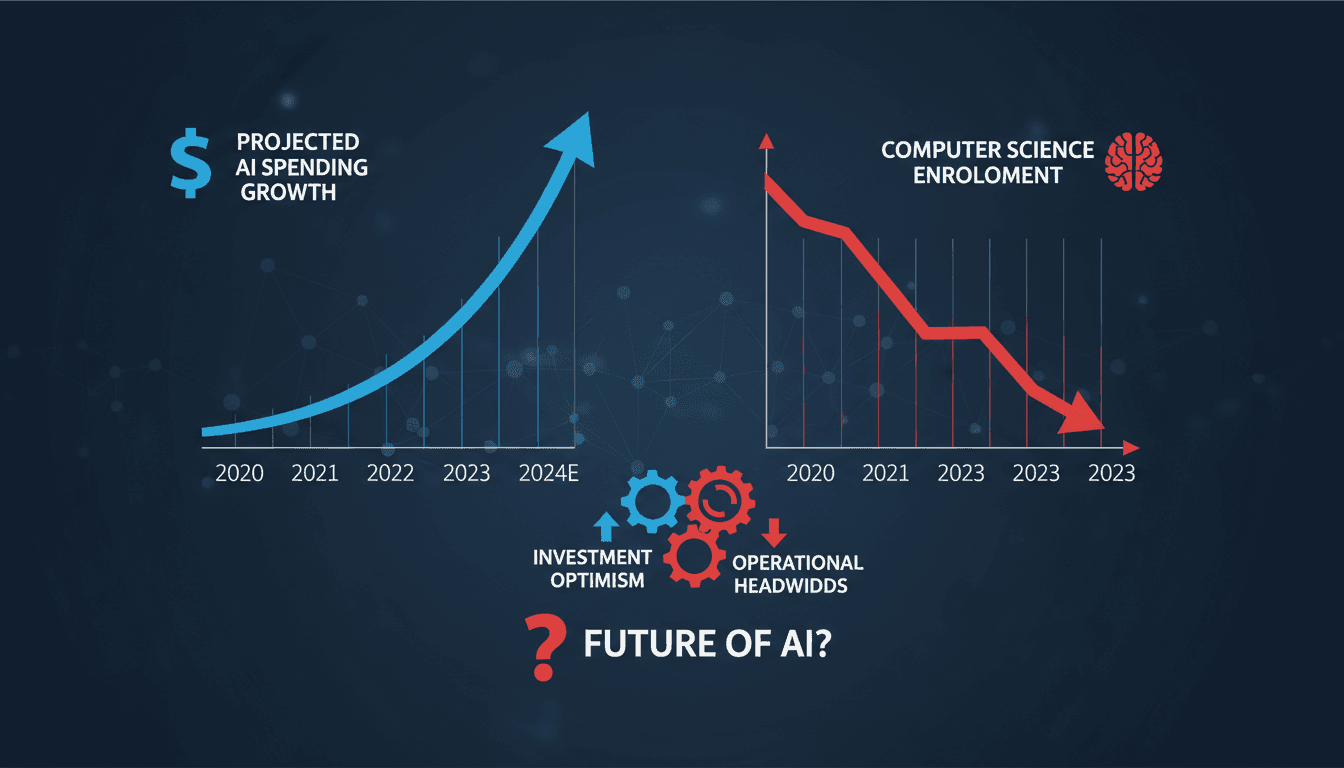
The artificial intelligence sector is witnessing a notable downturn, with stock sell-offs and a decline in computer science program enrollment for the first time in two decades. Projections indicate that AI spending could reach $758 billion by 2029, yet recent trends suggest a slowdown in interest among prospective students. OpenAI's ambitious advertising revenue goals are under scrutiny, raising concerns about the sustainability of its business model amid rising operational costs.
As companies like OpenAI explore new revenue streams, the feasibility of these strategies remains uncertain. The decline in computer science enrollment is particularly alarming, as it may hinder the growth of a skilled workforce essential for the industry's future. This combination of factors signals a pivotal moment for the AI sector.
The Context
The global AI infrastructure spending is expected to exceed $758 billion by 2029, reflecting significant investment and interest in AI technologies. However, the decline in computer science enrollment, influenced by the rise of AI, poses a challenge to sustaining this growth. A Stanford economist has noted that this is the first decrease in enrollment in two decades, highlighting a shift in student interests.
OpenAI's recent decision to test ads in ChatGPT aims to diversify its revenue streams, but market analysis raises questions about the viability of its revenue targets. As the AI sector grapples with these challenges, the implications for investment strategies and educational approaches become increasingly critical.
Takeaway
The future of AI investment and education may hinge on addressing current market uncertainties and adapting to changing student interests. Stakeholders should closely monitor trends in computer science enrollment and their impact on the tech workforce. Additionally, updates on OpenAI's advertising strategy will be crucial in understanding its financial implications and overall market health.
As the AI industry evolves, navigating the complexities of market dynamics and innovative revenue strategies will be essential for sustaining growth and interest in AI technologies.
Tech news, hardware, and AI tools coverage.
"PC/tech site increasingly covering AI hardware and apps."
— A47 Editor
OpenAI's ambitious ad revenue goals look like AI-generated money, analysis says
A recent analysis by Emarketer has raised significant doubts about OpenAI's ambitious advertising revenue goals, particularly its projection of $2.5 billion from ChatGPT ads in 2023, which contrasts sharply with the forecasted total ad revenue of les...
Stock market news, investing ideas, and trading analysis.
"TheStreet provides market news and retail-investor-focused analysis."
— A47 Editor
The AI honeymoon appears over amid stock sell-off
The artificial intelligence (AI) spending boom, ignited by the launch of ChatGPT 3.5 in November 2022, is facing a downturn as stock sell-offs occur across the tech sector. Global AI infrastructure spending is projected to reach $758 billion by 2029,...
Business and tech news excluding paywalled content.
"High-volume business/tech outlet with frequent AI coverage."
— A47 Editor
Computer science enrollment fell for the first time in 20 years after ChatGPT's rise, a Stanford economist says
Computer science enrollment has declined for the first time in two decades, a trend attributed to the rise of AI technologies like ChatGPT, according to a Stanford economist. This shift indicates changing student preferences and concerns about future...