
Chinese military-linked universities pursue Nvidia's H200 chips amid US export controls
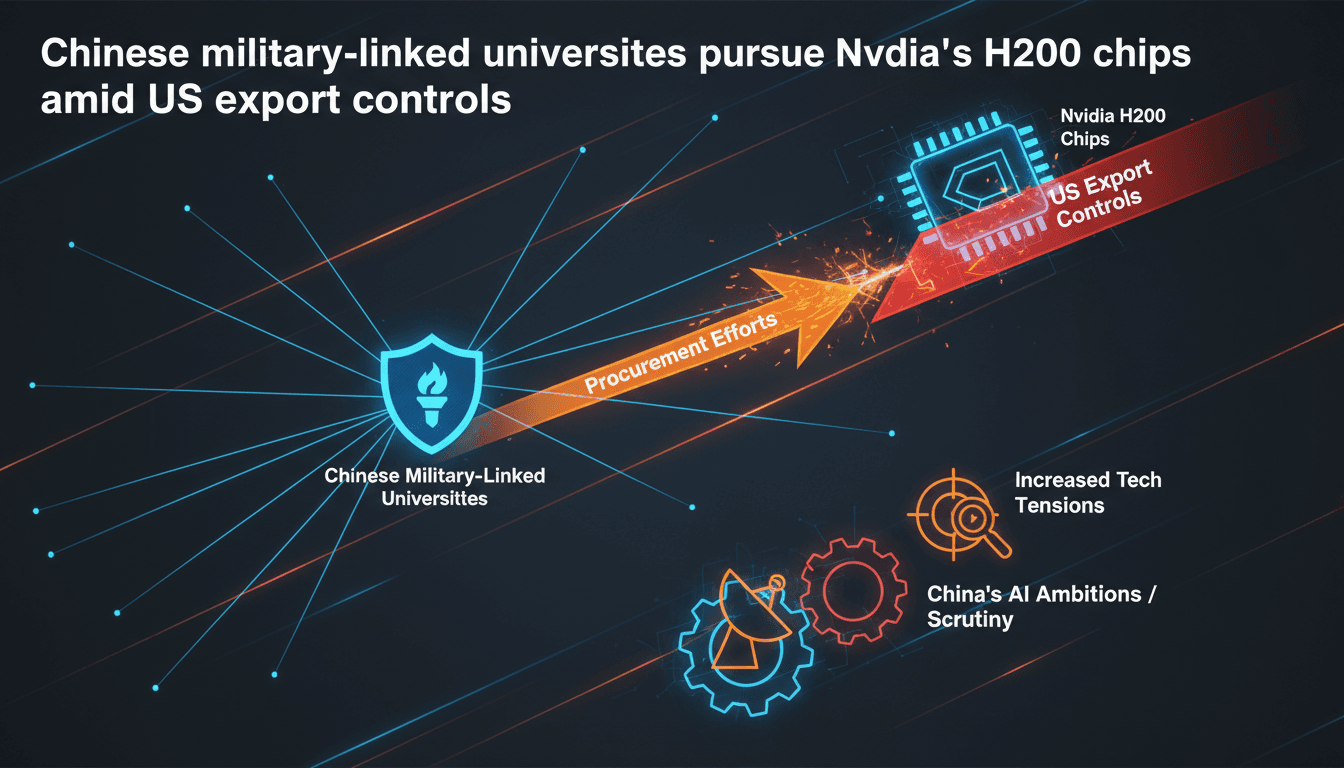
Here's what it means for you.
The pursuit of Nvidia's H200 chips by Chinese universities with military ties highlights the ongoing tensions between U.S. technology export controls and China's military ambitions in artificial intelligence. This situation could lead to increased scrutiny of China's military procurement practices and further complicate international relations. As demand for advanced AI technology grows, stakeholders must remain vigilant regarding the implications for national security and technological competition.
What happened
At least seven Chinese universities linked to the military are actively seeking access to Nvidia's H200 chips, the most advanced AI processors currently permitted for sale in China. Reports indicate that these institutions are engaged in ongoing procurement efforts despite U.S. export restrictions on technology. The military's interest in these chips raises concerns about their potential applications in military operations.
Chinese procurement documents reveal that military units have made repeated attempts to acquire Nvidia hardware, underscoring the urgency of their efforts. This situation reflects a broader trend of military-affiliated institutions in China striving to enhance their technological capabilities. The implications of these actions extend beyond academia, potentially affecting global technology dynamics.
The Context
The H200 chips represent the pinnacle of AI processing power available for sale in China, making them a coveted asset for military and research institutions alike. The involvement of at least seven universities with military ties emphasizes the extent of collaboration between China's academic sector and its military. This relationship raises significant concerns regarding the potential military applications of advanced AI technology.
As the U.S. continues to impose export controls on sensitive technologies, the situation highlights the challenges of regulating technology transfers in an increasingly interconnected world. The timing of these procurement efforts coincides with heightened geopolitical tensions, particularly regarding China's ambitions in AI development. Understanding this context is crucial for assessing the future landscape of technology exports and international relations.
Takeaway
The ongoing demand for advanced AI technology by military-affiliated institutions in China could lead to increased tensions regarding technology exports. Stakeholders should closely monitor potential changes in U.S. export policies related to AI technology, as these could significantly impact the dynamics of international trade and security. Additionally, further investigations into military procurement practices in China may reveal deeper insights into the implications of these developments.
As the interplay between U.S. export controls and China's military interests continues to evolve, it will remain a critical issue influencing future policy decisions and international relations. The global community must remain vigilant in addressing the challenges posed by these technological advancements.
Tech news, hardware, and AI tools coverage.
"PC/tech site increasingly covering AI hardware and apps."
— A47 Editor
China's military obtained Nvidia chips despite US export controls, report claims
A report by The New York Times indicates that the People's Liberation Army (PLA) of China has made over 500 attempts to procure Nvidia chips, including the A100 and A800 models, since 2019, despite U.S. export restrictions on advanced technology. Thi...
Curated tech headlines including AI stories.
"Influential aggregator surfacing the day’s top tech/AI links."
— A47 Editor
Chinese procurement records: at least seven Chinese universities that support China's military and defense industry are seeking access to Nvidia's H200 chips (Bloomberg)
At least seven Chinese universities with connections to the military are actively seeking access to Nvidia Corp.'s H200 AI chips, which are the most advanced processors allowed for sale in China by the U.S. This procurement effort underscores the ong...
Technology business and AI-related headlines.
"Data-driven tech newsroom with global scope."
— A47 Editor
Nvidia Chips Sought by Chinese Labs With Military Ties
At least seven Chinese universities with military ties are seeking access to Nvidia Corp's H200 AI chips, the most advanced processors allowed for sale in China by the U.S. This request underscores the ongoing interest in high-performance computing c...
Technology business news, market impacts, and innovation trends.
"Bloomberg is a premier financial and tech news provider, respected for its in-depth reporting and analytical rigor."
— A47 Editor
Nvidia Chips Sought by Chinese Labs With Military Ties
At least seven Chinese universities with military ties are seeking access to Nvidia Corp's H200 AI chips, the most advanced processors allowed for sale in China by the U.S. This request underscores the ongoing interest in high-performance computing c...