
AI Companies Acquire and Destroy Rare Books for Language Model Training
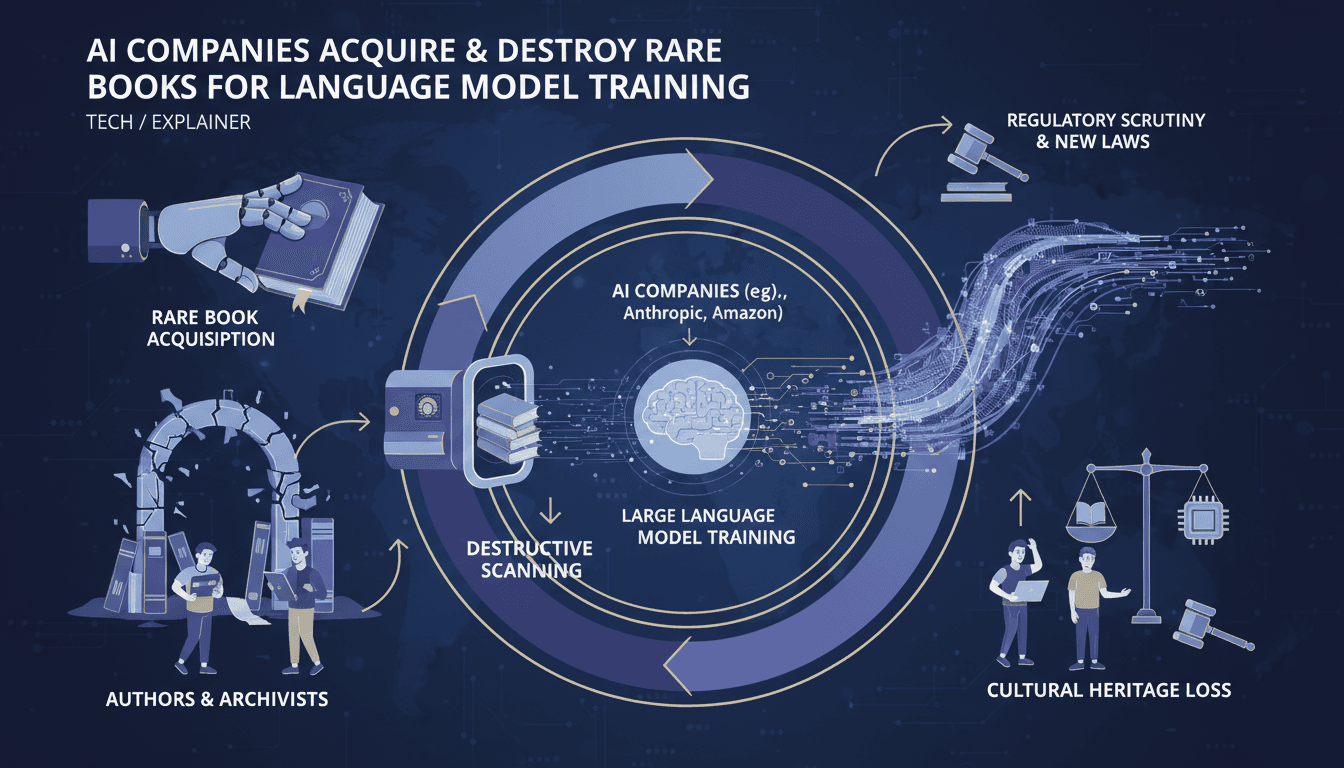
Here's what it means for you.
If you value cultural heritage and the preservation of literature, this trend could reshape how you view the intersection of technology and intellectual property.
Why it matters
This practice raises significant ethical questions about the preservation of cultural artifacts in the face of technological advancement.
What happened (in 30 seconds)
- AI developers like Anthropic and Amazon are purchasing and destructively scanning rare and antique books for training data.
- Internal documents revealed plans to scan up to 2 million books, prompting backlash from authors and bibliophiles.
- Legal rulings have upheld this practice as fair use, complicating the conversation around copyright and cultural preservation.
The context you actually need
- Initial reliance on digital sources led to extensive copyright litigation, pushing AI developers to acquire physical books for legal ownership.
- The first-sale doctrine allows these companies to exploit ownership rights, accessing out-of-print texts without infringing on copyright.
- Public backlash has emerged from authors and historians, who argue that this practice threatens cultural heritage and the integrity of literary works.
What's really happening
The acquisition and destruction of physical books by AI companies is a calculated response to the challenges posed by copyright law and the need for high-quality training data. Initially, AI developers relied heavily on digital corpora and shadow libraries, but faced significant legal hurdles due to copyright infringement claims. This led to a strategic pivot towards physical books, which can be legally owned and scanned under the first-sale doctrine.
Anthropic's "Project Panama" exemplifies this shift, with plans to destructively scan between 500,000 and 2 million books within a six-month timeframe. This initiative aims to create a robust dataset of high-quality long-form narrative data, which is often lacking in web-scale sources. The focus on rare and antique books not only provides access to unique content but also circumvents the legal complexities associated with digital sources.
The operational mechanics involve purchasing bulk quantities of books, often through intermediaries, and transporting them to specialized scanning facilities. Here, employees remove bindings and scan the contents at high speed, subsequently disposing of the originals. This process has been documented through investigative reporting, revealing a systematic approach to acquiring and destroying literary works.
The implications of this practice extend beyond the immediate legal framework. Authors, archivists, and bibliophiles have expressed deep concern over the loss of cultural heritage, arguing that the destruction of these books undermines the very foundation of literary history. Booksellers have reported increased scrutiny of transactions involving rare titles, as they resist selling to suspected AI intermediaries. This has led to a market shift where preservation alternatives are being sought, highlighting a growing awareness of the need to protect cultural artifacts.
Despite the backlash, courts have upheld the practice as transformative fair use for internal training, complicating the narrative around copyright and cultural preservation. As AI continues to evolve, the tension between technological advancement and the preservation of cultural heritage will likely intensify, raising critical questions about the future of literature and intellectual property.
Who feels it first (and how)
- Authors: Concerned about the loss of their works and the implications for copyright.
- Archivists: Alarmed by the destruction of cultural artifacts and the potential loss of historical context.
- Bibliophiles: Frustrated by the diminishing availability of rare books and the impact on literary culture.
- Booksellers: Facing increased scrutiny and market shifts as they navigate sales to AI companies.
- Legal professionals: Engaged in ongoing discussions about copyright law and fair use implications.
What to watch next
- Legal challenges: Monitor ongoing court cases that may redefine fair use and copyright in the context of AI training.
- Market resistance: Watch for shifts in the rare book market as sellers adapt to increased scrutiny and potential boycotts against AI companies.
- Cultural preservation initiatives: Look for emerging movements aimed at protecting literary heritage and advocating for alternative preservation methods.
AI companies are acquiring and destructively scanning physical books for training data.
Increased legal scrutiny and public backlash will continue to shape the narrative around this practice.
The long-term impact on the availability of rare books and cultural heritage preservation remains uncertain.
Frequently Asked Questions
- Why it matters?
- This practice raises significant ethical questions about the preservation of cultural artifacts in the face of technological advancement.
- What happened (in 30 seconds)?
- AI developers like Anthropic and Amazon are purchasing and destructively scanning rare and antique books for training data. Internal documents revealed plans to scan up to 2 million books, prompting backlash from authors and bibliophiles. Legal rulings have upheld this practice as fair use, complicating the conversation around copyright and cultural preservation.
- What's really happening?
- The acquisition and destruction of physical books by AI companies is a calculated response to the challenges posed by copyright law and the need for high-quality training data. Initially, AI developers relied heavily on digital corpora and shadow libraries, but faced significant legal hurdles due to copyright infringement claims. This led to a strategic pivot towards physical books, which can be legally owned and scanned under the first-sale doctrine. Anthropic's "Project Panama" exemplifies t
- Who feels it first (and how)?
- Authors: Concerned about the loss of their works and the implications for copyright. Archivists: Alarmed by the destruction of cultural artifacts and the potential loss of historical context. Bibliophiles: Frustrated by the diminishing availability of rare books and the impact on literary culture. Booksellers: Facing increased scrutiny and market shifts as they navigate sales to AI companies. Legal professionals: Engaged in ongoing discussions about copyright law and fair use implication
- What to watch next?
- Legal challenges: Monitor ongoing court cases that may redefine fair use and copyright in the context of AI training. Market resistance: Watch for shifts in the rare book market as sellers adapt to increased scrutiny and potential boycotts against AI companies. Cultural preservation initiatives: Look for emerging movements aimed at protecting literary heritage and advocating for alternative preservation methods.
Business, investment, entrepreneurship, leadership, and innovation.
"Forbes is known for its coverage of business leaders, market trends, and entrepreneurial ventures with a pro-business editorial stance."
— A47 Editor
AI Companies Are Buying—And Destroying—Antique Books. Here’s Why.
AI companies are acquiring millions of antique books to scan them for training AI models, leading to the destruction of these physical texts once they are no longer needed. This practice raises concerns about the preservation of cultural heritage and...
Future-focused tech headlines including AI breakthroughs.
"Consumer-friendly future-tech site with frequent AI coverage."
— A47 Editor
Amazon Caught Destroying Rare Books to Train AI
Amazon has been accused of purchasing large quantities of rare books, scanning them for artificial intelligence training, and subsequently destroying these texts. An investigation revealed that a tracked shipment from Biblio ended at an Amazon facili...
Tech startup news, programming trends, and discussions shared by the developer community.
"Hacker News is a community-driven source highlighting influential tech discussions, startup launches, and programming insights."
— A47 Editor
Amazon, which started off selling books, is destroying rare texts to train AI
Amazon, originally a bookseller, is reportedly destroying rare texts to train its artificial intelligence systems, raising ethical concerns about the preservation of cultural heritage. This practice has sparked criticism from various stakeholders, in...
Startup news with frequent AI coverage.
"Covers launches, funding, and product updates in AI."
— A47 Editor
Amazon, which started off selling books, is destroying rare texts to train AI
Amazon, originally a bookseller, is reportedly destroying rare texts to train its artificial intelligence systems, raising ethical concerns about the preservation of cultural heritage. This practice has sparked criticism from various stakeholders, in...
Curated tech headlines including AI stories.
"Influential aggregator surfacing the day’s top tech/AI links."
— A47 Editor
Investigation: Amazon is buying huge quantities of rare books, scanning them for AI, and destroying them; a tracked Biblio order went to its Las Vegas facility (Emanuel Maiberg/404 Media)
An investigation by 404 Media revealed that Amazon is purchasing large quantities of rare books, scanning them for artificial intelligence training, and subsequently destroying them. A tracked shipment from Biblio ended at an Amazon facility in Las V...