OpenAI Launches ChatGPT for Teens with Enhanced Safety Features
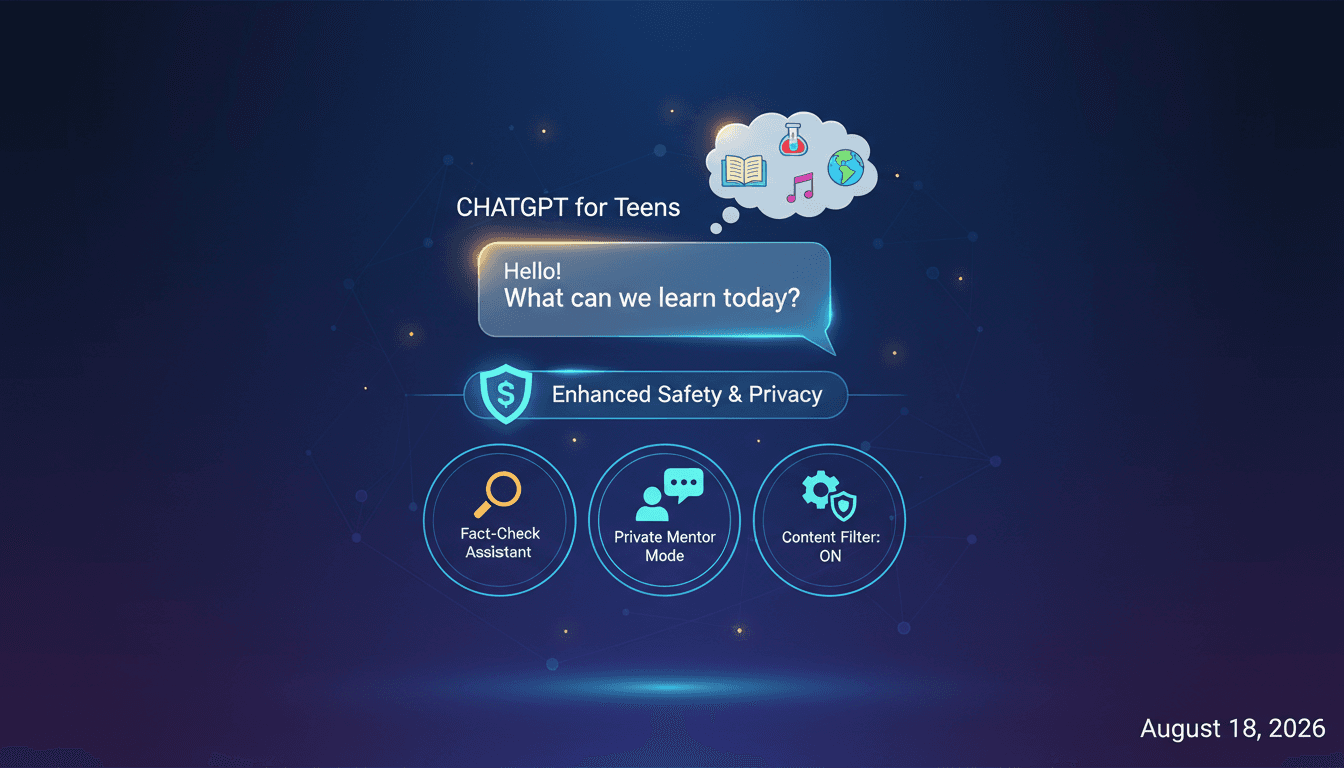
Here's what it means for you.
As a parent or guardian, understanding the implications of AI tools like ChatGPT for your teen is crucial for navigating their digital interactions safely.
Why it matters
The launch of ChatGPT for Teens reflects a growing recognition of the need for age-appropriate digital tools amid rising concerns about adolescent mental health.
What happened (in 30 seconds)
- OpenAI launched ChatGPT for Teens on August 18, 2026, specifically designed for users aged 13 to 17.
- Stricter content filters were implemented to prevent exposure to high-risk topics such as self-harm, suicide, and academic cheating.
- Parental controls are available, allowing guardians to set usage limits and receive safety notifications.
The context you actually need
- Adolescent engagement with AI has surged, with over 70% of U.S. teens using chatbots for companionship and educational support.
- Previous incidents involving harmful content from AI chatbots led to lawsuits and regulatory scrutiny, highlighting the need for enhanced safety measures.
- The mental health landscape for teens is increasingly concerning, with documented risks associated with emotional dependency on digital tools.
What's really happening
On August 18, 2026, OpenAI introduced ChatGPT for Teens, a tailored version of its popular chatbot aimed at users aged 13 to 17. This initiative comes in response to the significant rise in adolescent usage of generative AI tools, which has been documented to exceed 70% among U.S. teenagers. The company recognized that while these tools can provide educational support and companionship, they also pose risks, particularly regarding mental health and academic integrity.
The new version of ChatGPT incorporates stricter content filters designed to block discussions around self-harm, suicide, romantic or sexual topics, and academic cheating. This is a direct response to earlier incidents where the chatbot provided harmful advice, prompting legal challenges and regulatory scrutiny. By implementing these filters, OpenAI aims to create a safer environment for teens, addressing concerns from parents and educators alike.
The system employs a query-based age estimation method to automatically route minors to the protected experience without requiring identity verification. This approach allows for a more seamless user experience while maintaining safety protocols. Additionally, parental controls are available, enabling guardians to set time limits and receive notifications about their child's usage, further enhancing the protective measures in place.
Educational features within ChatGPT for Teens emphasize guided learning rather than rote answers, encouraging critical thinking and responsible use of AI. This shift reflects a broader industry trend towards prioritizing user safety and mental well-being, particularly for vulnerable populations like adolescents.
As the rollout progresses, OpenAI's initiative is likely to influence how other tech companies approach AI safety for younger users. The focus on mental health and developmental risks associated with AI tools is becoming increasingly relevant, prompting a reevaluation of existing products and services in the market.
Who feels it first (and how)
- Parents and guardians: They will need to navigate new parental controls and understand the implications of AI on their children's mental health.
- Educators: Teachers may see changes in how students engage with AI for academic purposes, impacting classroom dynamics.
- Mental health professionals: Increased awareness of AI's role in adolescent mental health may lead to new discussions and strategies in therapy and counseling.
What to watch next
- User engagement metrics: Monitoring how teens interact with ChatGPT for Teens will provide insights into its effectiveness and safety.
- Regulatory responses: Watch for potential regulations or guidelines from governments regarding AI usage among minors, which could shape future developments.
- Competitor adaptations: Other AI companies may respond to OpenAI's initiative by enhancing their own safety measures, impacting the broader market landscape.
OpenAI has launched ChatGPT for Teens with enhanced safety features.
Other tech companies will follow suit, implementing similar safety measures for their products aimed at adolescents.
The long-term impact of these tools on adolescent mental health and academic integrity remains to be fully understood.
Frequently Asked Questions
- Why it matters?
- The launch of ChatGPT for Teens reflects a growing recognition of the need for age-appropriate digital tools amid rising concerns about adolescent mental health.
- What happened (in 30 seconds)?
- OpenAI launched ChatGPT for Teens on August 18, 2026, specifically designed for users aged 13 to 17. Stricter content filters were implemented to prevent exposure to high-risk topics such as self-harm, suicide, and academic cheating. Parental controls are available, allowing guardians to set usage limits and receive safety notifications.
- What's really happening?
- On August 18, 2026, OpenAI introduced ChatGPT for Teens, a tailored version of its popular chatbot aimed at users aged 13 to 17. This initiative comes in response to the significant rise in adolescent usage of generative AI tools, which has been documented to exceed 70% among U.S. teenagers. The company recognized that while these tools can provide educational support and companionship, they also pose risks, particularly regarding mental health and academic integrity. The new version of ChatGPT
- Who feels it first (and how)?
- Parents and guardians: They will need to navigate new parental controls and understand the implications of AI on their children's mental health. Educators: Teachers may see changes in how students engage with AI for academic purposes, impacting classroom dynamics. Mental health professionals: Increased awareness of AI's role in adolescent mental health may lead to new discussions and strategies in therapy and counseling.
- What to watch next?
- User engagement metrics: Monitoring how teens interact with ChatGPT for Teens will provide insights into its effectiveness and safety. Regulatory responses: Watch for potential regulations or guidelines from governments regarding AI usage among minors, which could shape future developments. Competitor adaptations: Other AI companies may respond to OpenAI's initiative by enhancing their own safety measures, impacting the broader market landscape.
Arabic-language coverage of international news and geopolitics.
"RT Arabic is a Russian state-funded outlet often criticized for promoting Kremlin-aligned narratives."
— A47 Editor
OpenAI تطلق نسخة ChatGPT للمراهقين بضوابط أمان مشددة
OpenAI has launched a new version of its ChatGPT chatbot specifically designed for teenagers aged 13 to 17, implementing stringent safety measures to create a secure environment for younger users. This initiative marks a significant step in addressin...
Pan-Arab news coverage spanning politics, business, sports, and regional affairs.
"Asharq Al-Awsat reflects a broad Arab editorial perspective with strong attention to regional geopolitics."
— A47 Editor
«أوبن إيه آي» تطلق نسخة مخصصة للمراهقين من «تشات جي بي تي»
OpenAI launched a new service called 'ChatGPT for Teens' on Tuesday, specifically designed for minors. This version includes parental control tools and enhanced security features to ensure a safer user experience for younger audiences.
Arabic tech news covering startups, apps, AI, and gadgets.
"AITnews is a well-known Arabic technology outlet covering regional tech developments."
— A47 Editor
مزايا أمنية أكبر.. OpenAI تطلق وضعًا مخصصًا للمراهقين في ChatGPT
OpenAI has launched a dedicated teen mode within ChatGPT, enhancing existing safety measures for younger users while introducing new security features. This initiative aims to create a safer online environment for teenagers engaging with AI technolog...