
Slack Launches Code Feature for AI Collaboration in Software Development
Why it matters
Slack's integration of AI coding agents into collaborative channels signals a shift in software development practices, enhancing oversight and team engagement.
What happened (in 30 seconds)
- Slack launched the Slack Code feature on August 20, 2026, enabling real-time collaboration with AI coding agents.
- Dedicated channels are automatically created when agents are mentioned, allowing for visibility into code changes and team feedback.
- The feature supports both technical and non-technical users, broadening participation in coding tasks.
The context you actually need
- Prior to this launch, AI coding agents operated in isolation, limiting team visibility and increasing risks of unvetted code entering production.
- Slack's previous integrations with AI tools like Anthropic’s Claude Tag laid the groundwork for this collaborative approach.
- The rise of agentic AI capabilities has prompted platforms to develop oversight mechanisms as enterprise adoption of AI tools accelerates.
What's really happening
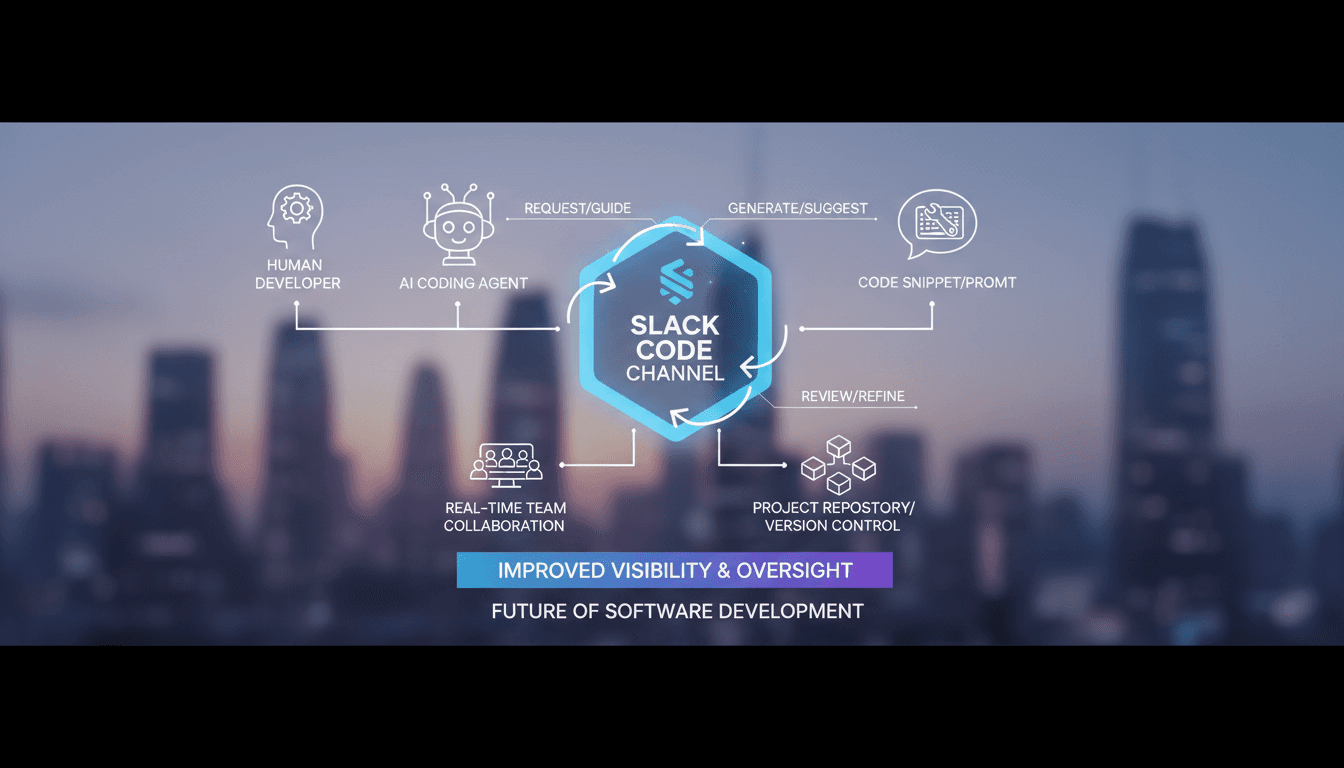
On August 20, 2026, Slack introduced the Slack Code feature, a significant advancement in how teams can collaborate on software development. This feature allows users to mention supported AI coding agents within conversations, which automatically generates dedicated project channels. These channels serve as collaborative spaces where team members can view code diffs, planning documents, live HTML previews, and session artifacts. This setup not only facilitates real-time feedback but also enables team members to guide AI agents and approve outputs, effectively merging human oversight with AI efficiency.
The automatic archiving of channels upon task completion ensures that all discussions and code changes are preserved in a searchable format, enhancing accountability and traceability. This is particularly crucial in environments where code quality and oversight are paramount. The integration of existing Slack permissions means that agents inherit the same access controls as human users, ensuring that sensitive actions require human approval, thereby mitigating risks associated with unvetted code deployment.
The launch included seamless integrations with four founding partner agents: Claude Code, Devin, GitHub Copilot, and Vercel. OpenAI's ChatGPT integration is expected to follow, further expanding the capabilities of the Slack Code feature. This initiative not only addresses the visibility and quality control challenges faced by teams using AI coding agents but also opens the door for non-technical users to engage in coding-related tasks, such as bug reporting and project management.
As Slack positions itself beyond traditional messaging into the realm of collaborative AI workspaces, analysts have noted potential resistance from developers who may be wary of workflow changes. However, the benefits of reduced handoffs and enhanced auditability could outweigh these concerns, making it easier for teams to manage complex coding projects collectively.
Who feels it first (and how)
- Software Developers: They will experience a shift in how they collaborate with AI tools, potentially reducing manual oversight.
- Project Managers: Enhanced visibility into coding processes allows for better tracking of project progress and quality control.
- Non-technical Team Members: They can now participate in coding discussions, providing feedback and reporting issues without needing deep technical knowledge.
- Organizations Adopting AI: Companies leveraging AI tools will need to adapt their workflows to integrate this new collaborative approach.
What to watch next
- Adoption Rates: Monitor how quickly teams begin using the Slack Code feature and the impact on coding efficiency.
- User Feedback: Pay attention to how developers and non-technical users respond to the new workflows and whether resistance emerges.
- Integration Expansion: Watch for additional AI tool integrations, particularly from OpenAI, and how they enhance Slack's capabilities.
Slack Code is now available on all Slack plans with supported agent integrations.
Increased collaboration among teams as non-technical users engage more in coding processes.
The long-term impact on developer workflows and potential resistance to adopting new practices.
Frequently Asked Questions
- Why it matters?
- Slack's integration of AI coding agents into collaborative channels signals a shift in software development practices, enhancing oversight and team engagement.
- What happened (in 30 seconds)?
- Slack launched the Slack Code feature on August 20, 2026, enabling real-time collaboration with AI coding agents. Dedicated channels are automatically created when agents are mentioned, allowing for visibility into code changes and team feedback. The feature supports both technical and non-technical users, broadening participation in coding tasks.
- What's really happening?
- On August 20, 2026, Slack introduced the Slack Code feature, a significant advancement in how teams can collaborate on software development. This feature allows users to mention supported AI coding agents within conversations, which automatically generates dedicated project channels. These channels serve as collaborative spaces where team members can view code diffs, planning documents, live HTML previews, and session artifacts. This setup not only facilitates real-time feedback but also enables
- Who feels it first (and how)?
- Software Developers: They will experience a shift in how they collaborate with AI tools, potentially reducing manual oversight. Project Managers: Enhanced visibility into coding processes allows for better tracking of project progress and quality control. Non-technical Team Members: They can now participate in coding discussions, providing feedback and reporting issues without needing deep technical knowledge. Organizations Adopting AI: Companies leveraging AI tools will need to adapt their work
- What to watch next?
- Adoption Rates: Monitor how quickly teams begin using the Slack Code feature and the impact on coding efficiency. User Feedback: Pay attention to how developers and non-technical users respond to the new workflows and whether resistance emerges. Integration Expansion: Watch for additional AI tool integrations, particularly from OpenAI, and how they enhance Slack's capabilities.
News and guidance for IT pros on AI adoption.
"Enterprise-focused tips, explainers, and news for professionals."
— A47 Editor
Slack Code: AI Coding Agents Get Shared Channels for Review and Oversight
Slack has launched Slack Code, a feature that allows AI coding agents to operate within shared project channels, enabling teams to monitor, guide, and review software development in real-time. This innovation aims to enhance collaboration among devel...
AI news with an enterprise and cloud focus.
"Covers AI in the context of data infrastructure, cloud, and enterprise stacks."
— A47 Editor
Salesforce introduces Slack Code to bring agentic team coding into the open
Salesforce Inc. has launched Slack Code, a new feature that allows teams to collaborate on coding projects within Slack, integrating AI coding agents into group chats for enhanced visibility and interaction. This innovation aims to streamline the cod...
Curated insights and thought leadership in enterprise technology.
"Ciente.io delivers curated insights, thought leadership, and trends in B2B tech and innovation."
— A47 Editor
Slack Turns Group Chats into AI Software Factories with ‘Slack Code’
Slack has introduced 'Slack Code,' a feature that allows teams to create software directly within dedicated 'vibe coding' channels in their messaging platform, utilizing AI agents to streamline the development process. This innovation aims to enhance...
Biting coverage of AI/ML software and vendors.
"Known for skeptical, incisive reporting on enterprise tech."
— A47 Editor
Slack Code taps into collective vibe, puts AI agents into the group chat
Slack has introduced a new feature that allows developers to integrate AI agents into group chats, enhancing collaborative coding experiences. This innovation enables teams to invite AI bots into their discussions, streamlining workflows and improvin...