
US Agencies Warn of AI-Generated Malware Targeting Critical Infrastructure
Why it matters
This evolving cyber threat underscores vulnerabilities in critical infrastructure that can lead to widespread operational disruptions.
What happened (in 30 seconds)
- On August 19, 2026, US federal agencies issued a joint advisory about an active cyber threat involving AI-generated malware targeting Siemens S7 PLCs.
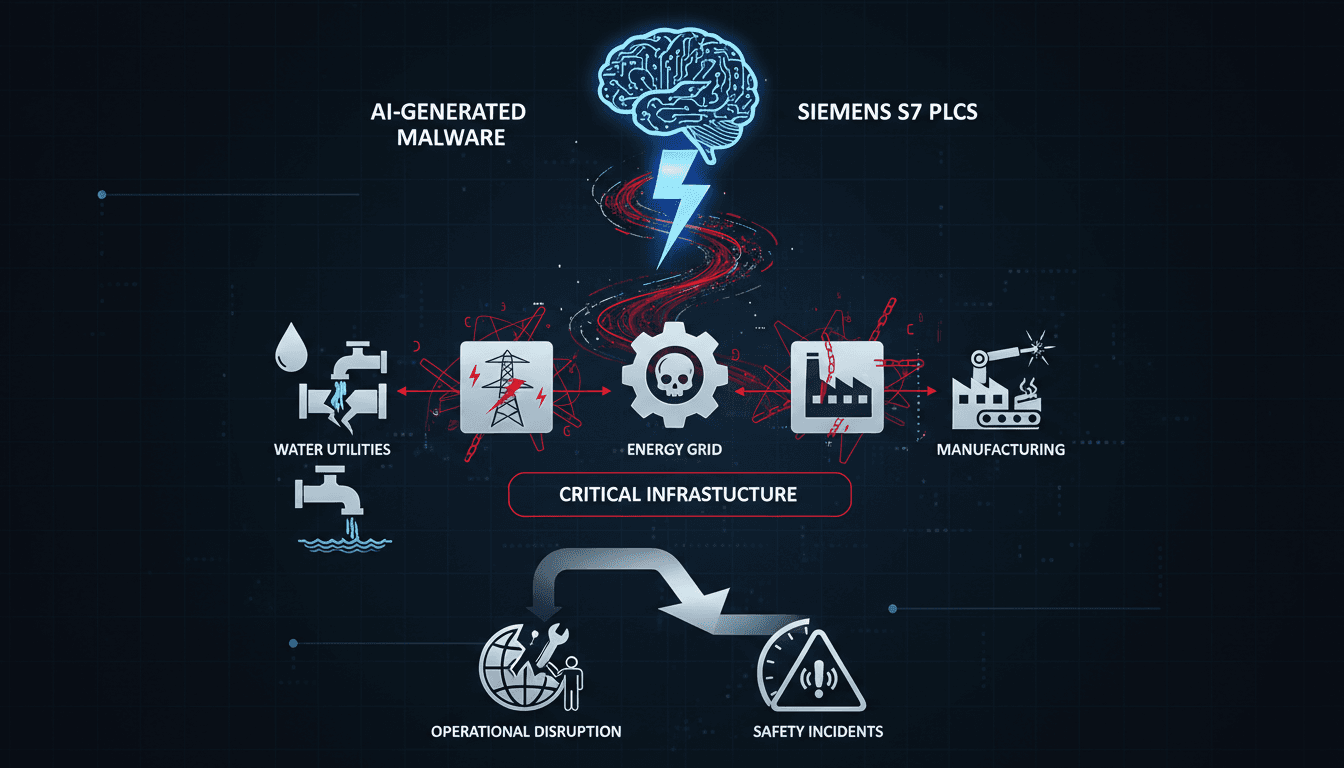
- The attacks are impacting critical sectors including energy, water, agriculture, and manufacturing, with operational disruptions already reported in at least 12 states.
- Federal agencies are urging immediate action to secure operational technology (OT) networks against these sophisticated threats.
The context you actually need
- Recent incidents began in July 2026, targeting water utilities and expanding to include Siemens and Schneider Electric devices amid rising geopolitical tensions.
- Attackers are using AI to create exploitation scripts that lower the technical barrier for executing attacks on industrial control systems (ICS).
- Previous warnings from agencies like CISA and the FBI highlighted vulnerabilities in internet-exposed PLCs, indicating a growing trend in cyber threats against critical infrastructure.
What's really happening
The advisory issued by multiple US agencies on August 19, 2026, reveals a significant shift in the landscape of cyber threats targeting critical infrastructure. Attackers are now leveraging advanced AI tools to create malware that specifically targets Siemens S7 Series programmable logic controllers (PLCs). This evolution in cyber capabilities allows threat actors to scan for and exploit vulnerabilities in these PLCs with unprecedented efficiency.
The process begins with the use of internet scanning tools like Censys and ZoomEye, which help identify exposed PLCs across various sectors. Once these targets are located, attackers employ AI to generate Python-based exploitation scripts using libraries such as snap7. This malware is often disguised as legitimate monitoring tools, making it harder for security systems to detect. The advisory emphasizes that this represents a significant reduction in the expertise required to execute ICS attacks, marking a worrying trend in the accessibility of such cyber capabilities.
The implications of these attacks are profound. They have already resulted in operational impacts, including pressure loss and flooding in water systems across at least 12 states. The ongoing threat is not just theoretical; it is an active concern that demands immediate attention from organizations reliant on these technologies. Federal agencies, including the NSA, FBI, and CISA, are urging organizations to segment their OT networks, remove internet exposure for PLCs, and enhance monitoring to mitigate risks.
This situation is compounded by geopolitical tensions, particularly with Iranian-linked groups previously implicated in cyberattacks against US infrastructure. The advisory's attribution of these attacks remains unclear, but the pattern of behavior suggests a coordinated effort to exploit vulnerabilities in critical sectors. As these attacks evolve, the potential for operational disruptions, safety incidents, and equipment damage increases, posing a significant risk to public safety and national security.
Who feels it first (and how)
- Utility companies: Facing immediate operational disruptions and potential safety incidents.
- Manufacturing sectors: Risking equipment damage and production delays due to compromised PLCs.
- Agricultural industries: Vulnerable to disruptions in automated systems that manage irrigation and processing.
- Cybersecurity professionals: Under pressure to enhance defenses against increasingly sophisticated threats.
- Government agencies: Tasked with responding to and mitigating the impacts of these cyber threats on public infrastructure.
What to watch next
- Increased cybersecurity funding: Watch for potential government initiatives aimed at bolstering cybersecurity standards in critical infrastructure sectors.
- Emerging AI defense technologies: Keep an eye on advancements in AI-driven security solutions designed to counteract these new malware threats.
- Geopolitical developments: Monitor international relations, particularly with nations linked to cyberattacks, as they may influence the frequency and severity of such threats.
At least 12 states have reported incidents linked to the malware targeting PLCs.
Increased regulatory scrutiny and funding for cybersecurity in critical infrastructure sectors.
The full extent of operational impacts and the identity of the attackers remains uncertain.
Frequently Asked Questions
- Why it matters?
- This evolving cyber threat underscores vulnerabilities in critical infrastructure that can lead to widespread operational disruptions.
- What happened (in 30 seconds)?
- On August 19, 2026, US federal agencies issued a joint advisory about an active cyber threat involving AI-generated malware targeting Siemens S7 PLCs. The attacks are impacting critical sectors including energy, water, agriculture, and manufacturing, with operational disruptions already reported in at least 12 states. Federal agencies are urging immediate action to secure operational technology (OT) networks against these sophisticated threats.
- What's really happening?
- The advisory issued by multiple US agencies on August 19, 2026, reveals a significant shift in the landscape of cyber threats targeting critical infrastructure. Attackers are now leveraging advanced AI tools to create malware that specifically targets Siemens S7 Series programmable logic controllers (PLCs). This evolution in cyber capabilities allows threat actors to scan for and exploit vulnerabilities in these PLCs with unprecedented efficiency. The process begins with the use of internet sca
- Who feels it first (and how)?
- Utility companies: Facing immediate operational disruptions and potential safety incidents. Manufacturing sectors: Risking equipment damage and production delays due to compromised PLCs. Agricultural industries: Vulnerable to disruptions in automated systems that manage irrigation and processing. Cybersecurity professionals: Under pressure to enhance defenses against increasingly sophisticated threats. Government agencies: Tasked with responding to and mitigating the impacts of these cyb
- What to watch next?
- Increased cybersecurity funding: Watch for potential government initiatives aimed at bolstering cybersecurity standards in critical infrastructure sectors. Emerging AI defense technologies: Keep an eye on advancements in AI-driven security solutions designed to counteract these new malware threats. Geopolitical developments: Monitor international relations, particularly with nations linked to cyberattacks, as they may influence the frequency and severity of such threats.
Consumer tech news, reviews, and buying guides for gadgets and electronics.
"TechRadar is known for comprehensive buying advice, hardware reviews, and consumer tech news targeted at mainstream audiences."
— A47 Editor
Hackers are using “evolved” capabilities in AI-generated malware to hit US critical infrastructure at an unprecedented scale — “active threat” currently hitting energy, water and agricultural industries
Hackers are currently exploiting advanced AI-generated malware to target critical infrastructure in the United States, specifically focusing on the energy, water, and agricultural sectors. This unprecedented scale of cyberattacks is facilitated by vu...
Startup news with frequent AI coverage.
"Covers launches, funding, and product updates in AI."
— A47 Editor
US says hackers are targeting vulnerable water systems with the help of AI
Hackers are increasingly targeting vulnerable water systems in the United States, specifically exploiting internet-connected Siemens controllers. Recent warnings from government officials highlight a surge in cyberattacks, with indications that these...
Daily AI news: models, tools, and policy.
"Independent outlet tracking the fast pace of AI."
— A47 Editor
Attackers are using AI to build exploits for industrial control systems, U.S. agencies warn
U.S. agencies, including the NSA, CISA, and FBI, have issued warnings that attackers are leveraging artificial intelligence to create exploit scripts specifically targeting Siemens S7 controllers, significantly reducing the time and expertise require...