
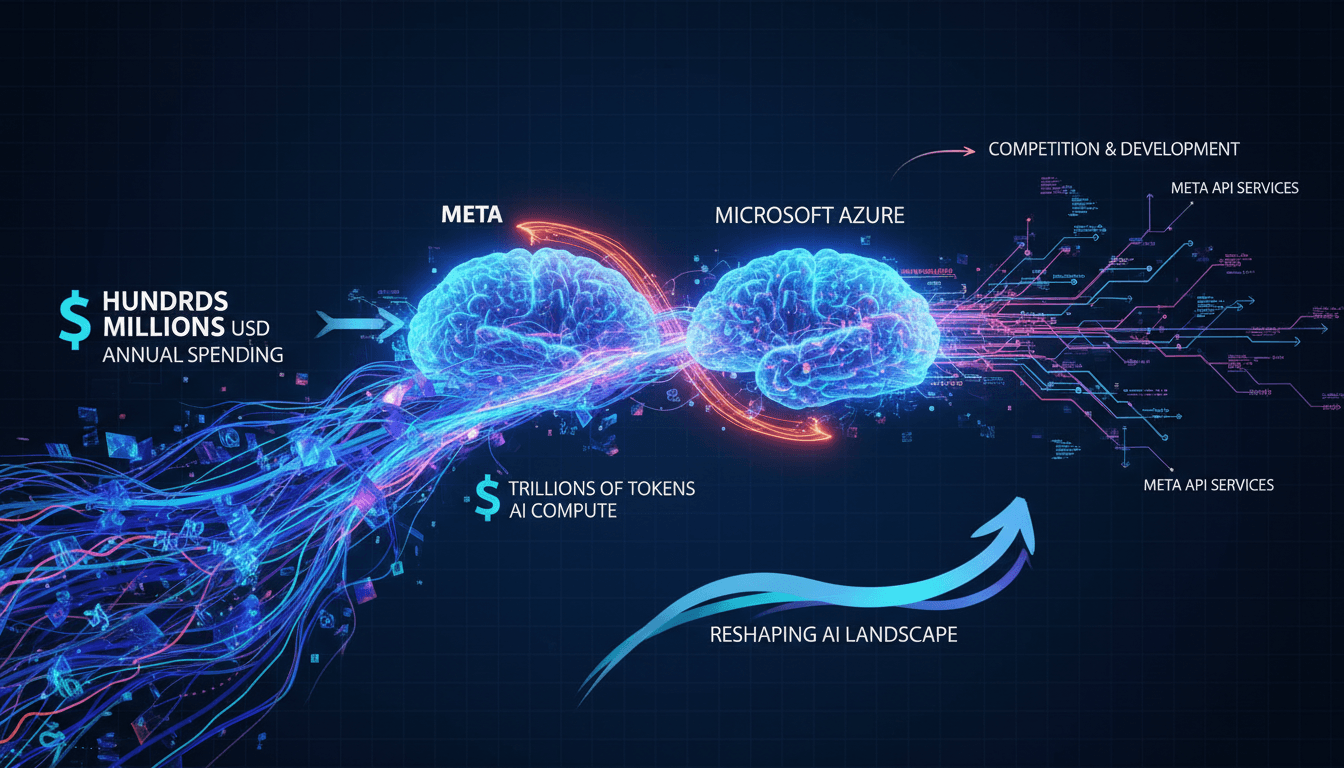
Meta becomes one of Microsoft's largest AI customers through significant Azure spending
Why it matters
Meta's significant investment in Microsoft's AI infrastructure signals a shift in how major tech companies leverage cloud services for competitive advantage.
What happened (in 30 seconds)
- Meta Platforms has become one of Microsoft’s largest AI customers, spending hundreds of millions annually on Azure services.
- The partnership supports Meta's AI model development, utilizing Microsoft’s Foundry marketplace and third-party tools like OpenAI models.
- Despite this reliance, Meta is also developing its own competing API service, indicating a dual strategy in AI capabilities.
The context you actually need
- Meta has invested over $100 billion annually in its own AI infrastructure, balancing internal development with external partnerships for efficiency.
- Microsoft's Foundry marketplace lists ByteDance as its largest customer, with Meta now ranking among the top, highlighting the competitive landscape in AI services.
- Approximately 70% of Microsoft’s AI revenue comes from OpenAI compute purchases, underscoring the importance of these partnerships in the broader AI ecosystem.
What's really happening
On August 20, 2026, Bloomberg reported that Meta Platforms has emerged as one of Microsoft’s largest AI customers, with an annual expenditure estimated in the hundreds of millions of dollars. This partnership allows Meta to access advanced AI models through Microsoft’s Azure cloud service and Foundry marketplace, consuming trillions of tokens weekly. This arrangement is crucial for Meta as it supports their internal model development and benchmarking efforts, particularly through the use of third-party tools, including those from OpenAI.
Meta's strategy reflects a dual approach: while it heavily invests in its own AI infrastructure, it also relies on external providers like Microsoft to enhance its capabilities and efficiency. This mirrors past behaviors, such as Meta's previous use of Microsoft’s Bing search services before transitioning to proprietary technology. The current partnership with Microsoft not only provides Meta with essential resources but also positions it competitively against other tech giants in the AI space.
Interestingly, while Meta is leveraging Microsoft’s resources, it is simultaneously developing its own competing API service. This indicates a strategic balancing act where Meta seeks to enhance its AI capabilities while also preparing to compete directly with the very services it is currently utilizing. The implications of this are significant, as it could lead to a more fragmented market where companies are both collaborators and competitors.
Despite the scale of this partnership, neither Meta nor Microsoft has confirmed specific details, leaving some ambiguity around the full extent of their collaboration. Market reactions have been minimal, with no significant share price movements reported for either company as of August 23, 2026. This suggests that while the partnership is noteworthy, it has not yet triggered widespread changes in market dynamics or investor sentiment.
Who feels it first (and how)
- Tech companies: Competitors may need to adjust their strategies in response to Meta's enhanced AI capabilities.
- AI developers: Increased demand for AI services could lead to more job opportunities and innovations in the sector.
- Investors: Stakeholders in both Meta and Microsoft may see shifts in stock performance as the partnership evolves.
What to watch next
- Future AI service procurement trends: Monitor how other companies respond to Meta's partnership with Microsoft and whether they seek similar arrangements.
- Regulatory responses: Keep an eye on any governmental or regulatory actions that may arise from this significant commercial relationship.
- Market share shifts: Watch for changes in market dynamics as Meta rolls out its competing API service and how it affects Microsoft’s AI revenue.
Meta is spending hundreds of millions annually on Microsoft’s AI services.
Other tech companies may pursue similar partnerships to enhance their AI capabilities.
The long-term impact of this partnership on market competition and pricing structures in AI services.
Frequently Asked Questions
- Why it matters?
- Meta's significant investment in Microsoft's AI infrastructure signals a shift in how major tech companies leverage cloud services for competitive advantage.
- What happened (in 30 seconds)?
- Meta Platforms has become one of Microsoft’s largest AI customers, spending hundreds of millions annually on Azure services. The partnership supports Meta's AI model development, utilizing Microsoft’s Foundry marketplace and third-party tools like OpenAI models. Despite this reliance, Meta is also developing its own competing API service, indicating a dual strategy in AI capabilities.
- What's really happening?
- On August 20, 2026, Bloomberg reported that Meta Platforms has emerged as one of Microsoft’s largest AI customers, with an annual expenditure estimated in the hundreds of millions of dollars. This partnership allows Meta to access advanced AI models through Microsoft’s Azure cloud service and Foundry marketplace, consuming trillions of tokens weekly. This arrangement is crucial for Meta as it supports their internal model development and benchmarking efforts, particularly through the use of thir
- Who feels it first (and how)?
- Tech companies: Competitors may need to adjust their strategies in response to Meta's enhanced AI capabilities. AI developers: Increased demand for AI services could lead to more job opportunities and innovations in the sector. Investors: Stakeholders in both Meta and Microsoft may see shifts in stock performance as the partnership evolves.
- What to watch next?
- Future AI service procurement trends: Monitor how other companies respond to Meta's partnership with Microsoft and whether they seek similar arrangements. Regulatory responses: Keep an eye on any governmental or regulatory actions that may arise from this significant commercial relationship. Market share shifts: Watch for changes in market dynamics as Meta rolls out its competing API service and how it affects Microsoft’s AI revenue.
Daily AI news: models, tools, and policy.
"Independent outlet tracking the fast pace of AI."
— A47 Editor
Meta spends hundreds of millions on Microsoft's AI services
Meta has emerged as one of Microsoft's largest AI customers, reportedly spending hundreds of millions annually on Microsoft's AI services, particularly Azure, to utilize trillions of AI tokens each week. This partnership highlights Meta's significant...
Curated tech headlines including AI stories.
"Influential aggregator surfacing the day’s top tech/AI links."
— A47 Editor
Source: Meta is spending hundreds of millions per year on Azure to consume trillions of AI tokens weekly, becoming one of Microsoft's largest AI customers (Brody Ford/Bloomberg)
Meta Platforms Inc. has emerged as one of Microsoft Corp.'s largest AI customers, reportedly spending hundreds of millions annually on Azure to utilize trillions of AI tokens each week. This partnership highlights the growing demand for AI technologi...
U.S. company headlines: M&A, product launches, legal/regulatory actions, and leadership moves.
"U.S.-centric corporate tape; good for tracking single-name catalysts."
— A47 Editor
Meta becomes major AI customer of Microsoft’s Azure cloud - report
Meta has reportedly become a significant customer of Microsoft's Azure cloud services, reflecting a strategic partnership aimed at enhancing Meta's artificial intelligence capabilities. This collaboration comes as both companies navigate the rapidly ...