
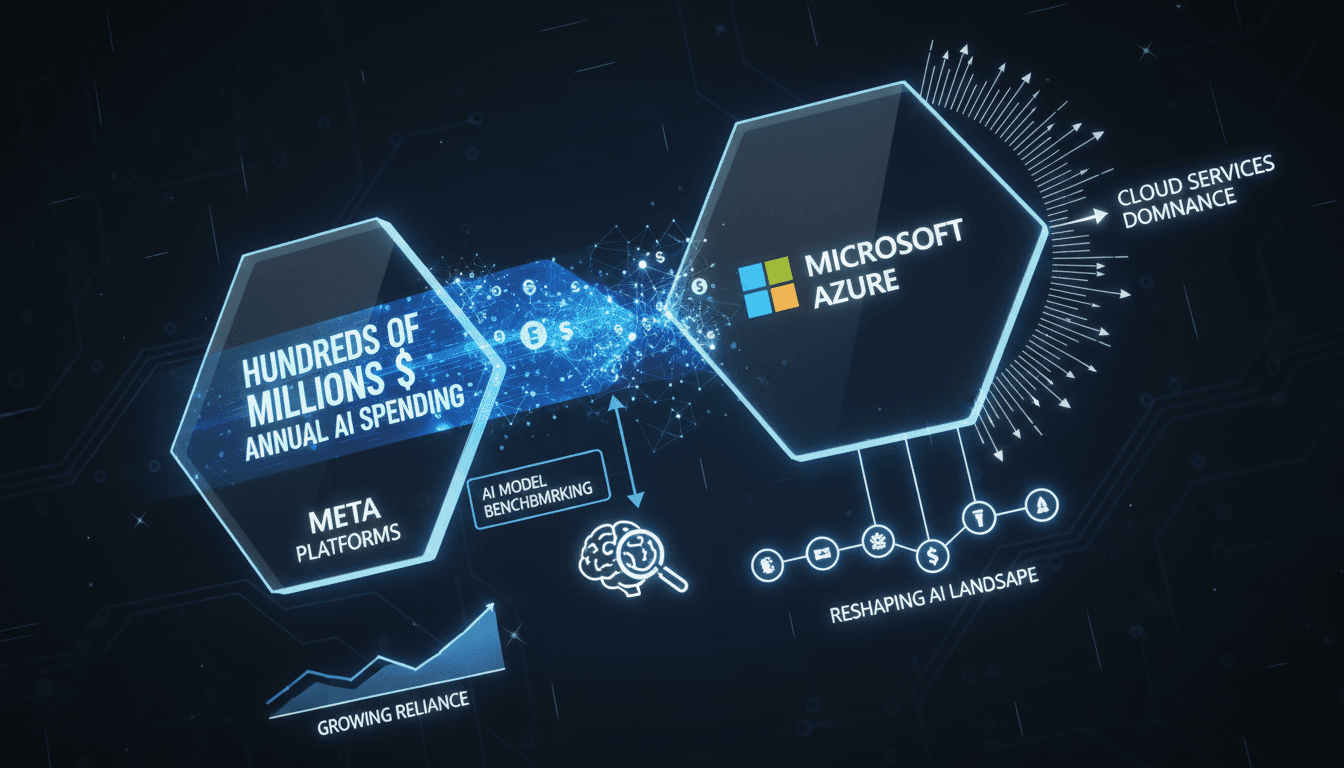
Meta Platforms becomes one of Microsoft's largest AI customers through significant Azure spending
Here's what it means for you.
If you're in tech, this shift signals a growing reliance on cloud services for AI development, impacting costs and competitive dynamics.
Why it matters
This partnership underscores the escalating demand for AI capabilities within the tech sector, influencing market strategies and investment decisions.
What happened (in 30 seconds)
- Meta Platforms Inc. has become one of Microsoft Corp.’s largest AI customers, spending hundreds of millions annually.
- Azure cloud services are being utilized to benchmark Meta's AI models against those from OpenAI, indicating a strategic reliance on external resources.
- Neither company has confirmed specific details about the spending or token consumption, reflecting a trend of secrecy in competitive tech partnerships.
The context you actually need
- Meta's investments in its own AI infrastructure are significant, yet it still relies on external providers for benchmarking and optimization.
- Microsoft’s Azure Foundry marketplace aggregates AI models from various providers, catering primarily to tech industry clients amid fierce competition in generative AI.
- The pattern mirrors Meta's previous shift from using Microsoft’s Bing search technology to developing its own, indicating a strategic pivot in resource allocation.
What's really happening
On August 20, 2026, Bloomberg reported that Meta Platforms Inc. has emerged as one of Microsoft Corp.’s largest AI customers, spending hundreds of millions of dollars annually on AI model access through Microsoft’s Azure cloud service and Foundry marketplace. This arrangement allows Meta to consume trillions of tokens weekly, facilitating internal benchmarking of its proprietary AI models against those offered by OpenAI. The significance of this partnership lies not only in the financial commitment but also in the strategic implications for both companies and the broader tech landscape.
Meta has been investing heavily in developing its own frontier AI models and data centers, yet it continues to rely on external providers like Microsoft for benchmarking and cost optimization. This dual approach highlights a critical tension in the tech industry: while companies strive for independence in AI development, they also recognize the value of leveraging established platforms to enhance their capabilities. Microsoft’s Azure Foundry marketplace plays a pivotal role in this dynamic, aggregating models from multiple providers and serving primarily tech industry clients. This positions Microsoft as a key player in the competitive landscape of generative AI, where access to diverse models can significantly impact development speed and quality.
The report from Bloomberg cited an anonymous source familiar with the arrangement, indicating a level of confidentiality that is becoming increasingly common in tech partnerships. Both Meta and Microsoft have declined to comment on the specifics of the spending or token consumption figures, which adds an air of intrigue to the arrangement. This secrecy may reflect competitive pressures within the industry, as companies seek to protect their strategic advantages in a rapidly evolving market.
Moreover, this partnership echoes Meta’s previous transition from Microsoft’s Bing search technology to its own proprietary solutions. It suggests a broader trend where tech companies are navigating the delicate balance between building in-house capabilities and leveraging external resources to accelerate their development processes. As AI continues to reshape the technology landscape, the implications of such partnerships will likely reverberate across various sectors, influencing investment strategies and operational decisions.
Who feels it first (and how)
- Tech companies: Increased competition for AI capabilities may drive up costs and influence strategic partnerships.
- AI developers: Demand for skilled professionals in AI will likely rise as companies invest more in cloud services.
- Investors: Shifts in spending patterns could impact stock valuations and investment strategies in tech firms.
What to watch next
- Market reactions: Monitor how competitors respond to Meta's spending and whether similar partnerships emerge.
- Investment trends: Watch for shifts in funding towards cloud services and AI development as companies adapt to new demands.
- Regulatory scrutiny: Keep an eye on potential regulatory responses to the growing concentration of AI capabilities among a few major players.
Meta is spending hundreds of millions on Microsoft’s AI services.
Other tech companies may follow suit, increasing their reliance on cloud services for AI development.
The long-term impact on competition and pricing in the AI market remains to be seen.
Frequently Asked Questions
- Why it matters?
- This partnership underscores the escalating demand for AI capabilities within the tech sector, influencing market strategies and investment decisions.
- What happened (in 30 seconds)?
- Meta Platforms Inc. has become one of Microsoft Corp.’s largest AI customers, spending hundreds of millions annually. Azure cloud services are being utilized to benchmark Meta's AI models against those from OpenAI, indicating a strategic reliance on external resources. Neither company has confirmed specific details about the spending or token consumption, reflecting a trend of secrecy in competitive tech partnerships.
- What's really happening?
- On August 20, 2026, Bloomberg reported that Meta Platforms Inc. has emerged as one of Microsoft Corp.’s largest AI customers, spending hundreds of millions of dollars annually on AI model access through Microsoft’s Azure cloud service and Foundry marketplace. This arrangement allows Meta to consume trillions of tokens weekly, facilitating internal benchmarking of its proprietary AI models against those offered by OpenAI. The significance of this partnership lies not only in the financial commitm
- Who feels it first (and how)?
- Tech companies: Increased competition for AI capabilities may drive up costs and influence strategic partnerships. AI developers: Demand for skilled professionals in AI will likely rise as companies invest more in cloud services. Investors: Shifts in spending patterns could impact stock valuations and investment strategies in tech firms.
- What to watch next?
- Market reactions: Monitor how competitors respond to Meta's spending and whether similar partnerships emerge. Investment trends: Watch for shifts in funding towards cloud services and AI development as companies adapt to new demands. Regulatory scrutiny: Keep an eye on potential regulatory responses to the growing concentration of AI capabilities among a few major players.
Daily AI news: models, tools, and policy.
"Independent outlet tracking the fast pace of AI."
— A47 Editor
Meta spends hundreds of millions on Microsoft's AI services
Meta has emerged as one of Microsoft's largest AI customers, reportedly spending hundreds of millions annually on Microsoft's AI services, particularly Azure, to utilize trillions of AI tokens each week. This partnership highlights Meta's significant...
Curated tech headlines including AI stories.
"Influential aggregator surfacing the day’s top tech/AI links."
— A47 Editor
Source: Meta is spending hundreds of millions per year on Azure to consume trillions of AI tokens weekly, becoming one of Microsoft's largest AI customers (Brody Ford/Bloomberg)
Meta Platforms Inc. has emerged as one of Microsoft Corp.'s largest AI customers, reportedly spending hundreds of millions annually on Azure to utilize trillions of AI tokens each week. This partnership highlights the growing demand for AI technologi...
U.S. company headlines: M&A, product launches, legal/regulatory actions, and leadership moves.
"U.S.-centric corporate tape; good for tracking single-name catalysts."
— A47 Editor
Meta becomes major AI customer of Microsoft’s Azure cloud - report
Meta has reportedly become a significant customer of Microsoft's Azure cloud services, reflecting a strategic partnership aimed at enhancing Meta's artificial intelligence capabilities. This collaboration comes as both companies navigate the rapidly ...