
Chinese Humanoid Robots Set New Athletic Records at World Humanoid Robot Games
Why it matters
The emergence of humanoid robots surpassing human capabilities signals a pivotal moment in the global technology race, particularly between China and the United States.
What happened (in 30 seconds)
- On August 22, 2026, Chinese humanoid robots set new records in sprinting and high jumping during the World Humanoid Robot Games in Beijing.
- X-Humanoid's robot completed a 100-meter sprint in 9.39 seconds, breaking Usain Bolt's human record of 9.58 seconds.
- The event featured over 2,000 robots from various manufacturers, showcasing China's advancements in robotics amid international competition.
The context you actually need
- China leads the world in humanoid robot production, intensifying competition with the U.S. amid recent trade restrictions.
- The World Humanoid Robot Games coincided with the 2026 World Robot Conference, highlighting the rapid evolution of robotics technology.
- Experts note that while humanoid robots are advancing, their mass deployment in everyday life remains years away.
What's really happening
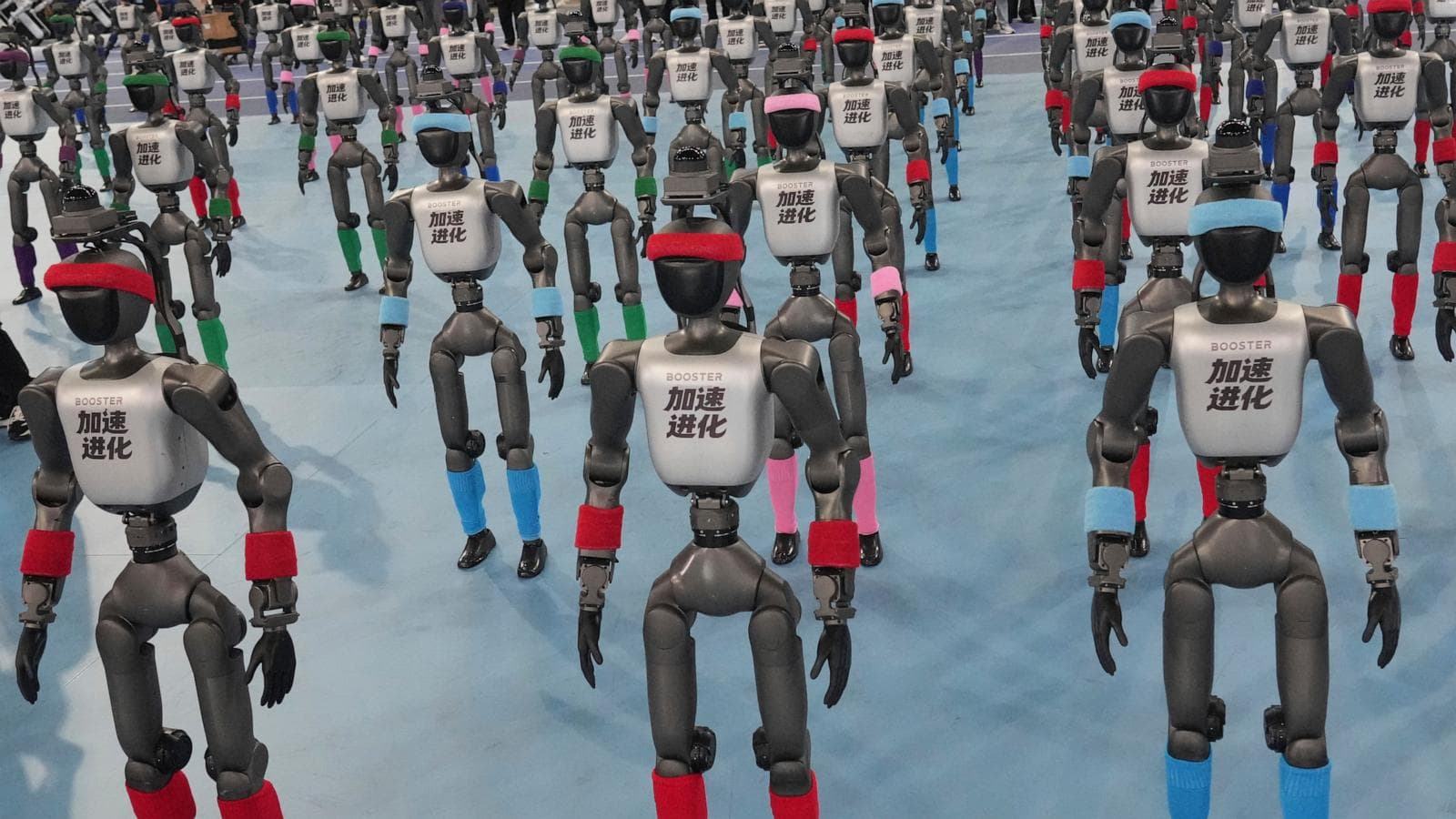
The World Humanoid Robot Games, held in Beijing, marked a significant milestone in the evolution of robotics, showcasing the capabilities of humanoid robots that now exceed human athletic performance. The event featured synchronized robot marches and competitions across 51 events, with participation from 16 countries. The standout performance came from a robot developed by Beijing-based X-Humanoid, which completed the 100-meter sprint in 9.39 seconds, surpassing Usain Bolt's long-standing record. This achievement not only demonstrates the technological advancements in robotics but also reflects China's strategic focus on leading the global robotics market.
China's dominance in humanoid robotics is underscored by its production capabilities, which account for a significant portion of the world's humanoid robots. This has intensified the technology race with the United States, particularly as the U.S. government has implemented measures to restrict imports of foreign-made humanoid robots, citing national security concerns. The Pentagon's inclusion of Chinese manufacturer Unitree on a list of companies with alleged military ties further illustrates the geopolitical implications of this technological competition.
The games also serve as a platform for showcasing innovations, with approximately 3,000 products presented at the concurrent World Robot Conference. While the advancements in humanoid robots are impressive, experts caution that these technologies remain primarily in the demonstration and research phases. The transition from research to real-world applications will take time, as the infrastructure and regulatory frameworks necessary for widespread deployment are still being developed.
The reactions from spectators in Beijing highlight a growing acceptance of AI advancements, moving from initial skepticism to recognition of the potential benefits of robotics. As humanoid robots continue to evolve, industries across various sectors may begin to explore their applications, from manufacturing to healthcare, potentially reshaping job markets and economic landscapes.
Who feels it first (and how)
- Tech companies: Increased investment in robotics and AI development.
- Manufacturers: Potential shifts in production processes and labor dynamics.
- Athletes and sports organizations: Reevaluation of human performance standards and competition.
- Consumers: Changes in product offerings and services as robotics become more integrated into daily life.
- Policymakers: Need for regulations addressing the implications of advanced robotics on employment and security.
What to watch next
- Adoption rates of humanoid robots: Monitor how quickly industries integrate humanoid robots into their operations, which could signal broader economic shifts.
- Regulatory developments: Watch for new policies from governments regarding the use and import of humanoid robots, particularly in the U.S. and China.
- Public perception: Track changes in consumer attitudes towards robotics and AI, as acceptance could drive market demand and innovation.
Chinese humanoid robots have surpassed human athletic records.
Increased investment in robotics technology and potential shifts in job markets.
The timeline for mass deployment of humanoid robots in everyday life.
Frequently Asked Questions
- Why it matters?
- The emergence of humanoid robots surpassing human capabilities signals a pivotal moment in the global technology race, particularly between China and the United States.
- What happened (in 30 seconds)?
- On August 22, 2026, Chinese humanoid robots set new records in sprinting and high jumping during the World Humanoid Robot Games in Beijing. X-Humanoid's robot completed a 100-meter sprint in 9.39 seconds, breaking Usain Bolt's human record of 9.58 seconds. The event featured over 2,000 robots from various manufacturers, showcasing China's advancements in robotics amid international competition.
- What's really happening?
- The World Humanoid Robot Games, held in Beijing, marked a significant milestone in the evolution of robotics, showcasing the capabilities of humanoid robots that now exceed human athletic performance. The event featured synchronized robot marches and competitions across 51 events, with participation from 16 countries. The standout performance came from a robot developed by Beijing-based X-Humanoid, which completed the 100-meter sprint in 9.39 seconds, surpassing Usain Bolt's long-standing record
- Who feels it first (and how)?
- Tech companies: Increased investment in robotics and AI development. Manufacturers: Potential shifts in production processes and labor dynamics. Athletes and sports organizations: Reevaluation of human performance standards and competition. Consumers: Changes in product offerings and services as robotics become more integrated into daily life. Policymakers: Need for regulations addressing the implications of advanced robotics on employment and security.
- What to watch next?
- Adoption rates of humanoid robots: Monitor how quickly industries integrate humanoid robots into their operations, which could signal broader economic shifts. Regulatory developments: Watch for new policies from governments regarding the use and import of humanoid robots, particularly in the U.S. and China. Public perception: Track changes in consumer attitudes towards robotics and AI, as acceptance could drive market demand and innovation.
Corporate leadership, finance, technology, and market trends.
"Fortune covers financial trends, leadership, and innovation with a pragmatic editorial approach."
— A47 Editor
At Olympics-like event, Chinese robots smash athletic records set by humans — including Usain Bolt’s 100-meter sprint time
At a recent event reminiscent of the Olympics, a humanoid robot from China completed a 100-meter sprint in 9.39 seconds, surpassing the previous human record of 9.58 seconds set by Jamaican athlete Usain Bolt in 2009. This achievement highlights sign...
Business and tech news excluding paywalled content.
"High-volume business/tech outlet with frequent AI coverage."
— A47 Editor
At China's robot Olympics, the finish line comes with a padded wall and a stretcher
The second World Humanoid Robot Games commenced in Beijing, showcasing advancements in humanoid robotics as China invests heavily in this sector. The event features a variety of robots competing in tasks that highlight their capabilities, reflecting ...
Technology and innovation coverage, including consumer tech and digital transformation stories.
"Emirates 24|7 technology coverage often highlights practical tech developments with relevance to Gulf readers and businesses."
— A47 Editor
Humanoid robot runs in 9.39s to beat men's 100m world record
A humanoid robot achieved a remarkable time of 9.39 seconds in the men's 100m race, surpassing Usain Bolt's previous world record of 9.58 seconds during the opening ceremony of the World Humanoid Robot Games in Beijing. This event featured 666 teams ...
Technology innovations, startups, and trends.
"ABC News delivers broad national coverage with a mainstream editorial stance, focusing on accessibility and balanced reporting."
— A47 Editor
Chinese humanoid robots smash human records in 100m sprint and high jump at Beijing robot games
Chinese humanoid robots have achieved remarkable feats by breaking records in the 100-meter sprint and high jump at the World Humanoid Robot Games held in Beijing, surpassing Usain Bolt's previous sprint record. This event showcases the advancements ...
A curated Gulf News feed featuring major stories across news, business, opinion, and lifestyle.
"Gulf News is a major UAE newspaper whose featured stories feed reflects a broad editorial mix shaped for a Gulf audience."
— A47 Editor
Chinese humanoid robots smash human records in 100m sprint and high jump at Beijing robot games
At the World Humanoid Robot Games in Beijing, Chinese humanoid robots achieved remarkable feats, breaking human records in both the 100m sprint and high jump. One robot completed the 100m race in an astonishing 9.39 seconds, surpassing Usain Bolt's p...
UAE-based newspaper covering Gulf politics, society, and international developments.
"Gulf News is one of the UAE’s most prominent English-language publications."
— A47 Editor
Chinese humanoid robots smash human records in 100m sprint and high jump at Beijing robot games
At the World Humanoid Robot Games in Beijing, Chinese humanoid robots achieved remarkable feats, breaking human records in both the 100m sprint and high jump. One robot completed the 100m race in an astonishing 9.39 seconds, surpassing Usain Bolt's p...
Conservative-leaning political and national coverage.
"The Washington Times is a conservative-leaning newspaper known for its political coverage and advocacy of right-of-center viewpoints."
— A47 Editor
Chinese humanoid robots smash human records in 100m sprint and high jump at Beijing robot games
Chinese humanoid robots achieved remarkable feats by breaking human records in the 100-meter sprint and high jump during the opening day of the World Humanoid Robot Games in Beijing, notably surpassing Usain Bolt's previous 100-meter world record.
Pan-Arab news coverage spanning politics, business, sports, and regional affairs.
"Asharq Al-Awsat reflects a broad Arab editorial perspective with strong attention to regional geopolitics."
— A47 Editor
روبوت صيني يحطم رقم بولت في سباق 100 متر
A Chinese humanoid robot has achieved a time faster than the world record set by Jamaican legend Usain Bolt in the 100-meter sprint. This remarkable feat highlights advancements in robotics and artificial intelligence, showcasing the potential of mac...
Comprehensive coverage of Middle Eastern and global issues.
"Al Jazeera is a prominent voice from the Global South, especially the Middle East, with an emphasis on underreported stories."
— A47 Editor
Usain Bolt’s 100m record broken at World Humanoid Robot Games
A Chinese robot has broken Usain Bolt's 100m record by achieving a peak speed of 14.5 metres per second during the World Humanoid Robot Games held in Beijing, according to state media reports.
Global news coverage with extensive reporting on Middle Eastern conflicts and geopolitics.
"Al Jazeera is a Qatar-based broadcaster known for wide regional coverage and alternative perspectives."
— A47 Editor
Usain Bolt’s 100m record broken at World Humanoid Robot Games
A Chinese robot has broken Usain Bolt's 100m record by achieving a peak speed of 14.5 metres per second during the World Humanoid Robot Games held in Beijing, according to state media reports.