
OpenAI's ChatGPT for Teachers Expands to 55 More US School Districts
Here's what it means for you.
The expansion of AI tools in education could reshape how teachers plan lessons and engage with students.
Why it matters
This initiative reflects a significant shift towards integrating AI in K-12 education, addressing both teacher needs and student engagement.
What happened (in 30 seconds)
- OpenAI announced the addition of 55 new school districts to its ChatGPT for Teachers program, doubling its reach.
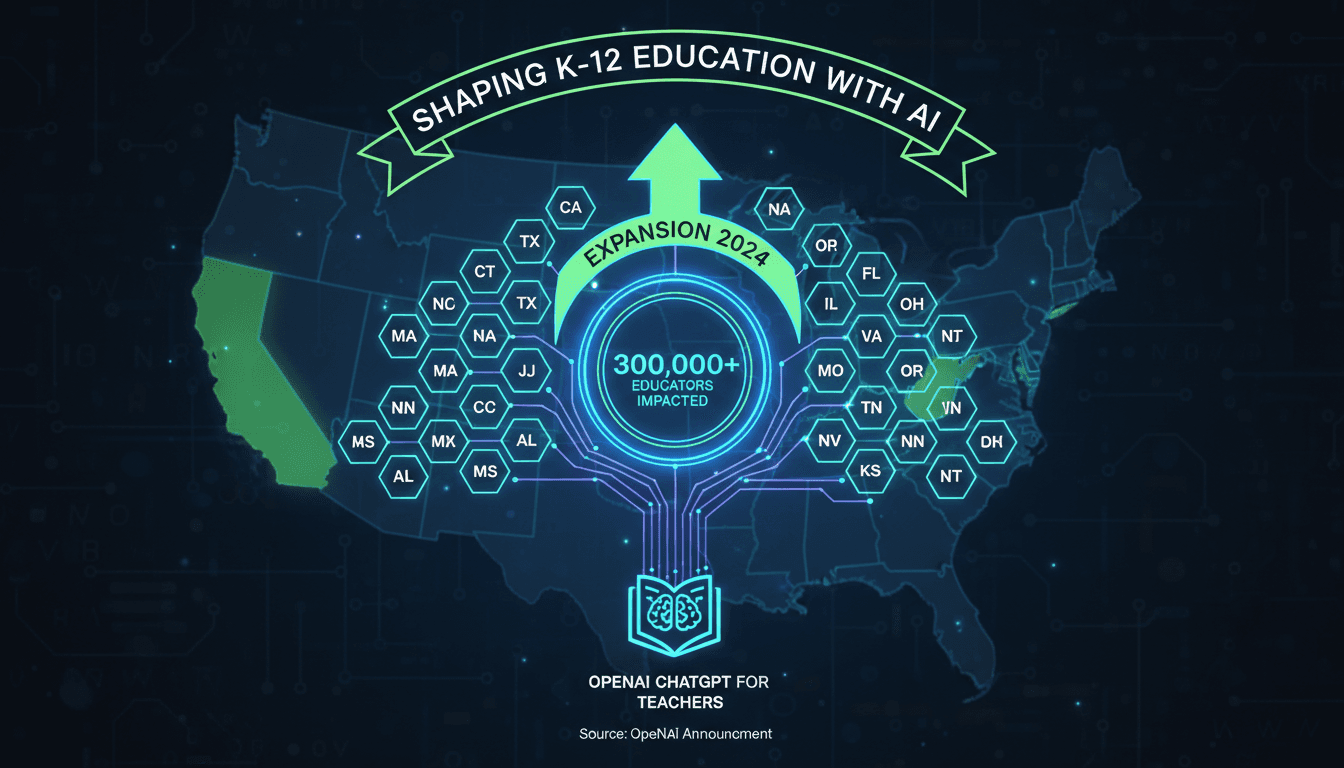
- Over 300,000 educators now have access to tailored AI tools, impacting approximately 2 million students across 30 states.
- The program emphasizes data privacy and human oversight, responding to parental concerns about AI in classrooms.
The context you actually need
- ChatGPT for Teachers was launched in November 2025 to provide secure AI access for educators amid rising student use of AI tools.
- Parental concerns about academic integrity have led to organized efforts against unchecked AI integration in classrooms.
- OpenAI's partnerships with the American Federation of Teachers (AFT) focus on training initiatives and data privacy in education.
What's really happening
On August 26, 2026, OpenAI's announcement of expanding its ChatGPT for Teachers program to 55 additional school districts marks a pivotal moment in the integration of AI in education. This expansion effectively doubles the program's reach, now serving over 300,000 educators and staff across more than 100 K-12 organizations in 30 states. The initiative is designed to provide free, adult-only access to tailored AI tools that assist with lesson planning and other professional tasks, ensuring that educators can leverage technology without compromising academic integrity.
The program's growth is particularly notable in large districts, including Houston ISD, one of the nation's largest. This expansion is not just about numbers; it reflects a broader trend of increasing reliance on AI tools in educational settings. As more educators gain access to these resources, the potential for enhanced teaching methodologies and improved student engagement rises significantly. The initiative also addresses critical concerns regarding data privacy, with OpenAI committing to non-training of models on user data and signing privacy agreements across 16 states.
The underlying mechanism driving this expansion is the recognition of the need for educators to adapt to a rapidly changing technological landscape. With over half of teenagers reportedly using AI chatbots for schoolwork, the demand for structured, responsible integration of these tools in classrooms has never been more pressing. OpenAI's collaboration with the AFT aims to train 400,000 educators over the next five years, emphasizing the importance of human oversight in AI-assisted tasks like curriculum development.
As AI continues to permeate educational environments, the focus remains on responsible oversight and the ethical use of technology. The absence of widespread governmental bans indicates a growing acceptance of AI in education, provided that proper guidelines and training are established. This shift not only enhances the teaching experience but also prepares students for a future where AI will play an integral role in various aspects of life.
Who feels it first (and how)
- Teachers: Gain access to AI tools that streamline lesson planning and administrative tasks.
- School Districts: Experience enhanced educational resources and support for educators.
- Students: Benefit indirectly from improved teaching methods and personalized learning experiences.
- Parents: May feel reassured by the emphasis on data privacy and responsible AI use in classrooms.
What to watch next
- Adoption rates: Monitor how quickly districts implement AI tools and the feedback from educators.
- Training initiatives: Watch for the effectiveness of the AFT's training programs and their impact on educator confidence in using AI.
- Policy developments: Keep an eye on state-level regulations regarding AI in education and how they evolve in response to this expansion.
Over 300,000 educators now have access to ChatGPT for Teachers.
Increased integration of AI tools in K-12 education will continue, with a focus on training and oversight.
The long-term impact on student learning outcomes and academic integrity remains to be fully assessed.
Frequently Asked Questions
- Why it matters?
- This initiative reflects a significant shift towards integrating AI in K-12 education, addressing both teacher needs and student engagement.
- What happened (in 30 seconds)?
- OpenAI announced the addition of 55 new school districts to its ChatGPT for Teachers program, doubling its reach. Over 300,000 educators now have access to tailored AI tools, impacting approximately 2 million students across 30 states. The program emphasizes data privacy and human oversight, responding to parental concerns about AI in classrooms.
- What's really happening?
- On August 26, 2026, OpenAI's announcement of expanding its ChatGPT for Teachers program to 55 additional school districts marks a pivotal moment in the integration of AI in education. This expansion effectively doubles the program's reach, now serving over 300,000 educators and staff across more than 100 K-12 organizations in 30 states. The initiative is designed to provide free, adult-only access to tailored AI tools that assist with lesson planning and other professional tasks, ensuring that e
- Who feels it first (and how)?
- Teachers: Gain access to AI tools that streamline lesson planning and administrative tasks. School Districts: Experience enhanced educational resources and support for educators. Students: Benefit indirectly from improved teaching methods and personalized learning experiences. Parents: May feel reassured by the emphasis on data privacy and responsible AI use in classrooms.
- What to watch next?
- Adoption rates: Monitor how quickly districts implement AI tools and the feedback from educators. Training initiatives: Watch for the effectiveness of the AFT's training programs and their impact on educator confidence in using AI. Policy developments: Keep an eye on state-level regulations regarding AI in education and how they evolve in response to this expansion.
Business and tech news excluding paywalled content.
"High-volume business/tech outlet with frequent AI coverage."
— A47 Editor
ChatGPT expands its foothold in the nation's classrooms
OpenAI has expanded its educational offerings by introducing ChatGPT for schools, now reaching over 2 million students in a district, aiming to attract more teachers to utilize the AI technology in classrooms. This initiative is part of OpenAI's broa...
Reporting on emerging tech including AI.
"Magazine covering AI’s business and social impacts."
— A47 Editor
Kids outlearn AI—and we still don’t know why
A recent analysis highlights that while artificial intelligence, particularly ChatGPT, has made significant strides in language processing, human children still outperform AI in language acquisition, leaving researchers puzzled about the underlying r...
Tech news and guides occasionally covering AI.
"Independent tech blog with practical tips and news."
— A47 Editor
OpenAI Launches ChatGPT for Teens With Study-Focused Features and Default Safety Protections
OpenAI has launched ChatGPT for Teens, a specialized version of its AI chatbot designed for users aged 13 to 17, featuring enhanced safety measures such as Study Mode and reminders to take breaks. This initiative aims to provide a safer and more educ...