
SpaceX Partners with NVIDIA for Starmind AI Satellite Constellation Launching in 2027
Here's what it means for you.
As AI demands surge, SpaceX's orbital AI constellation could redefine how global data processing is conducted.
Why it matters
The partnership between SpaceX and NVIDIA signals a significant shift in AI infrastructure, potentially alleviating terrestrial limitations on compute capacity.
What happened (in 30 seconds)
- SpaceX announced an exclusive partnership with NVIDIA to utilize Vera Rubin architecture for its Starmind orbital AI project.
- Prototypes are set for launch in 2027, aiming for a constellation of up to one million satellites.
- Each satellite will integrate approximately 72 NVIDIA chips, delivering data center-class compute capabilities via Starlink laser links.
The context you actually need
- The global AI industry is facing increasing pressure for compute resources, constrained by existing terrestrial infrastructure.
- Elon Musk's ecosystem, including xAI, is exploring orbital solutions to bypass these limitations, following earlier terrestrial expansions.
- NVIDIA's advancements in space-optimized computing modules are paving the way for this ambitious project, building on prior orbital AI experiments.
What's really happening
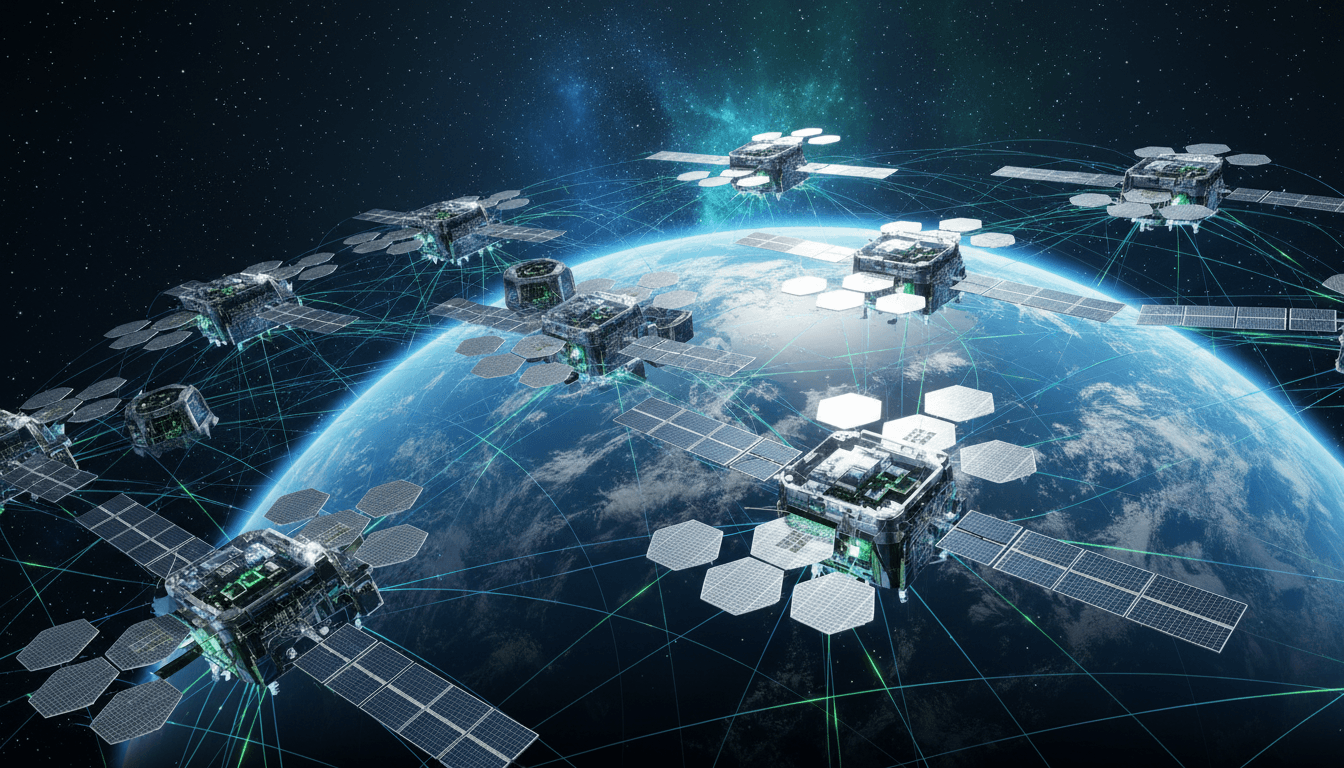
On August 4, 2026, during its Q2 earnings call, SpaceX revealed its partnership with NVIDIA, focusing on the Starmind project. This initiative aims to deploy NVIDIA's Vera Rubin NVL72 rack-scale systems aboard specialized satellites in low Earth orbit (LEO). The architecture is designed to overcome terrestrial constraints such as power availability, land use, and cooling requirements, which have become critical as AI workloads expand.
The Starmind project plans to launch prototypes in 2027, with a vision of creating a constellation of up to one million satellites. Each satellite will be equipped with around 72 NVIDIA chips, equivalent to a full server rack, enabling substantial data processing capabilities. The satellites will utilize extensive solar arrays capable of generating up to 210 kW of peak power and will feature liquid radiators for effective heat dissipation in the vacuum of space.
Elon Musk has emphasized the architecture's superiority and feasibility, suggesting that this orbital AI infrastructure could significantly enhance the capabilities of xAI and other AI-driven applications. However, the project is not without challenges. Technical risks include potential radiation-induced bit flips on advanced chips, the economic viability of launching such a large fleet, and the maintenance of satellites in orbit. Additionally, concerns about orbital debris from a million-satellite fleet could pose sustainability issues.
The announcement has already impacted the market, with AMD shares declining approximately 9% following the news of NVIDIA's exclusive commitment. Analysts have noted that NVIDIA's strengthened position in both terrestrial and emerging orbital AI segments could reshape competitive dynamics in the tech industry.
Who feels it first (and how)
- Tech companies: Firms relying on AI for data processing will benefit from enhanced compute capabilities.
- Investors: Stakeholders in NVIDIA and SpaceX may see shifts in stock performance based on project developments.
- AI developers: Those working on AI applications will gain access to more powerful resources, potentially accelerating innovation.
- Regulatory bodies: Agencies will need to address the implications of a large-scale satellite constellation on space traffic and debris management.
What to watch next
- Prototype launch timelines: Monitoring the success of initial satellite launches in 2027 will indicate the project's viability.
- Regulatory developments: Changes in space regulation regarding satellite deployment and orbital debris management will impact project scalability.
- Market reactions: Observing stock performance of NVIDIA and competitors like AMD will provide insights into industry confidence in orbital AI solutions.
SpaceX and NVIDIA are collaborating on the Starmind project, targeting a 2027 launch for prototypes.
The project will face technical and regulatory challenges that could affect its timeline and scale.
The long-term impact on the AI industry and market dynamics remains to be fully understood.
Frequently Asked Questions
- Why it matters?
- The partnership between SpaceX and NVIDIA signals a significant shift in AI infrastructure, potentially alleviating terrestrial limitations on compute capacity.
- What happened (in 30 seconds)?
- SpaceX announced an exclusive partnership with NVIDIA to utilize Vera Rubin architecture for its Starmind orbital AI project. Prototypes are set for launch in 2027, aiming for a constellation of up to one million satellites. Each satellite will integrate approximately 72 NVIDIA chips, delivering data center-class compute capabilities via Starlink laser links.
- What's really happening?
- On August 4, 2026, during its Q2 earnings call, SpaceX revealed its partnership with NVIDIA, focusing on the Starmind project. This initiative aims to deploy NVIDIA's Vera Rubin NVL72 rack-scale systems aboard specialized satellites in low Earth orbit (LEO). The architecture is designed to overcome terrestrial constraints such as power availability, land use, and cooling requirements, which have become critical as AI workloads expand. The Starmind project plans to launch prototypes in 2027, wit
- Who feels it first (and how)?
- Tech companies: Firms relying on AI for data processing will benefit from enhanced compute capabilities. Investors: Stakeholders in NVIDIA and SpaceX may see shifts in stock performance based on project developments. AI developers: Those working on AI applications will gain access to more powerful resources, potentially accelerating innovation. Regulatory bodies: Agencies will need to address the implications of a large-scale satellite constellation on space traffic and debris management.
- What to watch next?
- Prototype launch timelines: Monitoring the success of initial satellite launches in 2027 will indicate the project's viability. Regulatory developments: Changes in space regulation regarding satellite deployment and orbital debris management will impact project scalability. Market reactions: Observing stock performance of NVIDIA and competitors like AMD will provide insights into industry confidence in orbital AI solutions.
Consumer technology news with AI coverage.
"Gadget and tech site reporting on AI in products."
— A47 Editor
SpaceX to use NVIDIA GPUs for its Starmind project — Here's what they'll face in space
SpaceX has announced its intention to utilize NVIDIA GPUs for its Starmind project, which aims to harness solar energy for artificial intelligence applications in space. This initiative reflects Elon Musk's vision of integrating advanced technology t...
Covers consumer technology, electronics, gadgets, and product reviews.
"Engadget is a trusted source for gadget reviews and consumer tech news, known for its hands-on analysis and industry coverage."
— A47 Editor
SpaceX to use NVIDIA GPUs for its Starmind project — Here's what they'll face in space
SpaceX has announced its intention to utilize NVIDIA GPUs for its Starmind project, which aims to harness solar energy for artificial intelligence applications in space. This initiative reflects Elon Musk's vision of integrating advanced technology t...
Daily curated AI news and tools.
"High-signal newsletter summarizing model and product news."
— A47 Editor
The SpaceX-Nvidia partnership heads for orbit
SpaceX has entered an exclusive partnership with Nvidia to procure graphics processing units, marking a pivotal shift in its chip strategy aimed at enhancing its artificial intelligence infrastructure. This decision was highlighted by CEO Elon Musk d...
Arabic-language coverage of international news and geopolitics.
"RT Arabic is a Russian state-funded outlet often criticized for promoting Kremlin-aligned narratives."
— A47 Editor
"سبيس إكس" تتجه لنشر شبكة أقمار لمعالجة بيانات الذكاء الاصطناعي في الفضاء مباشرة
SpaceX has announced its ambitious project, Starmind, which aims to deploy a network of high-performance satellites capable of processing artificial intelligence data directly in space using NVIDIA technologies. This initiative marks a significant st...