
IBM Launches Dual-Architecture Mainframe Processor Integrating Arm and z/Architecture
Here's what it means for you.
If you rely on enterprise systems, this innovation could streamline your operations and reduce costs.
Why it matters
This development positions IBM to maintain its dominance in enterprise computing while integrating modern cloud and AI capabilities.
What happened (in 30 seconds)
- On August 24, 2026, IBM unveiled a dual-architecture mainframe processor at the Hot Chips conference.
- The processor integrates both Arm AArch64 and IBM z/Architecture instruction sets into each of its 11 cores.
- This design enables native execution of Arm-based workloads alongside traditional z/OS processing without emulation.
The context you actually need
- IBM mainframes currently run 68% of global production IT workloads, making them critical for enterprise operations.
- The Arm ecosystem has over 22 million developers, rapidly expanding in cloud and AI sectors, which are increasingly vital for businesses.
- Prior to this announcement, running Arm-native applications on IBM Z systems required separate servers, complicating integration.
What's really happening
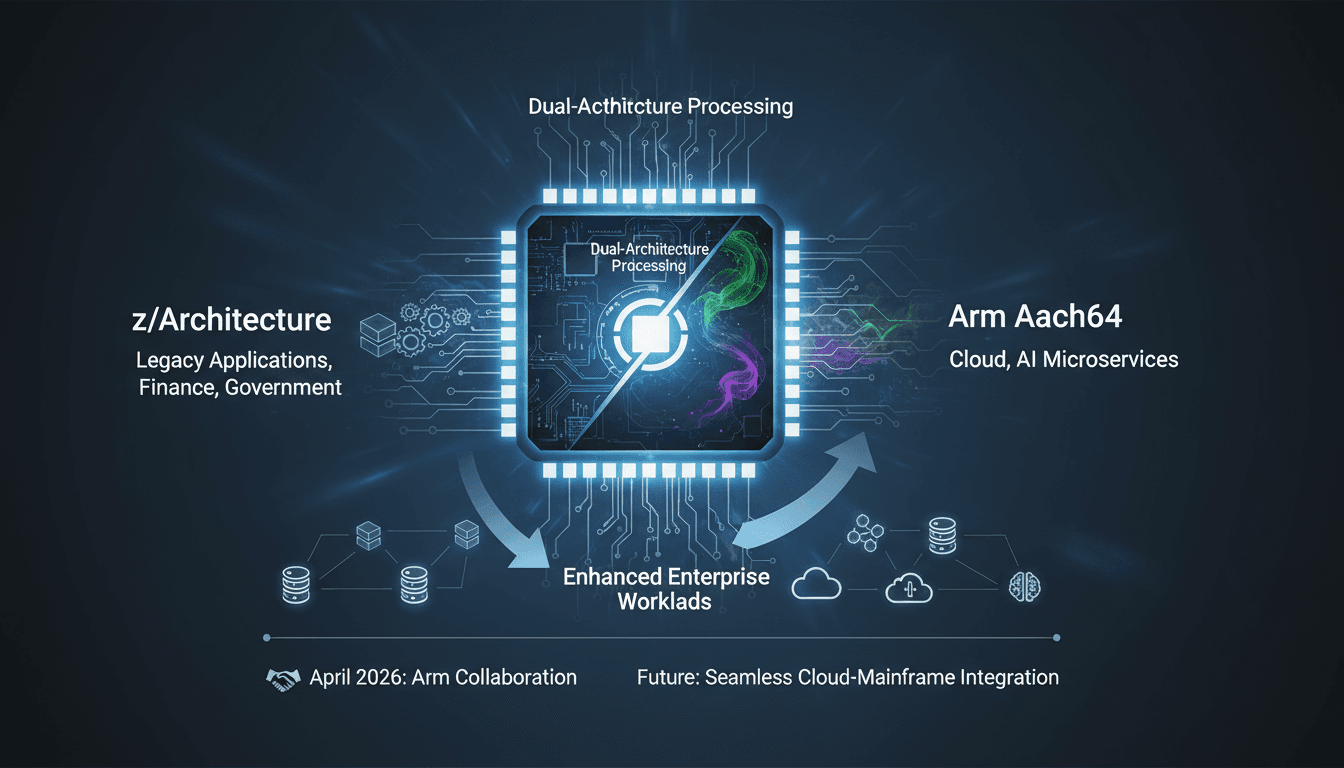
IBM's announcement of a dual-architecture mainframe processor marks a significant shift in enterprise computing. By integrating Arm AArch64 and IBM z/Architecture instruction sets directly into each of its 11 cores, IBM is addressing a critical gap in the market. Traditionally, enterprises have relied on separate servers to run Arm-native applications, which has led to increased costs and complexity. This new processor design allows for native concurrent execution of both Arm-based Linux workloads and traditional z/OS transaction processing, eliminating the need for emulation or separate core types.
The processor operates on a cutting-edge 2nm process and boasts a clock speed exceeding 5.7 GHz. Each core is designed to switch dynamically between instruction sets in nanoseconds, facilitated by hardware support and a KVM hypervisor. This capability not only enhances performance but also preserves the reliability and security that IBM mainframes are known for, particularly in sectors like financial services where these attributes are paramount.
Moreover, the chip incorporates specialized AI inference accelerators aimed at fraud detection, a data processing unit for I/O, and dedicated accelerators for tasks such as compression and cryptography. This multifaceted approach positions the new processor as a versatile solution for enterprises looking to leverage AI and cloud technologies while maintaining their existing mainframe infrastructure.
The collaboration between IBM and Arm, established in April 2026, laid the groundwork for this innovation. It reflects a strategic move to bridge the gap between legacy mainframe applications and modern cloud and AI ecosystems. As cloud providers increasingly adopt Arm architectures, IBM's dual-architecture processor could help retain its mainframe customers by offering a seamless transition to more contemporary workloads without the costly migrations typically associated with such shifts.
This development is particularly relevant as enterprises face mounting pressure to innovate and adapt to rapidly changing technological landscapes. By enabling the integration of Arm-native applications directly into mainframe environments, IBM is not only enhancing its product offerings but also reinforcing its position as a leader in enterprise computing.
Who feels it first (and how)
- Enterprise IT departments: They will benefit from reduced complexity and costs associated with running separate servers for Arm-native applications.
- Financial services firms: As major users of IBM mainframes, they will gain enhanced capabilities for fraud detection and transaction processing.
- Cloud service providers: They may see increased demand for hybrid solutions that leverage both Arm and z/Architecture capabilities.
What to watch next
- Deployment timelines: Keep an eye on IBM's progress towards the expected deployment of these systems in 2028, as it will indicate market readiness.
- Adoption rates: Monitor how quickly enterprises begin to integrate this dual-architecture processor into their existing systems, which will reflect its market acceptance.
- Competitive responses: Watch for reactions from other major players in the mainframe and cloud sectors, as they may introduce similar innovations to compete.
IBM's dual-architecture processor integrates Arm and z/Architecture instruction sets.
Enterprises will begin to adopt this technology to streamline operations and reduce costs.
The full impact on the competitive landscape in enterprise computing remains to be seen.
Frequently Asked Questions
- Why it matters?
- This development positions IBM to maintain its dominance in enterprise computing while integrating modern cloud and AI capabilities.
- What happened (in 30 seconds)?
- On August 24, 2026, IBM unveiled a dual-architecture mainframe processor at the Hot Chips conference. The processor integrates both Arm AArch64 and IBM z/Architecture instruction sets into each of its 11 cores. This design enables native execution of Arm-based workloads alongside traditional z/OS processing without emulation.
- What's really happening?
- IBM's announcement of a dual-architecture mainframe processor marks a significant shift in enterprise computing. By integrating Arm AArch64 and IBM z/Architecture instruction sets directly into each of its 11 cores, IBM is addressing a critical gap in the market. Traditionally, enterprises have relied on separate servers to run Arm-native applications, which has led to increased costs and complexity. This new processor design allows for native concurrent execution of both Arm-based Linux workloa
- Who feels it first (and how)?
- Enterprise IT departments: They will benefit from reduced complexity and costs associated with running separate servers for Arm-native applications. Financial services firms: As major users of IBM mainframes, they will gain enhanced capabilities for fraud detection and transaction processing. Cloud service providers: They may see increased demand for hybrid solutions that leverage both Arm and z/Architecture capabilities.
- What to watch next?
- Deployment timelines: Keep an eye on IBM's progress towards the expected deployment of these systems in 2028, as it will indicate market readiness. Adoption rates: Monitor how quickly enterprises begin to integrate this dual-architecture processor into their existing systems, which will reflect its market acceptance. Competitive responses: Watch for reactions from other major players in the mainframe and cloud sectors, as they may introduce similar innovations to compete.
Tech news, hardware, and AI tools coverage.
"PC/tech site increasingly covering AI hardware and apps."
— A47 Editor
IBM is building a dual-architecture mainframe chip that will run Arm and Z software on the same cores
IBM has announced the development of a dual-architecture mainframe chip that will run both Arm and Z software on the same cores, showcased at the Hot Chips 2026 conference. This processor is expected to utilize 11 IBM Z cores built on a 2-nanometer p...
Curated tech headlines including AI stories.
"Influential aggregator surfacing the day’s top tech/AI links."
— A47 Editor
IBM says it is developing a dual-architecture processor for IBM Z and LinuxONE systems that can natively execute both IBM's z/OS workloads and Arm applications (Michael Nuñez/VentureBeat)
IBM has announced the development of a dual-architecture processor designed for IBM Z and LinuxONE systems, capable of executing both z/OS workloads and Arm applications natively. This announcement was made during the annual Hot Chips conference, mar...
U.S. company headlines: M&A, product launches, legal/regulatory actions, and leadership moves.
"U.S.-centric corporate tape; good for tracking single-name catalysts."
— A47 Editor
IBM unveils dual-architecture mainframe processor with Arm
IBM has unveiled a new dual-architecture mainframe processor in collaboration with Arm, marking a significant advancement in its technology offerings. This development is part of IBM's ongoing efforts to innovate within the mainframe market, which ha...