
Apple Refreshes Mac Mini and Mac Studio with New M6 and M5 Ultra Chips for AI Development
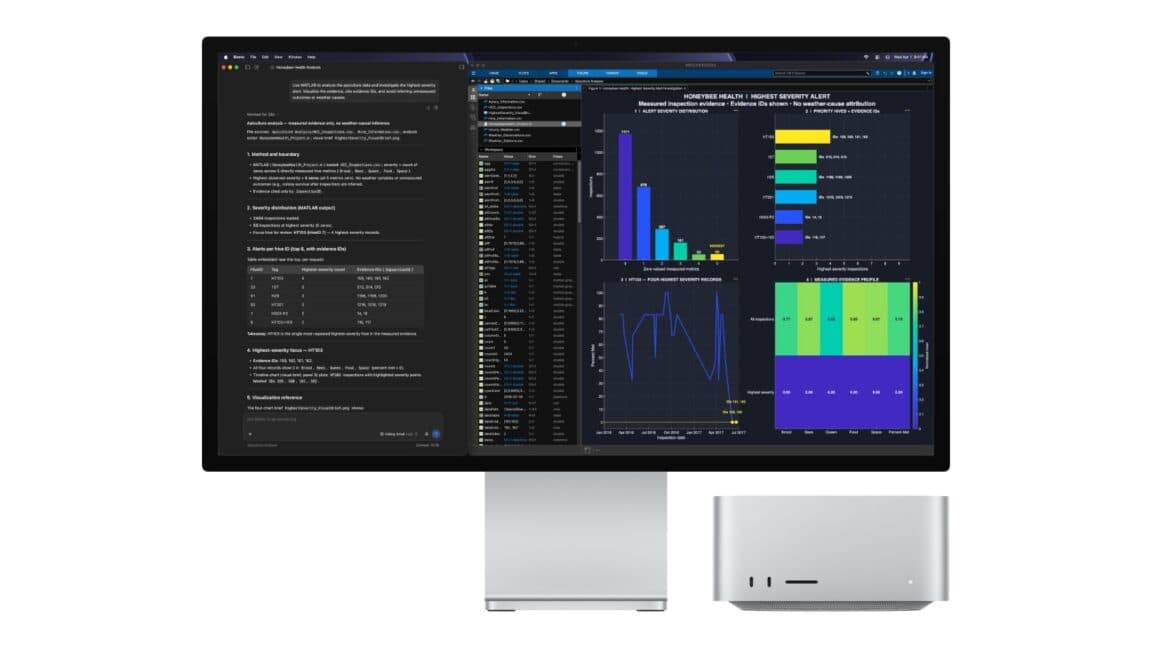
Here's what it means for you.
If you're a developer or researcher, these new chips could significantly enhance your local AI capabilities, reducing reliance on cloud services.
Why it matters
The shift towards local AI processing is reshaping the tech landscape, driving down costs and increasing efficiency for developers.
What happened (in 30 seconds)
- Apple announced refreshed Mac mini and Mac Studio featuring M6 and M5 Ultra chips on August 25, 2026.
- The new chips enhance local AI model inference, targeting developers and researchers amid rising cloud costs.
- Preorders opened immediately, with shipments starting September 22, 2026, and price increases noted on base models.
The context you actually need
- Prior to this launch, macOS 26.2 enabled low-latency Thunderbolt 5 communication for distributed AI inference, allowing users to run large models locally.
- The M6 chip is Apple's first 2nm process SoC, featuring a 12-core CPU and dual 16-core Neural Engine, designed for high-performance AI tasks.
- The M5 Ultra supports up to 512GB unified memory and 1.2TB/s bandwidth, making it a powerful option for intensive AI workloads.
What's really happening
Apple's latest product announcement marks a significant pivot towards local AI processing, driven by the need for cost-effective solutions in an era of escalating cloud computing expenses. The introduction of the M6 and M5 Ultra chips is not just about performance; it reflects a broader trend in the tech industry where developers and researchers are increasingly seeking to run AI models on local hardware rather than relying on cloud services.
The M6 chip, built on a 2nm process, integrates a 12-core CPU and a dual 16-core Neural Engine, which allows for efficient processing of AI tasks directly on the device. This architecture is designed to minimize latency and maximize throughput, making it ideal for applications that require real-time data processing. The M5 Ultra, with its quad-die architecture, takes this a step further by offering up to 36 CPU cores and 80 GPU cores, along with a staggering 512GB of unified memory. This level of capability is particularly appealing for developers working with large language models and complex AI algorithms.
The emphasis on local AI inference is a strategic response to the rising costs associated with cloud computing. As organizations increasingly adopt AI technologies, the expenses tied to cloud services can become prohibitive, especially for smaller firms and independent developers. By enabling local processing, Apple is positioning its hardware as a viable alternative to specialized Nvidia solutions, which have dominated the market for high-performance AI tasks.
Moreover, the integration of Thunderbolt 5 connectivity allows for clustering multiple Mac systems, further enhancing the capabilities for distributed AI workloads. This feature is particularly attractive for developers who want to leverage the power of several machines to run complex models without incurring the costs associated with cloud-based solutions.
As Apple continues to innovate in this space, the implications for the broader tech ecosystem are profound. The shift towards local AI processing could lead to a democratization of AI technology, allowing more individuals and smaller companies to participate in AI development without the financial burden of cloud services. This could foster a new wave of innovation and creativity in the field, as more developers gain access to powerful tools that were previously out of reach.
Who feels it first (and how)
- Developers: They will benefit from enhanced local processing capabilities, allowing for more efficient AI model development.
- Researchers: Access to powerful hardware for local AI inference can accelerate research timelines and reduce costs.
- Small businesses: Lower reliance on cloud services can lead to significant cost savings, enabling more agile operations.
What to watch next
- Market adoption rates: Monitor how quickly developers and researchers transition to using the new chips for local AI tasks, as this will indicate the effectiveness of Apple's strategy.
- Competitor responses: Watch for how other tech companies, particularly Nvidia, adapt their offerings in response to Apple's push for local AI processing.
- Pricing trends: Keep an eye on how the pricing of cloud services evolves as more users shift towards local AI solutions, potentially leading to increased competition.
Apple has launched the M6 and M5 Ultra chips, emphasizing local AI capabilities.
Developers will increasingly shift towards local AI processing, impacting cloud service demand.
The long-term effects on the pricing and availability of cloud services remain to be seen.
Frequently Asked Questions
- Why it matters?
- The shift towards local AI processing is reshaping the tech landscape, driving down costs and increasing efficiency for developers.
- What happened (in 30 seconds)?
- Apple announced refreshed Mac mini and Mac Studio featuring M6 and M5 Ultra chips on August 25, 2026. The new chips enhance local AI model inference, targeting developers and researchers amid rising cloud costs. Preorders opened immediately, with shipments starting September 22, 2026, and price increases noted on base models.
- What's really happening?
- Apple's latest product announcement marks a significant pivot towards local AI processing, driven by the need for cost-effective solutions in an era of escalating cloud computing expenses. The introduction of the M6 and M5 Ultra chips is not just about performance; it reflects a broader trend in the tech industry where developers and researchers are increasingly seeking to run AI models on local hardware rather than relying on cloud services. The M6 chip, built on a 2nm process, integrates a 12
- Who feels it first (and how)?
- Developers: They will benefit from enhanced local processing capabilities, allowing for more efficient AI model development. Researchers: Access to powerful hardware for local AI inference can accelerate research timelines and reduce costs. Small businesses: Lower reliance on cloud services can lead to significant cost savings, enabling more agile operations.
- What to watch next?
- Market adoption rates: Monitor how quickly developers and researchers transition to using the new chips for local AI tasks, as this will indicate the effectiveness of Apple's strategy. Competitor responses: Watch for how other tech companies, particularly Nvidia, adapt their offerings in response to Apple's push for local AI processing. Pricing trends: Keep an eye on how the pricing of cloud services evolves as more users shift towards local AI solutions, potentially leading to increased competi
Tech news, hardware, and AI tools coverage.
"PC/tech site increasingly covering AI hardware and apps."
— A47 Editor
Apple built its new M6 and M5 Ultra desktops for the people daisy-chaining Macs to run AI
Apple has introduced its new M6 and M5 Ultra desktop computers, designed specifically for users who daisy-chain Macs to enhance their AI capabilities. The M6 chip, built on TSMC's 2nm process, features a 12-core CPU that combines super cores, perform...
Global business headlines with AI angles.
"General business outlet that frequently covers AI."
— A47 Editor
Apple Goes Bigger on AI. New Mac Mini and Mac Studio Can Run Powerful Models On-Device.
Apple has announced the launch of new Mac Mini and Mac Studio models capable of running advanced AI models on-device, arriving just weeks before the anticipated release of its next generation of iPhones. This move underscores Apple's commitment to en...
In-depth reporting on tech, policy, and science including AI.
"Respected analysis for technically savvy readers, including AI topics."
— A47 Editor
Apple's new desktop computers are designed specifically for local AI development
Apple has introduced new desktop computers specifically designed for local AI development, reflecting the growing trend of utilizing Macs for artificial intelligence tasks. This refresh aims to enhance the performance and capabilities of these machin...
In-depth coverage of hardware, software, science, and policy.
"Ars Technica provides expert technology news, hardware reviews, and analysis for a technically savvy audience."
— A47 Editor
Apple's new desktop computers are designed specifically for local AI development
Apple has introduced new desktop computers specifically designed for local AI development, reflecting the growing trend of utilizing Macs for artificial intelligence tasks. This refresh aims to enhance the performance and capabilities of these machin...