
Apple Launches New Mac Mini and Mac Studio with Advanced AI Chips
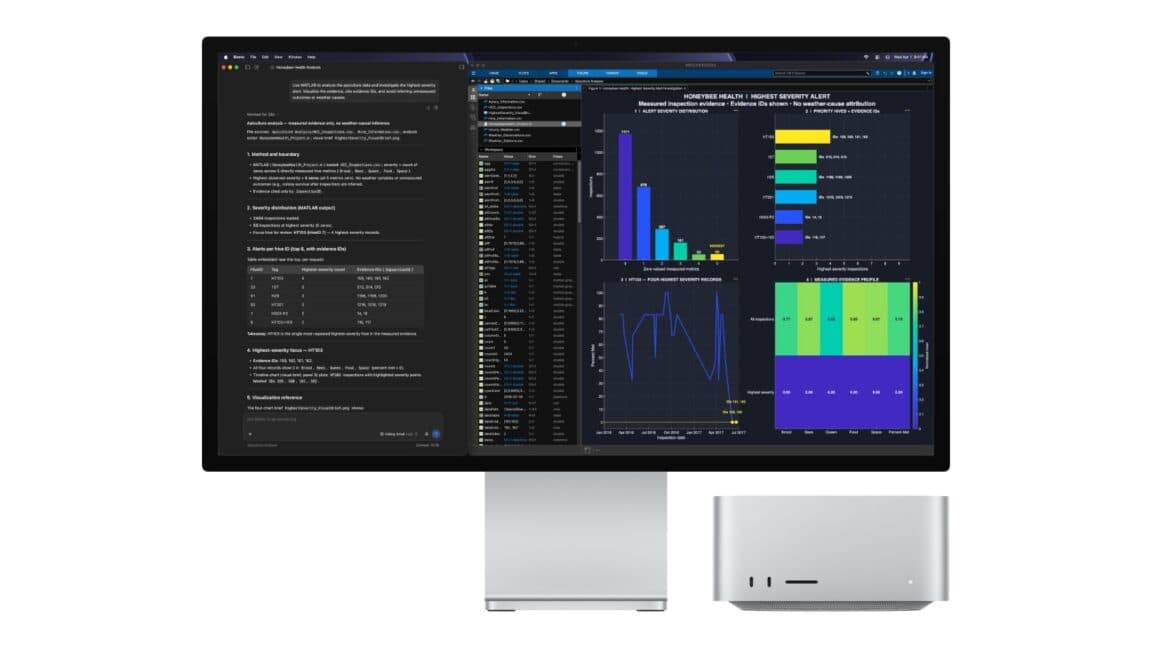
Here's what it means for you.
If you're a developer or researcher, these updates could significantly enhance your local AI capabilities.
Why it matters
Apple's latest chips signal a shift towards on-device AI processing, reducing reliance on cloud services.
What happened (in 30 seconds)
- Apple announced new Mac mini and Mac Studio models featuring M6 and M5 Ultra chips on August 25, 2026.
- These chips are designed for local AI inference, boasting enhanced memory architectures and Neural Engines.
- Preorders opened immediately, with shipping set to begin on September 22, 2026.
The context you actually need
- Prior to this launch, macOS 26.2 enabled low-latency AI inference, prompting users to cluster devices for enhanced performance.
- The demand for local AI has surged as developers seek alternatives to costly cloud services and specialized hardware.
- Open-weight models like Qwen and DeepSeek are gaining traction, emphasizing privacy and cost-effectiveness in AI workflows.
What's really happening
Apple's introduction of the M6 and M5 Ultra chips marks a pivotal moment in the tech landscape, particularly for local AI development. The M6 chip, built on a cutting-edge 2nm process, features a robust 12-core CPU and a 12-core GPU equipped with Neural Accelerators. This architecture allows for efficient processing of complex AI tasks directly on the device, minimizing latency and enhancing performance. The M5 Ultra takes this a step further, offering a quad-die design that scales up to 36 CPU cores and 80 GPU cores, with a staggering maximum memory capacity of 512GB. This capability is crucial for running large language models (LLMs) locally, which is increasingly important as developers seek to maintain control over their data and reduce costs associated with cloud computing.
The shift towards local AI inference is driven by several factors. First, the rising costs of cloud services and the need for privacy have prompted developers to explore on-device solutions. The ability to execute AI tasks locally not only reduces operational expenses but also addresses concerns about data security. Additionally, the growing interest in open-weight models, which are often more accessible and customizable, aligns perfectly with Apple's new offerings. By providing powerful hardware that supports these models, Apple is positioning itself as a leader in the local AI space.
Moreover, the integration of Thunderbolt 5 for distributed computing allows users to connect multiple Mac minis or Mac Studios, creating a powerful cluster for AI workloads. This capability is particularly appealing to researchers and developers who require high-performance computing without the overhead of traditional cloud solutions. As a result, the new Mac models are likely to attract a diverse range of users, from hobbyists to professionals in AI research.
The announcement also comes at a time when the tech industry is increasingly focused on sustainability and efficiency. By enabling local processing, Apple is contributing to a more sustainable model of computing that reduces the carbon footprint associated with data centers. This aligns with broader industry trends towards greener technology solutions.
In summary, Apple's latest chips not only enhance the performance of its desktop offerings but also signify a broader shift towards local AI processing. This move is likely to reshape how developers and researchers approach AI development, making it more accessible and efficient.
Who feels it first (and how)
- Developers: Gain access to powerful local AI tools, enhancing their project capabilities.
- Researchers: Benefit from improved data privacy and reduced costs associated with cloud computing.
- Tech enthusiasts: Experience cutting-edge technology in compact form factors.
- Businesses: Explore new AI applications without the burden of cloud service fees.
What to watch next
- Market response: Monitor sales figures and user feedback post-launch to gauge interest in local AI solutions.
- Software updates: Watch for updates to macOS that may further enhance AI capabilities and user experience.
- Competitive landscape: Keep an eye on how competitors respond with their own local AI hardware offerings.
Apple has successfully launched the M6 and M5 Ultra chips with strong initial interest.
Increased adoption of local AI solutions among developers and researchers.
How competitors will respond to Apple's push for local AI processing.
Frequently Asked Questions
- Why it matters?
- Apple's latest chips signal a shift towards on-device AI processing, reducing reliance on cloud services.
- What happened (in 30 seconds)?
- Apple announced new Mac mini and Mac Studio models featuring M6 and M5 Ultra chips on August 25, 2026. These chips are designed for local AI inference, boasting enhanced memory architectures and Neural Engines. Preorders opened immediately, with shipping set to begin on September 22, 2026.
- What's really happening?
- Apple's introduction of the M6 and M5 Ultra chips marks a pivotal moment in the tech landscape, particularly for local AI development. The M6 chip, built on a cutting-edge 2nm process, features a robust 12-core CPU and a 12-core GPU equipped with Neural Accelerators. This architecture allows for efficient processing of complex AI tasks directly on the device, minimizing latency and enhancing performance. The M5 Ultra takes this a step further, offering a quad-die design that scales up to 36 CPU
- Who feels it first (and how)?
- Developers: Gain access to powerful local AI tools, enhancing their project capabilities. Researchers: Benefit from improved data privacy and reduced costs associated with cloud computing. Tech enthusiasts: Experience cutting-edge technology in compact form factors. Businesses: Explore new AI applications without the burden of cloud service fees.
- What to watch next?
- Market response: Monitor sales figures and user feedback post-launch to gauge interest in local AI solutions. Software updates: Watch for updates to macOS that may further enhance AI capabilities and user experience. Competitive landscape: Keep an eye on how competitors respond with their own local AI hardware offerings.
Tech news and guides occasionally covering AI.
"Independent tech blog with practical tips and news."
— A47 Editor
Apple Announces M6 Mac mini and M5 Ultra Mac Studio Aimed at Local AI Workloads and Mac Clustering
Apple has announced the launch of the M6 Mac mini and M5 Ultra Mac Studio, featuring new chips designed to enhance local AI workloads and facilitate Mac clustering. These updates reflect Apple's ongoing commitment to advancing its desktop lineup with...
AI news with an enterprise and cloud focus.
"Covers AI in the context of data infrastructure, cloud, and enterprise stacks."
— A47 Editor
Apple refreshes Mac mini, Mac Studio lineups with new chips
Apple Inc. has introduced new models of the Mac mini and Mac Studio, powered by four custom processors, including the M6 and M5 Ultra chips, marking a significant upgrade in performance for these devices. The new models are designed to enhance capabi...
Tech news, hardware, and AI tools coverage.
"PC/tech site increasingly covering AI hardware and apps."
— A47 Editor
Apple built its new M6 and M5 Ultra desktops for the people daisy-chaining Macs to run AI
Apple has introduced its new M6 and M5 Ultra desktop computers, designed specifically for users who daisy-chain Macs to enhance their AI capabilities. The M6 chip, built on TSMC's 2nm process, features a 12-core CPU that combines super cores, perform...
Global business headlines with AI angles.
"General business outlet that frequently covers AI."
— A47 Editor
Apple Goes Bigger on AI. New Mac Mini and Mac Studio Can Run Powerful Models On-Device.
Apple has announced the launch of new Mac Mini and Mac Studio models capable of running advanced AI models on-device, arriving just weeks before the anticipated release of its next generation of iPhones. This move underscores Apple's commitment to en...
In-depth coverage of hardware, software, science, and policy.
"Ars Technica provides expert technology news, hardware reviews, and analysis for a technically savvy audience."
— A47 Editor
Apple's new desktop computers are designed specifically for local AI development
Apple has introduced new desktop computers specifically designed for local AI development, reflecting the growing trend of utilizing Macs for artificial intelligence tasks. This refresh aims to enhance the performance and capabilities of these machin...
In-depth reporting on tech, policy, and science including AI.
"Respected analysis for technically savvy readers, including AI topics."
— A47 Editor
Apple's new desktop computers are designed specifically for local AI development
Apple has introduced new desktop computers specifically designed for local AI development, reflecting the growing trend of utilizing Macs for artificial intelligence tasks. This refresh aims to enhance the performance and capabilities of these machin...
Tech, science, and startup news including AI.
"Irish tech outlet covering innovation and AI."
— A47 Editor
Apple unveils new Mac mini with M6 and M5 Pro chips
Apple has unveiled a new generation of the Mac Mini, featuring the latest M6 chip and a higher-end M5 Pro chip, designed to enhance performance for artificial intelligence applications. This announcement reflects Apple's commitment to providing power...