
X Corp Demands Shutdown of Nitter, Ending Privacy-Focused Alternative Frontend
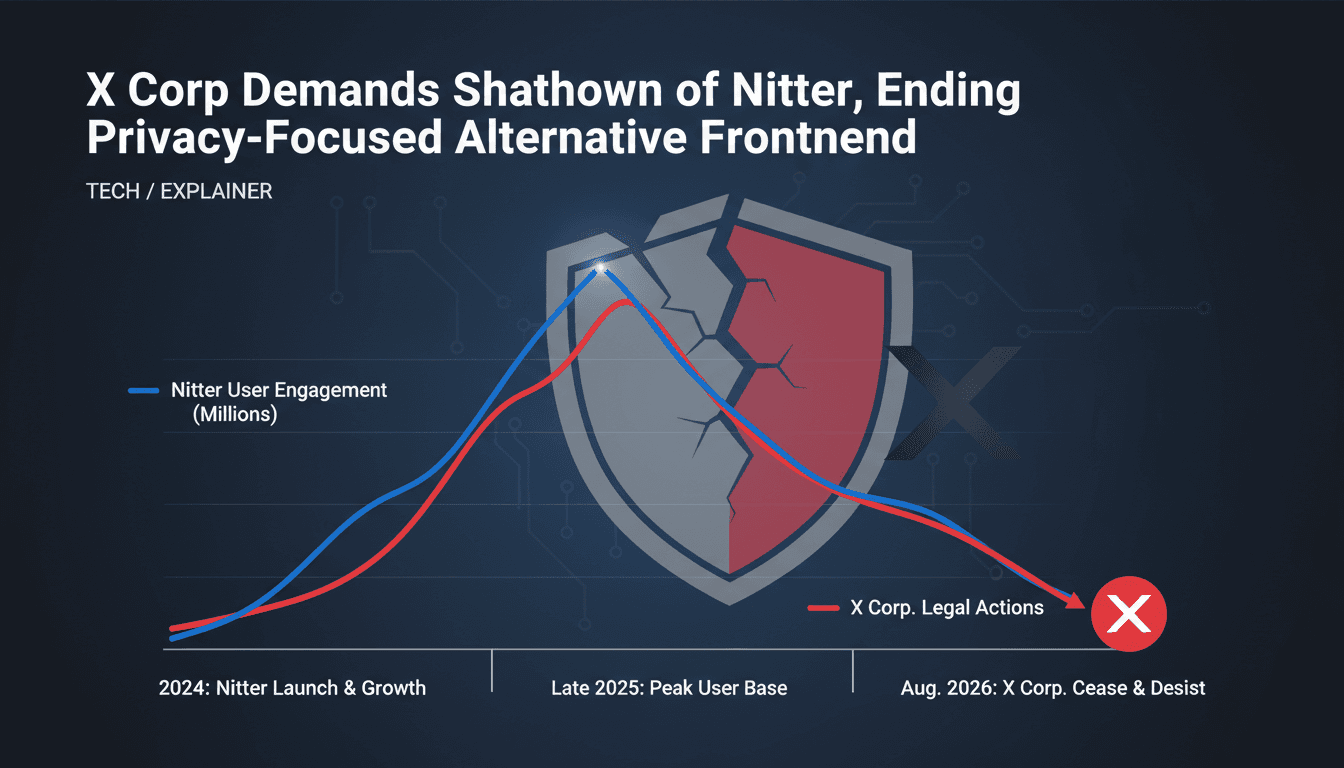
Here's what it means for you.
If you valued privacy while browsing public posts on X, your options just diminished significantly.
Why it matters
This action highlights the ongoing tension between corporate control over data and user privacy on the open web.
What happened (in 30 seconds)
- On August 24, 2026, X Corp. issued cease-and-desist letters to Nitter, demanding its shutdown.
- By August 25, Nitter's main site was taken offline, and its GitHub repository was archived.
- This move reflects a broader strategy by platforms to restrict third-party access to public data.
The context you actually need
- Nitter, launched in 2019, offered a privacy-focused alternative to X, allowing users to view public posts without tracking.
- In 2024, X restricted guest accounts and API access, which temporarily disrupted Nitter before workarounds were found.
- The recent takedown is part of X's efforts to monetize data and enforce terms of service against unauthorized access.
What's really happening
X Corp's decision to issue cease-and-desist letters to Nitter is emblematic of a larger trend in the tech industry: the consolidation of control over user data and the diminishing space for privacy-focused alternatives. Nitter, developed by Zedeus, provided a unique service by allowing users to access public posts on X without the intrusive ads, cookies, or JavaScript that typically accompany such platforms. This service attracted millions of users and peaked with 114 public instances, showcasing a significant demand for privacy-oriented solutions.
However, X Corp's legal action against Nitter is rooted in a desire to protect its business model. By claiming that Nitter was circumventing its API and scraping data, X is asserting its right to control how its content is accessed and monetized. This is not merely about protecting intellectual property; it’s about maintaining a revenue stream that relies heavily on user data and engagement metrics. The legal framework invoked, including the Texas Harmful Access by Computer Act and the Lanham Act, underscores the seriousness with which X is treating this issue.
The implications of this move extend beyond Nitter. It signals to other developers and privacy advocates that creating alternatives to major platforms may come with significant legal risks. As platforms like X tighten their grip on data access, the landscape for third-party applications becomes increasingly hostile. This could stifle innovation and limit user choice, as fewer alternatives are able to withstand the legal and financial pressures imposed by larger corporations.
Moreover, the shutdown of Nitter raises questions about the future of user privacy on the internet. As more users become aware of data privacy issues, the demand for alternatives that prioritize user rights will likely grow. However, with platforms like X actively working to eliminate these alternatives, the balance between user privacy and corporate control is shifting towards the latter. This creates a paradox where the very tools designed to enhance user experience and privacy are being systematically dismantled.
In summary, X Corp's actions against Nitter reflect a broader trend of increasing corporate control over data and a diminishing tolerance for privacy-focused alternatives. As the digital landscape evolves, users may find themselves with fewer options for accessing content without compromising their privacy.
Who feels it first (and how)
- Privacy-conscious users: Those who relied on Nitter for ad-free, tracking-free access to public posts will feel the immediate impact.
- Developers of alternative platforms: Other developers may reconsider launching similar projects due to the legal risks involved.
- Digital rights advocates: Groups focused on user privacy and open web principles will likely mobilize in response to this consolidation of control.
What to watch next
- Emergence of new alternatives: Watch for any new privacy-focused platforms that may arise in response to Nitter's shutdown.
- Legal challenges: Monitor any potential legal battles that may arise from developers seeking to challenge X Corp's actions.
- User migration patterns: Observe how users adapt to the loss of Nitter and whether they turn to other platforms or revert to using X directly.
Nitter has been permanently shut down, and its development has ceased.
Other privacy-focused alternatives may face similar legal challenges in the near future.
The long-term impact on user behavior and the demand for privacy-oriented solutions remains uncertain.
Frequently Asked Questions
- Why it matters?
- This action highlights the ongoing tension between corporate control over data and user privacy on the open web.
- What happened (in 30 seconds)?
- On August 24, 2026, X Corp. issued cease-and-desist letters to Nitter, demanding its shutdown. By August 25, Nitter's main site was taken offline, and its GitHub repository was archived. This move reflects a broader strategy by platforms to restrict third-party access to public data.
- What's really happening?
- X Corp's decision to issue cease-and-desist letters to Nitter is emblematic of a larger trend in the tech industry: the consolidation of control over user data and the diminishing space for privacy-focused alternatives. Nitter, developed by Zedeus, provided a unique service by allowing users to access public posts on X without the intrusive ads, cookies, or JavaScript that typically accompany such platforms. This service attracted millions of users and peaked with 114 public instances, showcasin
- Who feels it first (and how)?
- Privacy-conscious users: Those who relied on Nitter for ad-free, tracking-free access to public posts will feel the immediate impact. Developers of alternative platforms: Other developers may reconsider launching similar projects due to the legal risks involved. Digital rights advocates: Groups focused on user privacy and open web principles will likely mobilize in response to this consolidation of control.
- What to watch next?
- Emergence of new alternatives: Watch for any new privacy-focused platforms that may arise in response to Nitter's shutdown. Legal challenges: Monitor any potential legal battles that may arise from developers seeking to challenge X Corp's actions. User migration patterns: Observe how users adapt to the loss of Nitter and whether they turn to other platforms or revert to using X directly.
Curated insights and thought leadership in enterprise technology.
"Ciente.io delivers curated insights, thought leadership, and trends in B2B tech and innovation."
— A47 Editor
X Demands Nitter Takedown as Wall Closes on the Open Web
X Corp. has escalated its legal efforts by sending cease-and-desist letters to Nitter, an open-source project that allows users to access Twitter content without an account. This action underscores the ongoing conflict between platform security measu...
Business, investment, entrepreneurship, leadership, and innovation.
"Forbes is known for its coverage of business leaders, market trends, and entrepreneurial ventures with a pro-business editorial stance."
— A47 Editor
Cease-And-Desist From X Shuts Down Nitter And XCancel—Sites That Scraped And Mirrored Tweets
A cease-and-desist order from X has led to the shutdown of Nitter and XCancel, platforms that allowed users to access and mirror tweets without visiting the main site. This action reflects X's ongoing efforts to control how its content is accessed an...
Tech startup news, programming trends, and discussions shared by the developer community.
"Hacker News is a community-driven source highlighting influential tech discussions, startup launches, and programming insights."
— A47 Editor
XCancel and Nitter are receiving C&D letters from XCorp
XCancel and Nitter have received cease and desist letters from XCorp, indicating potential legal actions against these platforms. This development raises concerns about their operational viability and future in the technology landscape.
Startup news with frequent AI coverage.
"Covers launches, funding, and product updates in AI."
— A47 Editor
X sends cease-and-desist to open source project Nitter over alleged scraping
X has issued cease-and-desist letters to Nitter, an open source project that provides privacy-friendly front ends for the platform, demanding the removal of its instances and code repository due to allegations of scraping. This action highlights ongo...