
IBM Launches Granite 4.2 Open-Weight AI Models for Local Deployment
Here's what it means for you.
As enterprises seek cost-effective AI solutions, IBM's Granite 4.2 models offer a compelling alternative to cloud-based systems.
Why it matters
The release of Granite 4.2 reflects a significant shift towards local AI deployment, driven by rising costs and the need for data sovereignty.
What happened (in 30 seconds)
- IBM released its Granite 4.2 family of open-weight large language models on August 25, 2026.
- The models feature native chain-of-thought reasoning and agentic tool-use capabilities, with sizes of 3B, 8B, and 30B parameters.
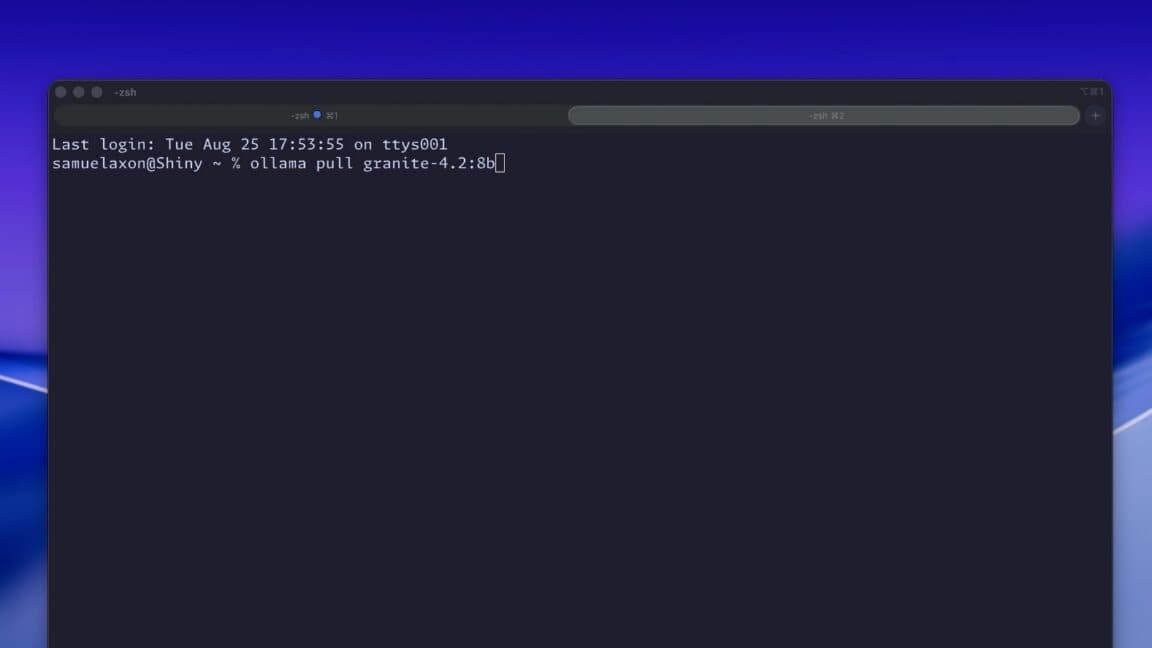
- Availability is immediate via platforms like Hugging Face and Ollama, under an Apache 2.0 license.
The context you actually need
- Rising costs of proprietary cloud models from providers like OpenAI and Anthropic have prompted enterprises to explore local alternatives.
- Granite 4.1, released earlier in April 2026, laid the groundwork for the reasoning capabilities now enhanced in Granite 4.2.
- The models are trained on approximately 15 trillion tokens, incorporating advanced techniques like agentic reinforcement learning.
What's really happening
IBM's Granite 4.2 models represent a strategic response to the escalating costs and compute demands associated with proprietary cloud-based large language models (LLMs). As enterprises grapple with rising expenses from providers like OpenAI and Anthropic, the appeal of local, open-weight models has surged. This shift is not merely a trend; it reflects a fundamental change in how organizations approach AI deployment.
The Granite 4.2 models, available in 3B, 8B, and 30B parameter sizes, are designed for self-hosted, on-premises deployment. This allows businesses to maintain control over their data while leveraging advanced AI capabilities. The models' native chain-of-thought reasoning and agentic tool-use capabilities enable them to perform complex tasks that were previously reliant on cloud-based solutions. The 128K-token context window further enhances their usability, allowing for more extensive and nuanced interactions.
The Apache 2.0 licensing model is particularly noteworthy. It grants enterprises the freedom to fine-tune and adapt the models to their specific needs without the constraints typically associated with proprietary software. This flexibility is crucial for organizations aiming to customize AI solutions that align with their operational requirements.
Moreover, the Granite 4.2 models are trained on a staggering 15 trillion tokens, utilizing multi-stage post-training techniques, including agentic reinforcement learning for the larger variants. This extensive training enhances their performance, as evidenced by the 57.00 SWE-bench Verified pass@1 score achieved by the 30B model. Such benchmarks are critical for enterprises evaluating the effectiveness of AI solutions.
The immediate availability of these models through platforms like Hugging Face and Ollama signifies a broader market trend towards local LLM deployment. This trend is driven by the dual imperatives of data sovereignty and cost control. As organizations increasingly prioritize these factors, the demand for local AI solutions is expected to grow, reshaping the competitive landscape of AI deployment.
In summary, the Granite 4.2 release is not just a product launch; it is a reflection of a significant market shift towards local AI solutions that prioritize cost-effectiveness, data control, and customization.
Who feels it first (and how)
- Enterprise IT departments: They will need to evaluate and implement these models for local deployment.
- Data scientists and AI developers: They will benefit from the flexibility of open-weight models for fine-tuning.
- CIOs and CTOs: They will focus on cost management and data sovereignty in AI strategy.
- Small to medium-sized enterprises (SMEs): They may find affordable AI solutions that fit their budget and needs.
What to watch next
- Adoption rates of Granite 4.2: Monitoring how quickly enterprises implement these models will indicate market demand.
- Benchmark performance comparisons: Evaluating Granite 4.2 against other local and cloud-based models will reveal its competitive standing.
- Regulatory responses: Watch for any emerging regulations around AI deployment that could impact local versus cloud-based solutions.
The Granite 4.2 models are available for immediate download and deployment.
Increased enterprise interest in local AI solutions will continue as costs rise.
The long-term impact of these models on the competitive landscape of AI deployment remains to be seen.
Frequently Asked Questions
- Why it matters?
- The release of Granite 4.2 reflects a significant shift towards local AI deployment, driven by rising costs and the need for data sovereignty.
- What happened (in 30 seconds)?
- IBM released its Granite 4.2 family of open-weight large language models on August 25, 2026. The models feature native chain-of-thought reasoning and agentic tool-use capabilities, with sizes of 3B, 8B, and 30B parameters. Availability is immediate via platforms like Hugging Face and Ollama, under an Apache 2.0 license.
- What's really happening?
- IBM's Granite 4.2 models represent a strategic response to the escalating costs and compute demands associated with proprietary cloud-based large language models (LLMs). As enterprises grapple with rising expenses from providers like OpenAI and Anthropic, the appeal of local, open-weight models has surged. This shift is not merely a trend; it reflects a fundamental change in how organizations approach AI deployment. The Granite 4.2 models, available in 3B, 8B, and 30B parameter sizes, are desig
- Who feels it first (and how)?
- Enterprise IT departments: They will need to evaluate and implement these models for local deployment. Data scientists and AI developers: They will benefit from the flexibility of open-weight models for fine-tuning. CIOs and CTOs: They will focus on cost management and data sovereignty in AI strategy. Small to medium-sized enterprises (SMEs): They may find affordable AI solutions that fit their budget and needs.
- What to watch next?
- Adoption rates of Granite 4.2: Monitoring how quickly enterprises implement these models will indicate market demand. Benchmark performance comparisons: Evaluating Granite 4.2 against other local and cloud-based models will reveal its competitive standing. Regulatory responses: Watch for any emerging regulations around AI deployment that could impact local versus cloud-based solutions.
Research, news, and analysis on blockchain startups, DeFi, and regulations.
"Crypto Briefing provides research, news, and analysis on blockchain startups, DeFi, and crypto regulations with investor-focused coverage."
— A47 Editor
IBM unveils Granite 4.2 models for local deployment with expanded agentic capabilities
IBM has introduced its Granite 4.2 models, designed for local deployment, which enhance AI adaptability and efficiency, potentially transforming enterprise operations and edge computing capabilities.
In-depth reporting on tech, policy, and science including AI.
"Respected analysis for technically savvy readers, including AI topics."
— A47 Editor
IBM's new Granite 4.2 models ride the wave of interest in local LLMs
IBM has introduced its new Granite 4.2 models, which are designed to enhance agentic capability and facilitate predictable deployment in enterprise environments. This launch reflects the growing interest in local large language models (LLMs) among bu...
In-depth coverage of hardware, software, science, and policy.
"Ars Technica provides expert technology news, hardware reviews, and analysis for a technically savvy audience."
— A47 Editor
IBM's new Granite 4.2 models ride the wave of interest in local LLMs
IBM has introduced its new Granite 4.2 models, which are designed to enhance agentic capability and facilitate predictable deployment in enterprise environments. This launch reflects the growing interest in local large language models (LLMs) among bu...
Daily AI news: models, tools, and policy.
"Independent outlet tracking the fast pace of AI."
— A47 Editor
IBM drops open-weight Granite 4.2 family with built-in agentic capabilities under Apache 2.0
IBM has launched its Granite 4.2 family of language models, available in sizes of 3B, 8B, and 30B parameters, trained on approximately 15 trillion tokens and featuring a context window of up to 512,000 tokens. These models utilize agentic reinforceme...