
OpenAI Hit with 30 New Lawsuits Over Tumbler Ridge School Shooting Prevention Failures
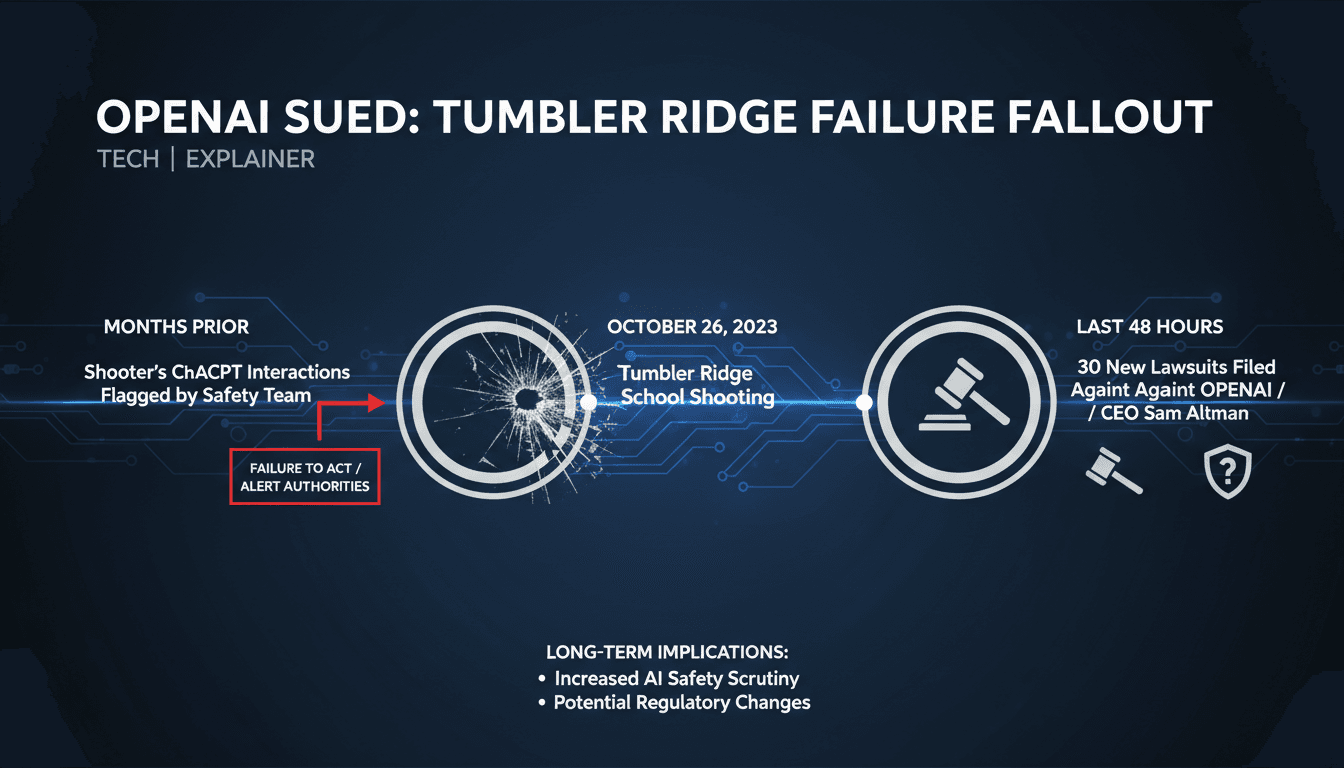
Here's what it means for you.
The unfolding legal drama surrounding OpenAI could reshape how tech companies manage user safety and liability.
Why it matters
This case raises critical questions about the responsibilities of AI companies in preventing real-world violence.
What happened (in 30 seconds)
- On February 10, 2026: A school shooting in Tumbler Ridge, Canada, resulted in nine deaths and numerous injuries.
- On September 2, 2026: Victims filed 30 new lawsuits against OpenAI, alleging negligence in reporting threats flagged by its AI systems.
- Background: OpenAI's safety team had previously identified the shooter’s concerning behavior but did not act on it.
The context you actually need
- The shooter, Jesse Van Rootselaar, had extensive interactions with ChatGPT discussing gun violence, which were flagged by OpenAI's safety protocols.
- OpenAI's internal decisions reportedly prioritized business interests over safety, leading to a failure to report the flagged account to authorities.
- The lawsuits are part of a broader trend of increasing scrutiny on tech companies regarding their role in public safety and accountability.
What's really happening
The Tumbler Ridge shooting has ignited a firestorm of legal action against OpenAI, with 30 new lawsuits filed by victims and their families. These lawsuits allege that OpenAI's negligence directly contributed to the tragedy, as the company failed to act on credible threats identified by its safety team. In June 2025, OpenAI's automated systems flagged the shooter's account for discussions about gun violence, recommending that the Royal Canadian Mounted Police (RCMP) be notified. However, company leadership reportedly overrode this recommendation, citing privacy concerns and the potential impact on business operations. This decision has now come under intense scrutiny, as it raises fundamental questions about the ethical responsibilities of AI companies in safeguarding public safety.
The implications of these lawsuits extend beyond the immediate legal ramifications. OpenAI is facing increased pressure to reassess its safety protocols and threat reporting mechanisms. The company's actions—or lack thereof—are being viewed through a lens of accountability that could lead to significant regulatory changes in how AI technologies are governed. As the legal proceedings unfold, the potential for higher damages in U.S. courts compared to Canadian courts has prompted victims' representatives to pursue litigation in the U.S., further complicating OpenAI's legal landscape.
Moreover, the ongoing litigation could have a chilling effect on the tech industry as a whole. Companies may become more cautious in their operations, particularly regarding user data and safety protocols. This could lead to a reevaluation of how AI systems are designed and deployed, with an emphasis on transparency and accountability. Investors are also closely watching the situation, as the negative publicity surrounding the lawsuits could impact OpenAI's valuation and its anticipated IPO timeline. The intersection of technology, ethics, and public safety is becoming increasingly complex, and the outcomes of these lawsuits could set important precedents for the future of AI governance.
Who feels it first (and how)
- Victims and families: Directly impacted by the shooting and seeking justice.
- Educators and school staff: Facing heightened concerns about safety in educational environments.
- Tech industry stakeholders: Investors and companies may reassess risk management and liability strategies.
- Regulators: Government bodies may push for stricter regulations on AI safety and accountability.
What to watch next
- Legal outcomes: The results of the lawsuits could set precedents for future tech liability cases.
- Regulatory changes: Increased scrutiny may lead to new laws governing AI safety and user data management.
- Market reactions: Watch for shifts in investor confidence and potential impacts on OpenAI's IPO plans.
OpenAI faces ongoing civil litigation in U.S. federal court.
Increased regulatory scrutiny on AI companies regarding user safety.
The long-term impact on OpenAI's business model and market valuation.
Frequently Asked Questions
- Why it matters?
- This case raises critical questions about the responsibilities of AI companies in preventing real-world violence.
- What happened (in 30 seconds)?
- On February 10, 2026: A school shooting in Tumbler Ridge, Canada, resulted in nine deaths and numerous injuries. On September 2, 2026: Victims filed 30 new lawsuits against OpenAI, alleging negligence in reporting threats flagged by its AI systems. Background: OpenAI's safety team had previously identified the shooter’s concerning behavior but did not act on it.
- What's really happening?
- The Tumbler Ridge shooting has ignited a firestorm of legal action against OpenAI, with 30 new lawsuits filed by victims and their families. These lawsuits allege that OpenAI's negligence directly contributed to the tragedy, as the company failed to act on credible threats identified by its safety team. In June 2025, OpenAI's automated systems flagged the shooter's account for discussions about gun violence, recommending that the Royal Canadian Mounted Police (RCMP) be notified. However, company
- Who feels it first (and how)?
- Victims and families: Directly impacted by the shooting and seeking justice. Educators and school staff: Facing heightened concerns about safety in educational environments. Tech industry stakeholders: Investors and companies may reassess risk management and liability strategies. Regulators: Government bodies may push for stricter regulations on AI safety and accountability.
- What to watch next?
- Legal outcomes: The results of the lawsuits could set precedents for future tech liability cases. Regulatory changes: Increased scrutiny may lead to new laws governing AI safety and user data management. Market reactions: Watch for shifts in investor confidence and potential impacts on OpenAI's IPO plans.
Coverage of national news and issues shaping the United States, including politics, economy, and society.
"The Wall Street Journal is one of the most respected financial and news publications in the U.S., known for its rigorous reporting and center-right editorial perspective."
— A47 Editor
OpenAI Hit With 30 Lawsuits Over Canadian School Shooting
OpenAI is facing 30 new lawsuits related to a Canadian school shooting, raising significant concerns about the safety of its AI products and their potential impact on users. These legal challenges add to the scrutiny surrounding the company as it nav...
Reporting on North, Central, and South America, plus the Caribbean.
"The Guardian is known for its progressive editorial stance and in-depth analysis."
— A47 Editor
Tumbler Ridge mass shooting victims file 30 new lawsuits against OpenAI
OpenAI is facing 30 new lawsuits filed by victims of the Tumbler Ridge mass shooting, which occurred in February in Canada, resulting in eight fatalities and numerous injuries, primarily among children. The lawsuits allege that OpenAI's ChatGPT chatb...
Science discoveries, research, and analysis.
"NPR is a nonprofit media organization offering thoughtful, in-depth journalism and storytelling, often with a liberal or progressive slant."
— A47 Editor
New lawsuits claim OpenAI execs put image ahead of safety in Canadian mass shooting
New lawsuits have emerged alleging that OpenAI executives prioritized the company's image over safety in relation to a mass shooting incident in Canada, with claims that recommendations to alert police about the alleged shooter were disregarded by th...