
Nvidia Launches PAIR Software to Optimize Idle Home GPUs for Local AI Inference
Here's what it means for you.
You can now leverage your home computing power to run AI tasks more efficiently and privately.
Why it matters
The rise of local AI inference solutions like Nvidia's PAIR reflects a shift towards privacy and cost-effectiveness in AI computing.
What happened (in 30 seconds)
- Nvidia launched PAIR: On September 3, 2026, Nvidia introduced the Personal AI Router (PAIR) software at IFA in Berlin.
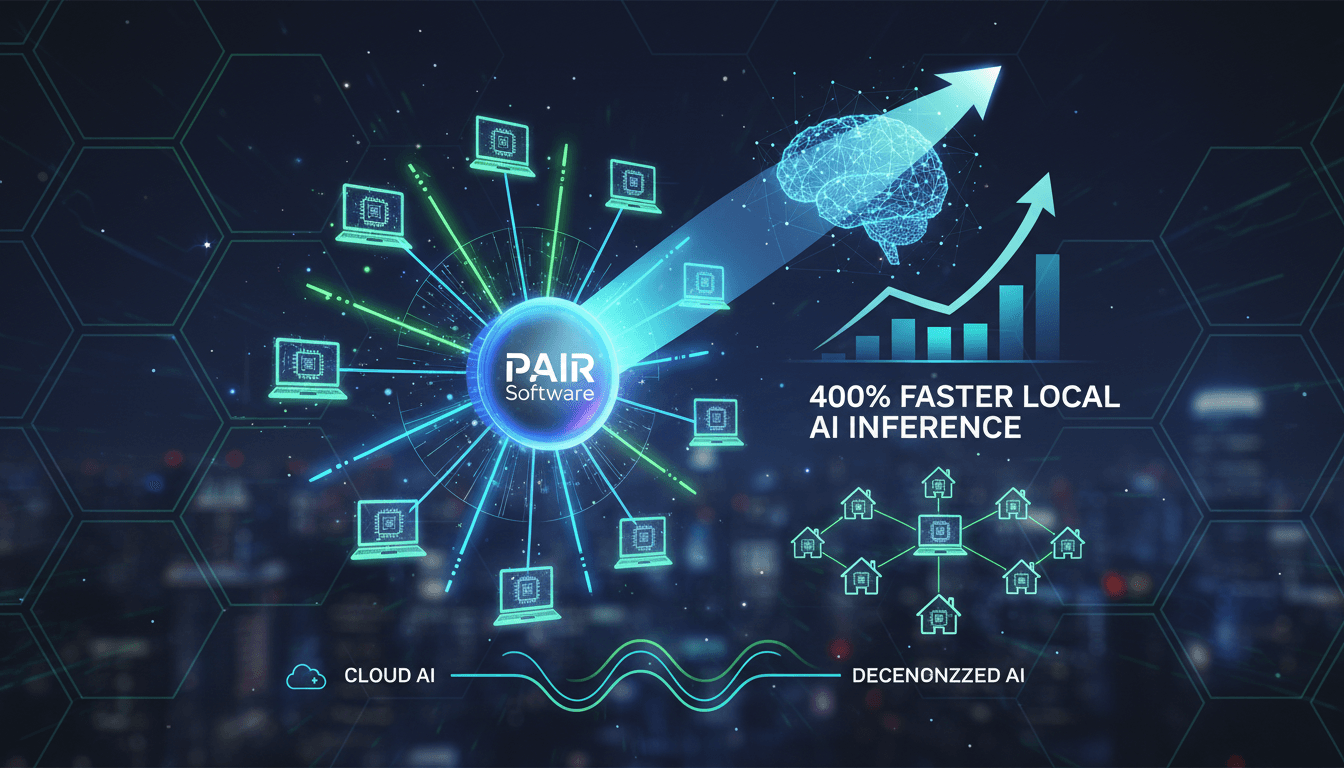
- Pooling resources: PAIR aggregates idle GPUs and Macs in home networks to accelerate local AI workloads without needing cloud services.
- Public beta available: The software is currently in public beta for Windows, Linux, and macOS users.
The context you actually need
- Growing demand for local AI: Increasing privacy concerns and high costs associated with cloud AI services have driven interest in local solutions.
- Consumer hardware proliferation: The availability of powerful consumer GPUs in households has made local AI inference more feasible.
- Geopolitical factors: Emphasis on data sovereignty and energy efficiency is pushing users towards decentralized computing solutions.
What's really happening
Nvidia's PAIR software represents a significant evolution in how AI workloads can be managed and executed at home. By utilizing underutilized consumer hardware, PAIR allows users to create local AI inference clusters without the need for additional infrastructure or constant internet connectivity. This is particularly relevant in an era where privacy concerns are paramount, and the costs associated with cloud-based AI services are rising.
The software operates by discovering compatible devices on local networks using mDNS (Multicast DNS). Once identified, devices can be paired securely using six-digit codes and mutual TLS (mTLS). This secure pairing allows PAIR to route independent inference requests to idle nodes, effectively turning a collection of home devices into a cohesive computing unit. For instance, in demonstrations, a three-device cluster was able to reduce the time taken to complete a five-subagent workload from 18 minutes on a single RTX Spark laptop to just 8 minutes and 48 seconds.
The software supports a range of devices, including Nvidia's RTX 20-series and newer GPUs, RTX PRO cards, DGX Spark systems, and Apple M4+ silicon. This broad compatibility means that many households with high-performance machines can participate in local AI tasks. The elastic participation feature allows devices to join or leave the cluster dynamically, making it adaptable to varying workloads and user needs.
The implications of PAIR extend beyond mere convenience. By enabling local AI inference, Nvidia is addressing the growing demand for privacy-focused solutions that do not rely on centralized cloud services. This shift is particularly relevant as users become increasingly aware of data privacy issues and the potential costs associated with cloud computing. Moreover, the software's open-source nature encourages community involvement and innovation, potentially leading to further enhancements and integrations with existing local AI tools.
Who feels it first (and how)
- Tech-savvy homeowners: Individuals with multiple high-performance devices will benefit from enhanced AI capabilities.
- Small office/home office (SOHO) users: Professionals working from home can leverage their idle machines for efficient AI tasks.
- AI developers: Those developing local AI applications will find PAIR a valuable tool for testing and deployment.
What to watch next
- User adoption rates: Monitoring how quickly users integrate PAIR into their home networks will indicate its market impact.
- Performance benchmarks: Future comparisons of AI task completion times with and without PAIR will highlight its effectiveness.
- Integration with existing tools: Watch for partnerships or enhancements that could expand PAIR's capabilities within the local AI ecosystem.
PAIR is currently in public beta and available for multiple operating systems.
Increased adoption of local AI solutions as privacy concerns and cloud costs continue to rise.
The long-term impact on cloud AI service providers and how they will adapt to this shift.
Frequently Asked Questions
- Why it matters?
- The rise of local AI inference solutions like Nvidia's PAIR reflects a shift towards privacy and cost-effectiveness in AI computing.
- What happened (in 30 seconds)?
- Nvidia launched PAIR: On September 3, 2026, Nvidia introduced the Personal AI Router (PAIR) software at IFA in Berlin. Pooling resources: PAIR aggregates idle GPUs and Macs in home networks to accelerate local AI workloads without needing cloud services. Public beta available: The software is currently in public beta for Windows, Linux, and macOS users.
- What's really happening?
- Nvidia's PAIR software represents a significant evolution in how AI workloads can be managed and executed at home. By utilizing underutilized consumer hardware, PAIR allows users to create local AI inference clusters without the need for additional infrastructure or constant internet connectivity. This is particularly relevant in an era where privacy concerns are paramount, and the costs associated with cloud-based AI services are rising. The software operates by discovering compatible devices
- Who feels it first (and how)?
- Tech-savvy homeowners: Individuals with multiple high-performance devices will benefit from enhanced AI capabilities. Small office/home office (SOHO) users: Professionals working from home can leverage their idle machines for efficient AI tasks. AI developers: Those developing local AI applications will find PAIR a valuable tool for testing and deployment.
- What to watch next?
- User adoption rates: Monitoring how quickly users integrate PAIR into their home networks will indicate its market impact. Performance benchmarks: Future comparisons of AI task completion times with and without PAIR will highlight its effectiveness. Integration with existing tools: Watch for partnerships or enhancements that could expand PAIR's capabilities within the local AI ecosystem.
Tech news, hardware, and AI tools coverage.
"PC/tech site increasingly covering AI hardware and apps."
— A47 Editor
Nvidia's PAIR software turns idle home computers into a local AI cluster
Nvidia has launched the Personal AI Router (PAIR), an open-source software that transforms idle home computers into a local AI cluster, allowing users to run AI applications like chatbots and agents across multiple devices. This initiative aims to op...
Daily AI news: models, tools, and policy.
"Independent outlet tracking the fast pace of AI."
— A47 Editor
Nvidia wants your home network to work like a mini data center for local AI
Nvidia has introduced the Personal AI Router (PAIR), a system designed to optimize home networks by distributing local AI tasks across multiple devices, effectively transforming them into a mini data center. This innovation aims to reduce wait times ...
Consumer technology news with AI coverage.
"Gadget and tech site reporting on AI in products."
— A47 Editor
NVIDIA's PAIR lets you use idle PCs for AI computing tasks
NVIDIA has introduced PAIR, a free and open-source tool that enables users to leverage idle PCs for AI computing tasks, effectively distributing workloads across multiple devices. This initiative aims to optimize computing resources and enhance the e...
Covers consumer technology, electronics, gadgets, and product reviews.
"Engadget is a trusted source for gadget reviews and consumer tech news, known for its hands-on analysis and industry coverage."
— A47 Editor
NVIDIA's PAIR lets you use idle PCs for AI computing tasks
NVIDIA has introduced PAIR, a free and open-source tool that enables users to leverage idle PCs for AI computing tasks, effectively distributing workloads across multiple devices. This initiative aims to optimize computing resources and enhance the e...