
Nvidia Launches PAIR Software for Local AI Inference Using Idle Home Computers
Here's what it means for you.
You can now leverage your home devices for AI tasks without relying on cloud services.
Why it matters
The rise of local AI inference tools like Nvidia's PAIR addresses privacy concerns and optimizes underutilized computing resources.
What happened (in 30 seconds)
- Nvidia released its Personal AI Router (PAIR) software on September 3, 2026, enabling local AI inference across various devices.
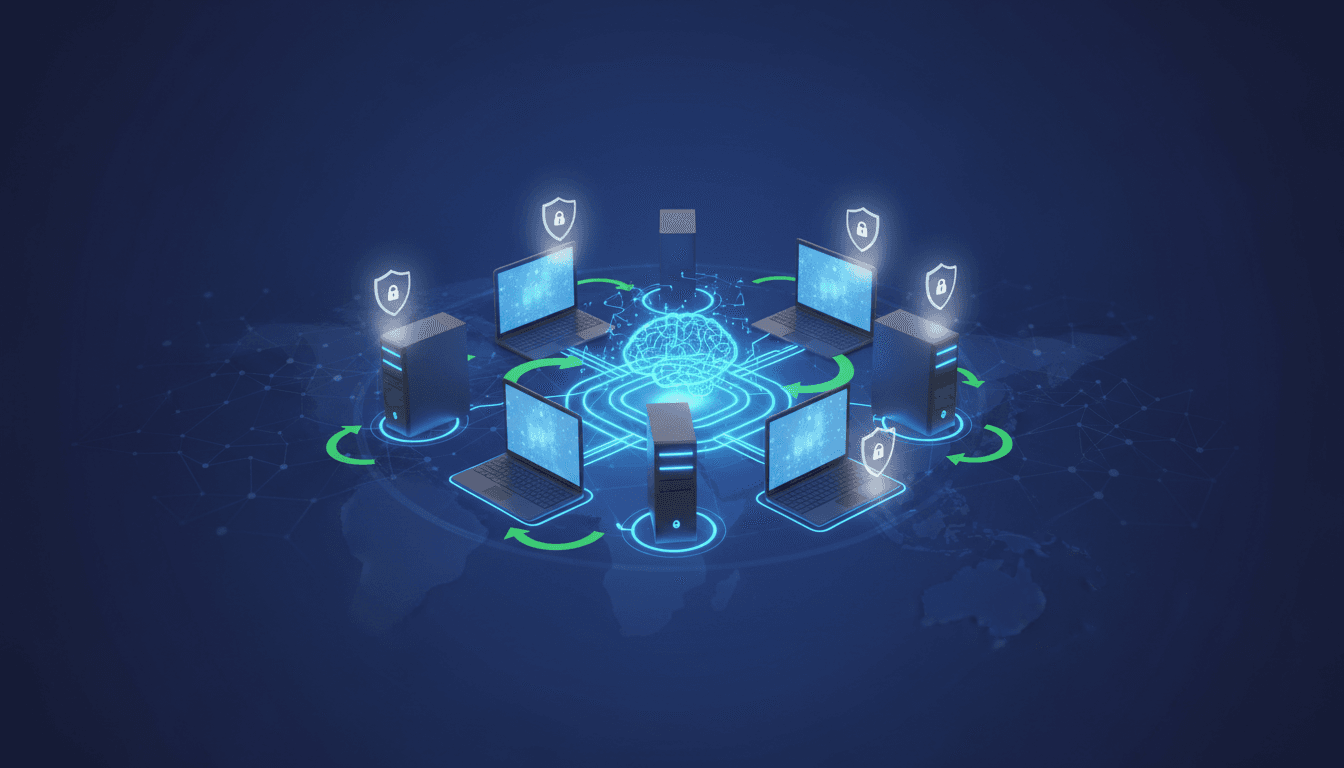
- The software connects idle home computers, including GeForce RTX GPUs and Apple M4+ Macs, to form a personal AI cluster.
- Early reactions highlight its ease of setup and privacy advantages, with no formal governmental responses reported.
The context you actually need
- Growing demand for local AI inference is driven by privacy requirements and the need to reduce latency and cloud costs.
- Prior tools like Ollama were limited to single machines, restricting scalability in diverse home environments.
- Nvidia's PAIR allows for distributed processing, enabling multiple devices to work together efficiently on AI workloads.
What's really happening
Nvidia's PAIR software represents a significant shift in how AI workloads can be managed at home. By connecting various devices—ranging from high-performance GeForce RTX GPUs to Apple M4+ Macs—PAIR creates a personal AI cluster that can handle inference tasks without the need for cloud connectivity. This is particularly relevant in an era where privacy concerns are paramount, as users can keep their data within their local network.
The software operates by discovering compatible devices on the local network using mDNS (Multicast DNS) and pairing them through a secure six-digit code protected by mTLS (Mutual Transport Layer Security). This setup allows for seamless integration of existing AI tools like Ollama and LM Studio, distributing inference requests across available nodes without requiring any changes to the application code.
A demonstration showcased the efficiency of this system: a three-device cluster completed a five-subagent workload in 8 minutes and 48 seconds, compared to 18 minutes on a single RTX Spark laptop. This highlights the potential for significant time savings and efficiency gains when leveraging multiple devices for AI tasks.
The beta version of PAIR supports a wide range of hardware, including RTX 20-series and newer GPUs, RTX PRO cards, DGX Spark systems, and Apple M4+ silicon across various operating systems. This broad compatibility is crucial for maximizing the utility of consumer devices, many of which often remain idle.
The implications of PAIR extend beyond mere convenience. By enabling local processing, Nvidia is addressing a growing market demand for privacy-conscious solutions that do not rely on cloud services. This is particularly relevant in regions like Dubai, where strict data regulations and high electricity costs for always-on infrastructure make local processing an attractive option.
As more consumers become aware of the capabilities of their existing hardware, the potential for local AI adoption without additional hardware purchases could reshape the landscape of personal computing and AI utilization.
Who feels it first (and how)
- Tech-savvy consumers: Early adopters who are keen on maximizing their existing hardware for AI tasks.
- Small businesses: Companies looking to reduce costs associated with cloud services while maintaining data privacy.
- Residents in data-sensitive regions: Individuals in areas with strict data regulations, such as Dubai, who prioritize local processing for privacy reasons.
What to watch next
- Adoption rates: Monitor how quickly consumers and businesses begin to implement PAIR in their operations, indicating a shift towards local AI solutions.
- Privacy regulations: Keep an eye on how evolving data privacy laws may impact the use of local AI tools and consumer trust in technology.
- Hardware sales: Watch for trends in GPU and compatible hardware sales, as increased interest in local AI processing could drive demand for specific devices.
Nvidia's PAIR software is currently in public beta and supports a variety of devices.
Increased adoption of local AI solutions will lead to a decline in reliance on cloud services for AI tasks.
The long-term impact on consumer behavior regarding hardware upgrades and cloud service subscriptions remains to be seen.
Frequently Asked Questions
- Why it matters?
- The rise of local AI inference tools like Nvidia's PAIR addresses privacy concerns and optimizes underutilized computing resources.
- What happened (in 30 seconds)?
- Nvidia released its Personal AI Router (PAIR) software on September 3, 2026, enabling local AI inference across various devices. The software connects idle home computers, including GeForce RTX GPUs and Apple M4+ Macs, to form a personal AI cluster. Early reactions highlight its ease of setup and privacy advantages, with no formal governmental responses reported.
- What's really happening?
- Nvidia's PAIR software represents a significant shift in how AI workloads can be managed at home. By connecting various devices—ranging from high-performance GeForce RTX GPUs to Apple M4+ Macs—PAIR creates a personal AI cluster that can handle inference tasks without the need for cloud connectivity. This is particularly relevant in an era where privacy concerns are paramount, as users can keep their data within their local network. The software operates by discovering compatible devices on the
- Who feels it first (and how)?
- Tech-savvy consumers: Early adopters who are keen on maximizing their existing hardware for AI tasks. Small businesses: Companies looking to reduce costs associated with cloud services while maintaining data privacy. Residents in data-sensitive regions: Individuals in areas with strict data regulations, such as Dubai, who prioritize local processing for privacy reasons.
- What to watch next?
- Adoption rates: Monitor how quickly consumers and businesses begin to implement PAIR in their operations, indicating a shift towards local AI solutions. Privacy regulations: Keep an eye on how evolving data privacy laws may impact the use of local AI tools and consumer trust in technology. Hardware sales: Watch for trends in GPU and compatible hardware sales, as increased interest in local AI processing could drive demand for specific devices.
Tech news, hardware, and AI tools coverage.
"PC/tech site increasingly covering AI hardware and apps."
— A47 Editor
Nvidia's PAIR software turns idle home computers into a local AI cluster
Nvidia has launched the Personal AI Router (PAIR), an open-source software that transforms idle home computers into a local AI cluster, allowing users to run AI applications like chatbots and agents across multiple devices. This initiative aims to op...
Daily AI news: models, tools, and policy.
"Independent outlet tracking the fast pace of AI."
— A47 Editor
Nvidia wants your home network to work like a mini data center for local AI
Nvidia has introduced the Personal AI Router (PAIR), a system designed to optimize home networks by distributing local AI tasks across multiple devices, effectively transforming them into a mini data center. This innovation aims to reduce wait times ...
Consumer technology news with AI coverage.
"Gadget and tech site reporting on AI in products."
— A47 Editor
NVIDIA's PAIR lets you use idle PCs for AI computing tasks
NVIDIA has introduced PAIR, a free and open-source tool that enables users to leverage idle PCs for AI computing tasks, effectively distributing workloads across multiple devices. This initiative aims to optimize computing resources and enhance the e...
Covers consumer technology, electronics, gadgets, and product reviews.
"Engadget is a trusted source for gadget reviews and consumer tech news, known for its hands-on analysis and industry coverage."
— A47 Editor
NVIDIA's PAIR lets you use idle PCs for AI computing tasks
NVIDIA has introduced PAIR, a free and open-source tool that enables users to leverage idle PCs for AI computing tasks, effectively distributing workloads across multiple devices. This initiative aims to optimize computing resources and enhance the e...