
Meta Launches Muse Spark 1.3 AI Model for Enhanced Coding and Agentic Workflows
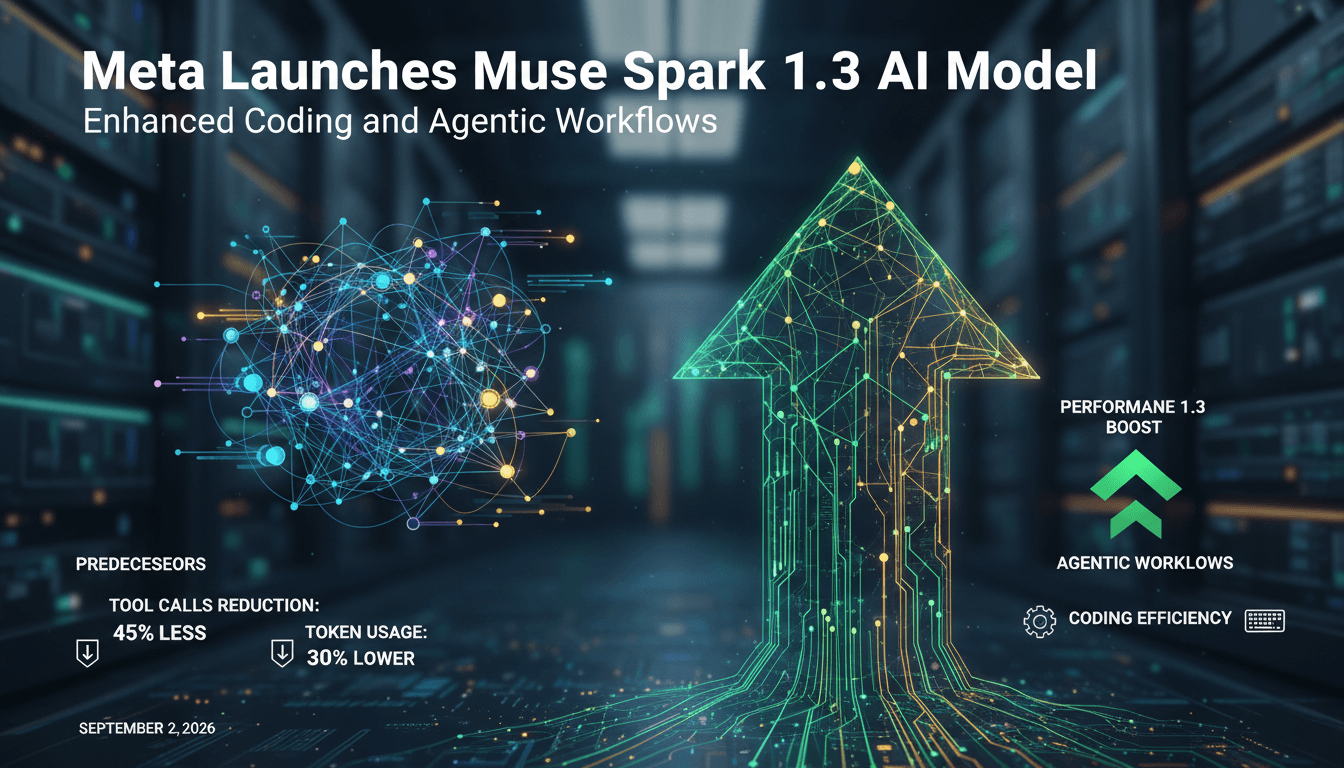
Here's what it means for you.
If you're a developer or tech firm, this update offers enhanced tools for coding and AI agent development without raising costs.
Why it matters
Meta's latest AI model release underscores the escalating competition in the generative AI sector, impacting how developers approach agentic workflows.
What happened (in 30 seconds)
- Meta released Muse Spark 1.3 on September 2, 2026, optimizing it for coding tasks and agentic workflows.
- The model improves performance by reducing tool calls by approximately 20% and token usage by 25% compared to its predecessor.
- Developers gain access to the model through Muse Code and the Meta Model API, maintaining previous pricing levels.
The context you actually need
- Meta introduced the Muse Spark family in April 2026, with rapid iterations based on developer feedback and competitive pressures.
- The September update focuses on long-horizon tasks, enhancing context tracking and safety against adversarial inputs.
- The AI landscape is competitive, with major players like OpenAI and Google pushing for advancements in usability and performance.
What's really happening
Meta's deployment of Muse Spark 1.3 is a strategic move in the rapidly evolving landscape of generative AI. The company aims to solidify its position as a leader in agentic AI capabilities, which are increasingly critical for developers focused on creating sophisticated coding systems and AI agents. The update reflects a response to both internal feedback from developers and external pressures from competitors like OpenAI, Anthropic, and Google.
The model's enhancements—specifically, a 20% reduction in unnecessary tool calls and a 25% decrease in token usage—are designed to streamline workflows. This means developers can expect more efficient coding processes, which is crucial for long-term projects that require sustained focus and resource management. By improving context tracking and plan correction, Muse Spark 1.3 allows for a more intuitive interaction with AI, reducing the cognitive load on developers.
Moreover, the decision to maintain pricing levels while enhancing performance is a calculated risk. It positions Meta favorably against competitors who may not offer similar value propositions. This pricing strategy could attract more developers to the Meta ecosystem, fostering a community that contributes to further advancements in AI capabilities.
The broader implications of this release extend beyond just improved performance metrics. As developers in regions like Dubai gain access to these tools, they can leverage competitively priced AI solutions to enhance local software engineering initiatives. This could lead to a surge in innovation and productivity within the tech sector, as developers are empowered to create more complex and capable AI agents without incurring additional costs.
In summary, Muse Spark 1.3 is not just an incremental update; it represents Meta's commitment to advancing agentic AI while navigating a competitive landscape. The focus on usability improvements and cost-effectiveness is likely to resonate with developers, potentially reshaping how they approach AI integration in their projects.
Who feels it first (and how)
- Developers: Gain immediate access to improved coding tools and workflows.
- Tech firms: Benefit from enhanced capabilities without increased costs, fostering innovation.
- Startups: Leverage competitive pricing to build AI-driven solutions, enhancing market entry opportunities.
- Educational institutions: May adopt the model for training purposes, impacting curriculum development in AI and coding.
What to watch next
- User adoption rates: Monitoring how quickly developers integrate Muse Spark 1.3 into their workflows will indicate its market impact.
- Competitor responses: Watch for updates from OpenAI, Anthropic, and Google as they react to Meta's advancements.
- Performance benchmarks: Future comparisons of Muse Spark 1.3 against other models will reveal its standing in the competitive landscape.
Muse Spark 1.3 is available through Muse Code and the Meta Model API.
Increased adoption among developers in various sectors, particularly in tech hubs like Dubai.
The long-term impact on Meta's market share in the generative AI sector.
Frequently Asked Questions
- Why it matters?
- Meta's latest AI model release underscores the escalating competition in the generative AI sector, impacting how developers approach agentic workflows.
- What happened (in 30 seconds)?
- Meta released Muse Spark 1.3 on September 2, 2026, optimizing it for coding tasks and agentic workflows. The model improves performance by reducing tool calls by approximately 20% and token usage by 25% compared to its predecessor. Developers gain access to the model through Muse Code and the Meta Model API, maintaining previous pricing levels.
- What's really happening?
- Meta's deployment of Muse Spark 1.3 is a strategic move in the rapidly evolving landscape of generative AI. The company aims to solidify its position as a leader in agentic AI capabilities, which are increasingly critical for developers focused on creating sophisticated coding systems and AI agents. The update reflects a response to both internal feedback from developers and external pressures from competitors like OpenAI, Anthropic, and Google. The model's enhancements—specifically, a 20% redu
- Who feels it first (and how)?
- Developers: Gain immediate access to improved coding tools and workflows. Tech firms: Benefit from enhanced capabilities without increased costs, fostering innovation. Startups: Leverage competitive pricing to build AI-driven solutions, enhancing market entry opportunities. Educational institutions: May adopt the model for training purposes, impacting curriculum development in AI and coding.
- What to watch next?
- User adoption rates: Monitoring how quickly developers integrate Muse Spark 1.3 into their workflows will indicate its market impact. Competitor responses: Watch for updates from OpenAI, Anthropic, and Google as they react to Meta's advancements. Performance benchmarks: Future comparisons of Muse Spark 1.3 against other models will reveal its standing in the competitive landscape.
English-language digital publication covering business, politics, technology, and current affairs.
"The Arabian Post mixes original and syndicated-style coverage with a broad regional and global business-news orientation."
— A47 Editor
Meta deploys Muse Spark 1.3 for developers
Meta has initiated the rollout of Muse Spark 1.3, an upgraded artificial intelligence model accessible through its Muse Code coding agent and Meta Model API. This new version enhances performance in coding and agentic tasks while maintaining the same...
Policy and strategy for digital leaders, including AI.
"Analyzes AI in the context of enterprise strategy."
— A47 Editor
Meta releases Muse Spark 1.3 for coding and AI agents
Meta has announced the release of Muse Spark 1.3, an advanced AI model aimed at enhancing coding and agentic tasks. This update follows the company's ongoing efforts to improve its AI capabilities and user interaction with applications, particularly ...
AI news with an enterprise and cloud focus.
"Covers AI in the context of data infrastructure, cloud, and enterprise stacks."
— A47 Editor
Meta says it has caught up with Anthropic and OpenAI with Muse Spark 1.3, its most powerful AI model yet
Meta Platforms Inc. has announced the release of Muse Spark 1.3, its most advanced large language model to date, claiming it has caught up with leading AI labs such as Anthropic and OpenAI. The model is available to developers for a fee, marking a si...