
Microsoft to Expand Global Data Center Capacity to Over 38 Gigawatts by 2032
Why it matters
This expansion reflects a critical response to soaring demand for AI computing power, impacting global tech infrastructure and energy markets.
What happened (in 30 seconds)
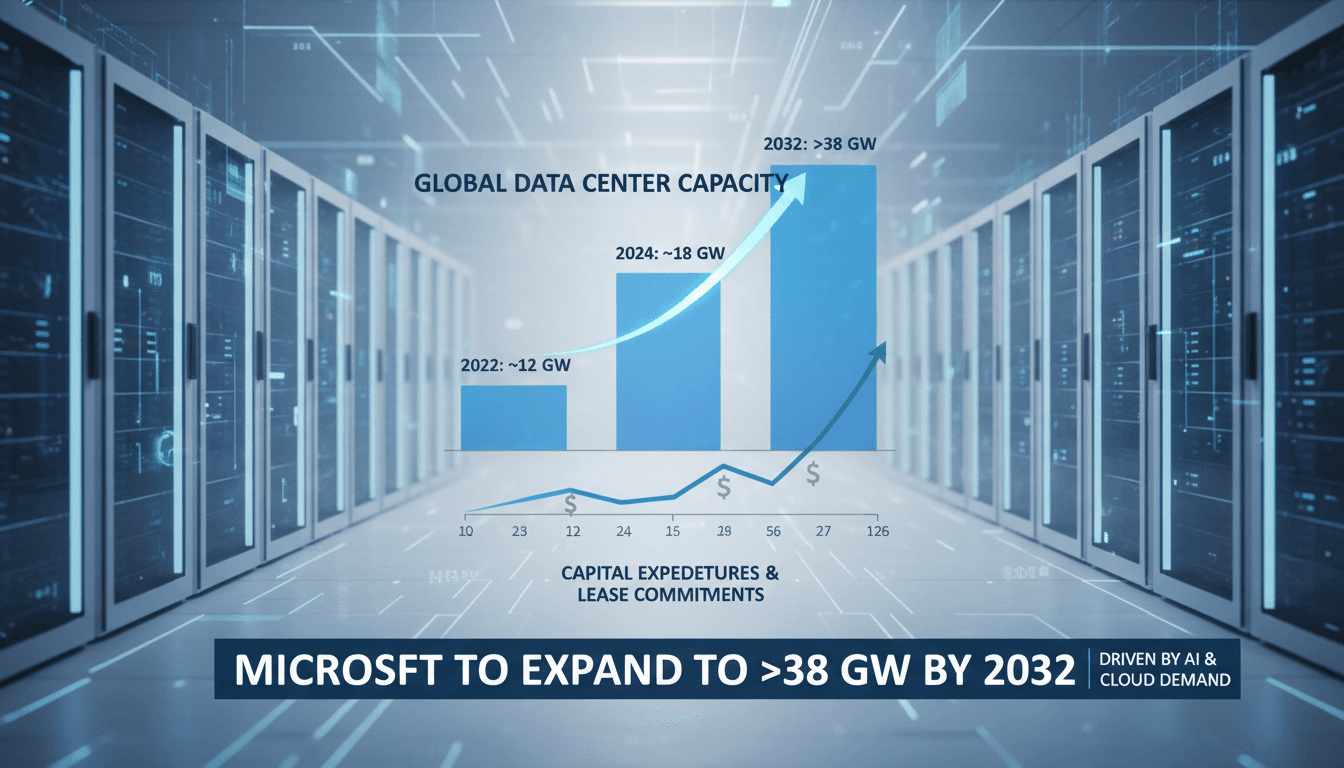
- Microsoft announced plans to triple its global data center capacity from 12 gigawatts to over 38 gigawatts by 2032.
- The expansion is driven by persistent computing shortages that have limited AI and cloud service offerings.
- Projected capital expenditures for 2026 are set at $175 billion, highlighting the financial scale of this initiative.
The context you actually need
- Microsoft has faced capacity constraints in its Azure cloud platform, leading to service restrictions and client losses.
- The company reported over $329 billion in uncommenced data center lease obligations as of June 30, 2026, indicating a significant commitment to infrastructure.
- Only 2 gigawatts of current capacity is AI-optimized, with plans to increase that share to roughly one-third, underscoring the urgency of this expansion.
What's really happening
Microsoft's ambitious plan to expand its data center capacity is a direct response to the explosive growth in demand for AI services and cloud computing. As businesses increasingly rely on AI-driven solutions, the pressure on existing infrastructure has become unsustainable. The company has already turned away enterprise clients and restricted services like Xbox cloud gaming due to these capacity constraints. This situation has prompted Microsoft to prioritize its data center expansion, which is expected to exceed 38 gigawatts by 2032.
The financial implications of this expansion are staggering. Microsoft is projected to spend $175 billion on capital expenditures in 2026 alone, a clear indication of the scale of investment required to meet the surging demand. This includes both owned and leased facilities, with a focus on optimizing efficiency and extending lease durations to mitigate costs. The company is also collaborating with power infrastructure providers to ensure that the expansion does not adversely impact the grid.
The broader industry context reveals that Microsoft is not alone in this race. Other tech giants, such as Meta, are also ramping up their data center commitments, pushing total hyperscaler obligations above $850 billion. This collective surge in investment highlights a critical shift in the tech landscape, where the demand for AI capabilities is reshaping infrastructure strategies across the board.
Moreover, the expansion is not just about increasing capacity; it’s also about enhancing the quality of services. Currently, only about 2 gigawatts of Microsoft's data center capacity is optimized for AI workloads. The goal is to increase this to approximately one-third, which will significantly improve the performance of AI applications and services. This shift is essential for maintaining competitiveness in a market where AI capabilities are becoming a key differentiator.
As Microsoft embarks on this journey, it faces significant execution challenges, including regulatory hurdles and the need for substantial energy resources. The company has committed to funding grid upgrades to avoid passing costs onto consumers, reflecting a growing awareness of the social implications of such large-scale infrastructure projects.
Who feels it first (and how)
- Cloud service users: Increased availability and potentially lower costs for cloud services.
- AI developers: Enhanced access to computing power for developing and deploying AI applications.
- Energy markets: Increased demand for energy resources, impacting pricing and availability.
- Local economies: Job creation in construction and tech sectors as data centers are built and maintained.
What to watch next
- Regulatory developments: Watch for any new regulations affecting data center expansions and energy consumption, as these could impact timelines and costs.
- Market responses: Monitor how competitors react to Microsoft’s expansion, particularly in terms of pricing and service offerings.
- Energy supply trends: Keep an eye on energy market fluctuations, as increased demand from data centers could lead to higher prices or supply challenges.
Microsoft plans to triple its data center capacity to over 38 gigawatts by 2032.
Increased competition among tech giants for AI infrastructure will drive further investments.
The long-term impact on energy markets and consumer pricing remains to be seen.
Frequently Asked Questions
- Why it matters?
- This expansion reflects a critical response to soaring demand for AI computing power, impacting global tech infrastructure and energy markets.
- What happened (in 30 seconds)?
- Microsoft announced plans to triple its global data center capacity from 12 gigawatts to over 38 gigawatts by 2032. The expansion is driven by persistent computing shortages that have limited AI and cloud service offerings. Projected capital expenditures for 2026 are set at $175 billion, highlighting the financial scale of this initiative.
- What's really happening?
- Microsoft's ambitious plan to expand its data center capacity is a direct response to the explosive growth in demand for AI services and cloud computing. As businesses increasingly rely on AI-driven solutions, the pressure on existing infrastructure has become unsustainable. The company has already turned away enterprise clients and restricted services like Xbox cloud gaming due to these capacity constraints. This situation has prompted Microsoft to prioritize its data center expansion, which is
- Who feels it first (and how)?
- Cloud service users: Increased availability and potentially lower costs for cloud services. AI developers: Enhanced access to computing power for developing and deploying AI applications. Energy markets: Increased demand for energy resources, impacting pricing and availability. Local economies: Job creation in construction and tech sectors as data centers are built and maintained.
- What to watch next?
- Regulatory developments: Watch for any new regulations affecting data center expansions and energy consumption, as these could impact timelines and costs. Market responses: Monitor how competitors react to Microsoft’s expansion, particularly in terms of pricing and service offerings. Energy supply trends: Keep an eye on energy market fluctuations, as increased demand from data centers could lead to higher prices or supply challenges.
Technology business news, market impacts, and innovation trends.
"Bloomberg is a premier financial and tech news provider, respected for its in-depth reporting and analytical rigor."
— A47 Editor
Microsoft's Data Center Plans Face Big Costs
Microsoft has announced plans to more than triple its data center capacity to address a computing shortage that has hindered its ability to meet demand for AI and cloud services. This expansion aims to add 26 gigawatts of compute power, bringing the ...
Technology business and AI-related headlines.
"Data-driven tech newsroom with global scope."
— A47 Editor
Microsoft's Data Center Plans Face Big Costs
Microsoft has announced plans to more than triple its data center capacity to address a computing shortage that has hindered its ability to meet demand for AI and cloud services. This expansion aims to add 26 gigawatts of compute power, bringing the ...
Technology business and AI-related headlines.
"Data-driven tech newsroom with global scope."
— A47 Editor
Microsoft Plans Data Center Push to Triple Its Computing Power
Microsoft Corp. has announced plans to more than triple its data center capacity, aiming to address a significant computing shortage that has limited its ability to meet the growing demand for AI and cloud services. This expansion is expected to add ...
Technology business news, market impacts, and innovation trends.
"Bloomberg is a premier financial and tech news provider, respected for its in-depth reporting and analytical rigor."
— A47 Editor
Microsoft Plans Data Center Push to Triple Its Computing Power
Microsoft Corp. has announced plans to more than triple its data center capacity, aiming to address a significant computing shortage that has limited its ability to meet the growing demand for AI and cloud services. This expansion is expected to add ...
Market-moving headlines impacting equities, bonds, and related risk assets.
"Real-time catalysts and volatility drivers across indices and sectors."
— A47 Editor
Microsoft plans 38 gigawatts of data center capacity by 2032, Bloomberg News reports
Microsoft plans to expand its data center capacity to 38 gigawatts by 2032, as reported by Bloomberg News. This ambitious initiative is part of the company's strategy to meet the growing demand for artificial intelligence (AI) solutions and enhance i...
Curated tech headlines including AI stories.
"Influential aggregator surfacing the day’s top tech/AI links."
— A47 Editor
Sources: Microsoft plans to expand its data center capacity from 12GW today to 38GW+ by 2032, with about a third of the 38GW centered on AI-specific chips (Bloomberg)
Microsoft plans to expand its data center capacity from the current 12 gigawatts (GW) to over 38 GW by 2032, with approximately one-third of this capacity dedicated to AI-specific chips. This expansion is a response to increasing demand for AI and cl...
Technology business news, market impacts, and innovation trends.
"Bloomberg is a premier financial and tech news provider, respected for its in-depth reporting and analytical rigor."
— A47 Editor
Microsoft AI Focused Data Center Plan to Add 26 Gigawatts of Compute
Microsoft has announced a significant plan to expand its data center capacity by adding 26 gigawatts of compute power, aiming for a total of 38 gigawatts to meet increasing demand for AI and cloud services. This decision comes after the company faced...
Technology business and AI-related headlines.
"Data-driven tech newsroom with global scope."
— A47 Editor
Microsoft AI Focused Data Center Plan to Add 26 Gigawatts of Compute
Microsoft has announced a significant plan to expand its data center capacity by adding 26 gigawatts of compute power, aiming for a total of 38 gigawatts to meet increasing demand for AI and cloud services. This decision comes after the company faced...