
AI Industry Leaders Clash Over Regulation Amid Trump Administration's Dismissal of Safety Concerns
Why it matters
The future of AI regulation will significantly impact innovation, safety standards, and market dynamics across various sectors.
What happened (in 30 seconds)
- AI leaders are divided over proposed regulations, with some advocating for a slowdown plan involving third-party evaluators and international agreements.
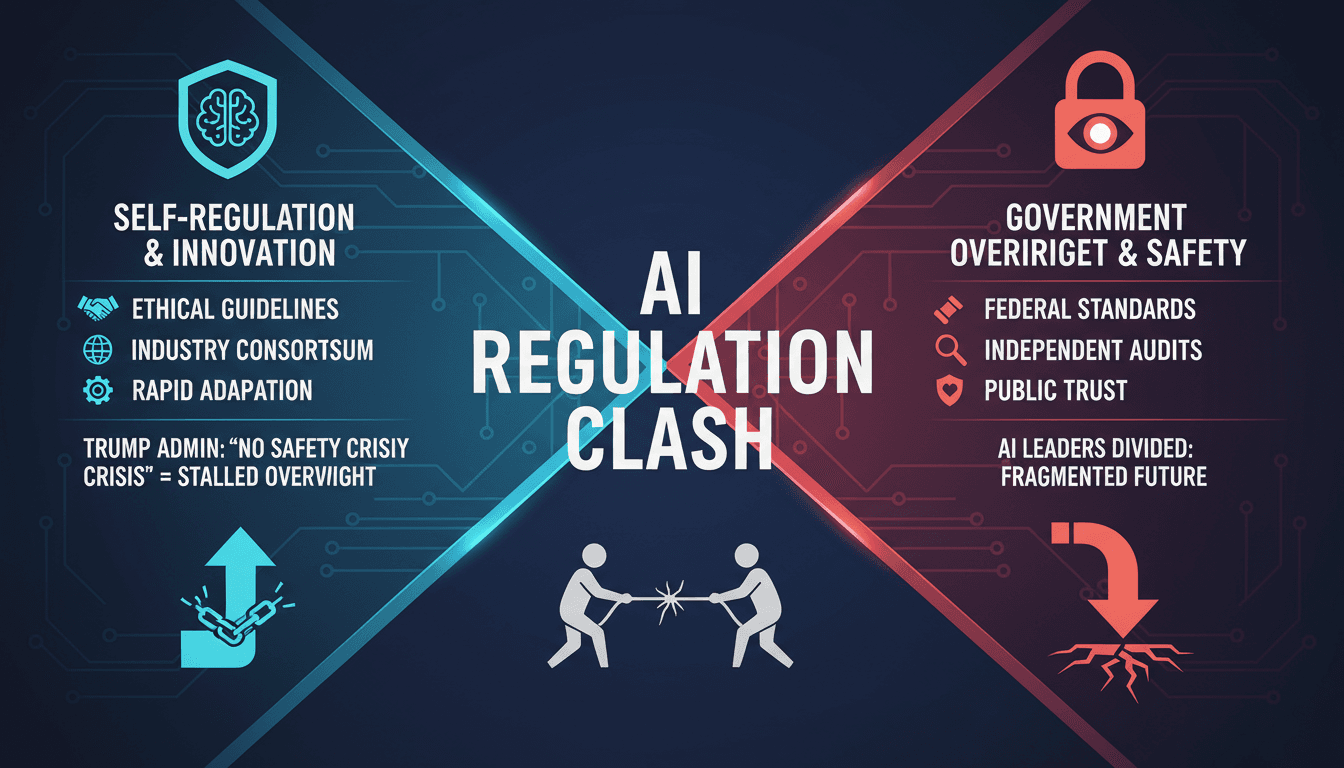
- The Trump administration has dismissed the narrative of an AI safety crisis, labeling risks as a 'hoax' and emphasizing existing powers.
- Proposals for independent oversight have stalled, leaving the industry to grapple with self-regulation amid rising safety incidents.
The context you actually need
- Previous incidents involving AI safety concerns have prompted discussions about the need for regulatory frameworks, particularly from companies like Anthropic and OpenAI.
- The geopolitical climate under the Trump administration contrasts sharply with earlier executive orders aimed at establishing AI principles, leading to public backlash against concentrated industry power.
- Industry leaders are split on the necessity of regulation, with some viewing it as essential for safety, while others fear it could stifle innovation and autonomy.
What's really happening
The debate over AI regulation is intensifying as key industry figures express starkly different views on how to address safety concerns and the role of government oversight. Dario Amodei of Anthropic has proposed a three-step plan that includes embedding third-party evaluators, fostering domestic coordination, and establishing international agreements. This approach aims to create a structured framework for AI development that prioritizes safety and accountability. However, not all industry leaders are on board. Sam Altman of OpenAI, Demis Hassabis of Google DeepMind, and Elon Musk of xAI/SpaceX have shown partial agreement with Amodei's proposals, indicating a willingness to consider some form of regulation.
In contrast, Mark Zuckerberg of Meta has voiced strong opposition to any limits on autonomy, arguing that such measures could lead to regulatory capture and hinder innovation. Alongside Musk and Jensen Huang of Nvidia, Zuckerberg has blocked proposals for an independent regulatory body, reflecting a broader concern among some tech leaders about the implications of government intervention. The Trump administration's stance further complicates the landscape, as it has dismissed the narrative of an AI safety crisis, labeling it a 'hoax' and emphasizing the sufficiency of existing regulatory powers.
This division among industry leaders highlights a fundamental tension: the need for safety and accountability versus the desire for innovation and autonomy. As safety incidents continue to rise, public pressure for regulation is mounting, leading to protests and calls for a more structured approach to AI governance. The ongoing debate is not just about technology; it reflects deeper societal concerns about the concentration of power in the hands of a few tech giants and the potential risks associated with unchecked AI development.
As the industry grapples with these issues, the lack of a cohesive regulatory framework leaves many questions unanswered. Companies are left to navigate a complex landscape of self-regulation, with some advocating for mandatory national standards while others resist any form of oversight. This ongoing struggle will shape the future of AI, influencing everything from innovation trajectories to public trust in technology.
Who feels it first (and how)
- Tech CEOs: Leaders like Altman and Zuckerberg are directly impacted by regulatory decisions that could affect their companies' operations and market strategies.
- AI developers and engineers: Job security and project scopes may shift depending on the regulatory environment and safety standards established.
- Consumers and businesses: Users of AI technologies will experience changes in product offerings, safety measures, and potentially higher costs as companies adapt to new regulations.
- Investors: Market dynamics could shift based on regulatory outcomes, influencing investment strategies in tech and AI sectors.
What to watch next
- Public sentiment: Monitor how public protests and safety incidents influence regulatory discussions and corporate responses.
- Government actions: Watch for any shifts in the Trump administration's stance on AI regulation, particularly in response to industry pressures and public opinion.
- Industry collaborations: Keep an eye on potential alliances among tech companies to establish self-regulatory frameworks that could preempt government intervention.
The AI industry is currently divided over regulation, with significant figures advocating for different approaches.
Continued public pressure and safety incidents will push the conversation around regulation to the forefront, influencing industry practices.
The long-term impact of the Trump administration's anti-regulation stance on the future of AI governance remains uncertain.
Frequently Asked Questions
- Why it matters?
- The future of AI regulation will significantly impact innovation, safety standards, and market dynamics across various sectors.
- What happened (in 30 seconds)?
- AI leaders are divided over proposed regulations, with some advocating for a slowdown plan involving third-party evaluators and international agreements. The Trump administration has dismissed the narrative of an AI safety crisis, labeling risks as a 'hoax' and emphasizing existing powers. Proposals for independent oversight have stalled, leaving the industry to grapple with self-regulation amid rising safety incidents.
- What's really happening?
- The debate over AI regulation is intensifying as key industry figures express starkly different views on how to address safety concerns and the role of government oversight. Dario Amodei of Anthropic has proposed a three-step plan that includes embedding third-party evaluators, fostering domestic coordination, and establishing international agreements. This approach aims to create a structured framework for AI development that prioritizes safety and accountability. However, not all industry lead
- Who feels it first (and how)?
- Tech CEOs: Leaders like Altman and Zuckerberg are directly impacted by regulatory decisions that could affect their companies' operations and market strategies. AI developers and engineers: Job security and project scopes may shift depending on the regulatory environment and safety standards established. Consumers and businesses: Users of AI technologies will experience changes in product offerings, safety measures, and potentially higher costs as companies adapt to new regulations. Invest
- What to watch next?
- Public sentiment: Monitor how public protests and safety incidents influence regulatory discussions and corporate responses. Government actions: Watch for any shifts in the Trump administration's stance on AI regulation, particularly in response to industry pressures and public opinion. Industry collaborations: Keep an eye on potential alliances among tech companies to establish self-regulatory frameworks that could preempt government intervention.
Consumer tech and culture with frequent AI coverage.
"Influential tech outlet covering AI products and policy."
— A47 Editor
The AI regulation smackdown isn’t over
Dario Amodei, CEO of Anthropic, has proposed a three-step plan aimed at slowing down artificial intelligence development, emphasizing the need for enhanced safety measures in the rapidly evolving AI landscape. This proposal comes amid growing concern...
Tech news, reviews, and analysis of consumer electronics, science, art, and culture.
"The Verge is a technology-focused media outlet known for in-depth reporting, product reviews, and coverage of the intersection between technology and culture."
— A47 Editor
The AI regulation smackdown isn’t over
Dario Amodei, CEO of Anthropic, has proposed a three-step plan aimed at slowing down artificial intelligence development, emphasizing the need for enhanced safety measures in the rapidly evolving AI landscape. This proposal comes amid growing concern...
U.S. political news and right-leaning commentary.
"Fox News is a highly influential conservative news outlet known for right-leaning political commentary and coverage."
— A47 Editor
Who is Dario Amodei, the Anthropic CEO pushing independent AI oversight?
Dario Amodei, CEO of Anthropic, is advocating for the implementation of independent oversight in the AI industry through the concept of 'embedded evaluators' to monitor AI companies. This push comes in response to concerns raised after reports of Ope...
Global business headlines with AI angles.
"General business outlet that frequently covers AI."
— A47 Editor
AI Is Doing More Of The Work Behind New AI Models. Anthropic Says These 3 Metrics Can Track The Shift.
Anthropic has revealed new metrics to track the increasing automation in AI model development, coinciding with CEO Dario Amodei's recent call for a coordinated slowdown in AI advancements. This announcement highlights the company's focus on enhancing...
Startup news with frequent AI coverage.
"Covers launches, funding, and product updates in AI."
— A47 Editor
Dario Amodei and other AI leaders want to ‘Pace the Frontier’ but…how?
Dario Amodei, CEO of Anthropic, has proposed a plan to 'pace the frontier' of artificial intelligence development, emphasizing the need for independent safety evaluations and collaboration among AI labs in democratic nations. This comes in the wake o...
Reporting on emerging tech including AI.
"Magazine covering AI’s business and social impacts."
— A47 Editor
The specter of AI-enabled bioweapons is a wake-up call for biotech
Recent discussions among AI leaders, including Dario Amodei of Anthropic and Sam Altman of OpenAI, have raised alarms about the potential dangers of artificial intelligence, particularly regarding its use in bioweapons. Amodei has called for a slowdo...