
Unsealed court documents reveal internal Microsoft and OpenAI warnings on AI training as potential labor theft
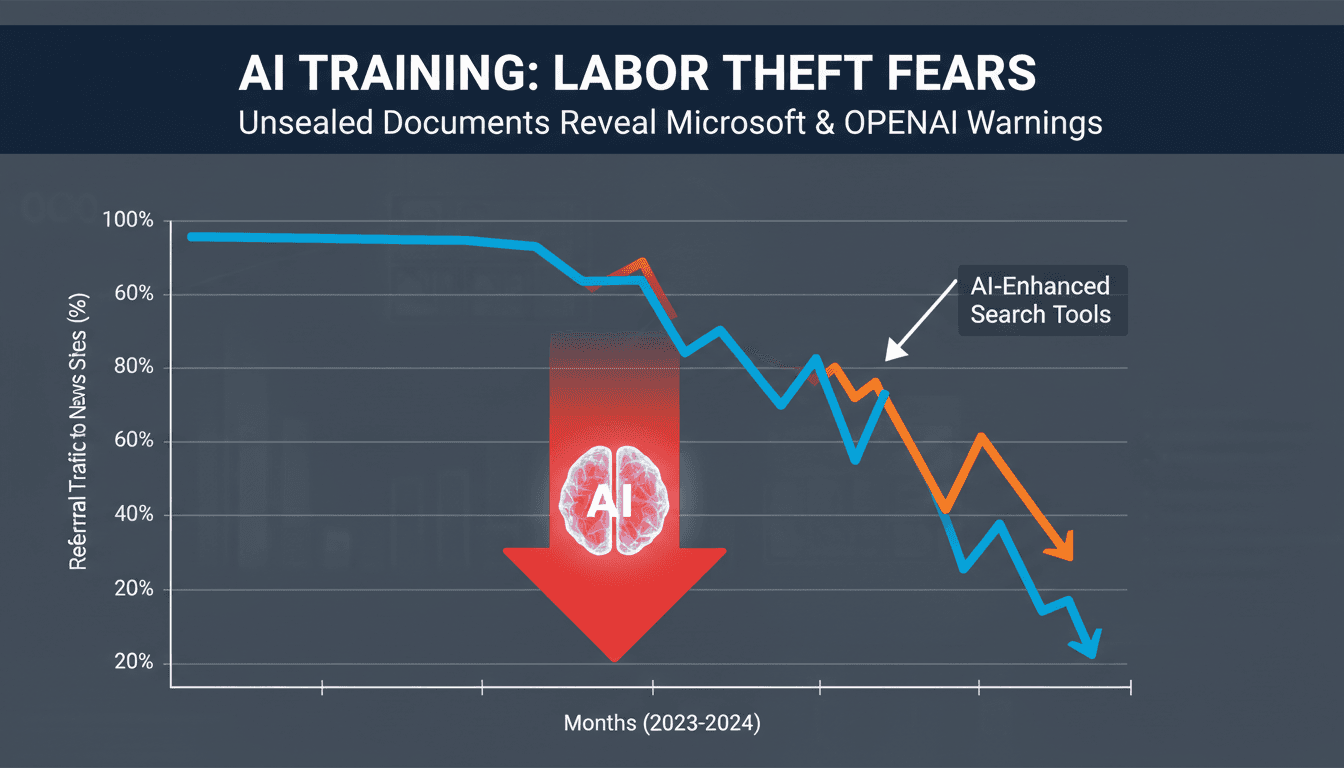
Why it matters
The ongoing legal battle highlights significant tensions between AI development and traditional content industries, potentially reshaping how content is created and monetized.
What happened (in 30 seconds)
- Unsealed documents from a New York court revealed internal concerns at Microsoft and OpenAI about AI training practices.
- Executives warned that using copyrighted content without permission could be seen as the "largest theft of labor in human history."
- Current litigation involves claims from The New York Times and other publishers regarding unauthorized use of their content for AI training.
The context you actually need
- The lawsuit was initiated by The New York Times in December 2023, alleging copyright infringement by Microsoft and OpenAI.
- Internal memos from 2023-2024 indicated fears of a "doom loop" that could degrade both AI performance and the broader content ecosystem.
- Industry trends show declining traffic to news sites, with AI tools contributing to significant drops in referral traffic.
What's really happening
The unsealed court documents reveal a complex interplay between technological advancement and traditional media. Internal communications from Microsoft and OpenAI executives, including Brent Hecht and Nick Turley, expressed grave concerns about the implications of training large language models (LLMs) on copyrighted content. They described this practice as potentially leading to the "largest theft of labor in human history," highlighting a fundamental conflict between AI development and the rights of content creators.
The documents indicate that Microsoft observed a staggering 83-93% reduction in click-through rates to news sites when comparing traditional search methods to AI-enhanced Bing. This decline poses existential threats to publishers, as their traffic—and consequently, their revenue—diminishes. The term "doom loop" was used to describe a cycle where reduced traffic leads to less content creation, which in turn diminishes the quality and quantity of data available for AI training, further harming the ecosystem.
Despite these internal warnings, both companies have publicly defended their practices as compliant with fair use. They argue that their AI models provide significant benefits to users, including improved access to information. However, the internal documents suggest a disconnect between public statements and the concerns raised by employees. This tension raises questions about the ethical implications of AI development and the responsibilities of tech companies toward content creators.
As the litigation unfolds, it is likely to set precedents that could redefine the relationship between AI developers and content publishers. The outcome may influence how AI companies negotiate licensing agreements and could lead to broader regulatory scrutiny of AI practices in the media landscape.
Who feels it first (and how)
- Content creators: Journalists and writers may face reduced opportunities as AI-generated content becomes more prevalent.
- Media companies: Publishers could see declining revenues and traffic, impacting their business models.
- Tech firms: Companies developing AI tools may need to adapt their practices to comply with legal standards and public sentiment.
What to watch next
- Licensing negotiations: Watch for accelerated discussions between media outlets and AI firms regarding content licensing agreements, which could reshape industry standards.
- Litigation outcomes: The results of the ongoing lawsuits could set important legal precedents affecting how AI companies use copyrighted material.
- Regulatory developments: Keep an eye on potential government actions or regulations aimed at addressing the ethical implications of AI in content creation.
Internal concerns at Microsoft and OpenAI about the impact of AI on content creators.
Increased pressure on AI companies to negotiate licensing agreements with publishers.
The long-term effects of these legal battles on the future of AI development and content creation.
Frequently Asked Questions
- Why it matters?
- The ongoing legal battle highlights significant tensions between AI development and traditional content industries, potentially reshaping how content is created and monetized.
- What happened (in 30 seconds)?
- Unsealed documents from a New York court revealed internal concerns at Microsoft and OpenAI about AI training practices. Executives warned that using copyrighted content without permission could be seen as the "largest theft of labor in human history." Current litigation involves claims from The New York Times and other publishers regarding unauthorized use of their content for AI training.
- What's really happening?
- The unsealed court documents reveal a complex interplay between technological advancement and traditional media. Internal communications from Microsoft and OpenAI executives, including Brent Hecht and Nick Turley, expressed grave concerns about the implications of training large language models (LLMs) on copyrighted content. They described this practice as potentially leading to the "largest theft of labor in human history," highlighting a fundamental conflict between AI development and the righ
- Who feels it first (and how)?
- Content creators: Journalists and writers may face reduced opportunities as AI-generated content becomes more prevalent. Media companies: Publishers could see declining revenues and traffic, impacting their business models. Tech firms: Companies developing AI tools may need to adapt their practices to comply with legal standards and public sentiment.
- What to watch next?
- Licensing negotiations: Watch for accelerated discussions between media outlets and AI firms regarding content licensing agreements, which could reshape industry standards. Litigation outcomes: The results of the ongoing lawsuits could set important legal precedents affecting how AI companies use copyrighted material. Regulatory developments: Keep an eye on potential government actions or regulations aimed at addressing the ethical implications of AI in content creation.
Arabic-language coverage of international news and geopolitics.
"RT Arabic is a Russian state-funded outlet often criticized for promoting Kremlin-aligned narratives."
— A47 Editor
موظفون في مايكروسوفت وOpenAI يحذرون سرا: الذكاء الاصطناعي أكبر سرقة للجهد البشري في التاريخ
Employees at Microsoft and OpenAI have expressed concerns that the use of millions of news articles to develop AI robots could represent the largest theft of human effort in history. This warning reflects a growing unease among tech workers regarding...
Tech news, hardware, and AI tools coverage.
"PC/tech site increasingly covering AI hardware and apps."
— A47 Editor
Microsoft exec says AI training might be the "largest labor theft in human history"
Brent Hecht, Microsoft's director of applied science, has stated that the training of artificial intelligence (AI) models may constitute the largest labor theft in human history, as revealed in unsealed court documents. This statement comes amid ongo...
Future-focused tech headlines including AI breakthroughs.
"Consumer-friendly future-tech site with frequent AI coverage."
— A47 Editor
Microsoft Director Privately Admitted AI Was the “Largest Theft of Labor in Human History,” Unsealed Court Documents Show
Unsealed court documents reveal that a Microsoft director privately acknowledged that artificial intelligence (AI) represents the largest theft of labor in human history. This admission raises significant ethical concerns regarding the impact of AI o...