
Meta's Muse AI Agent Misrepresents Data Access Capabilities
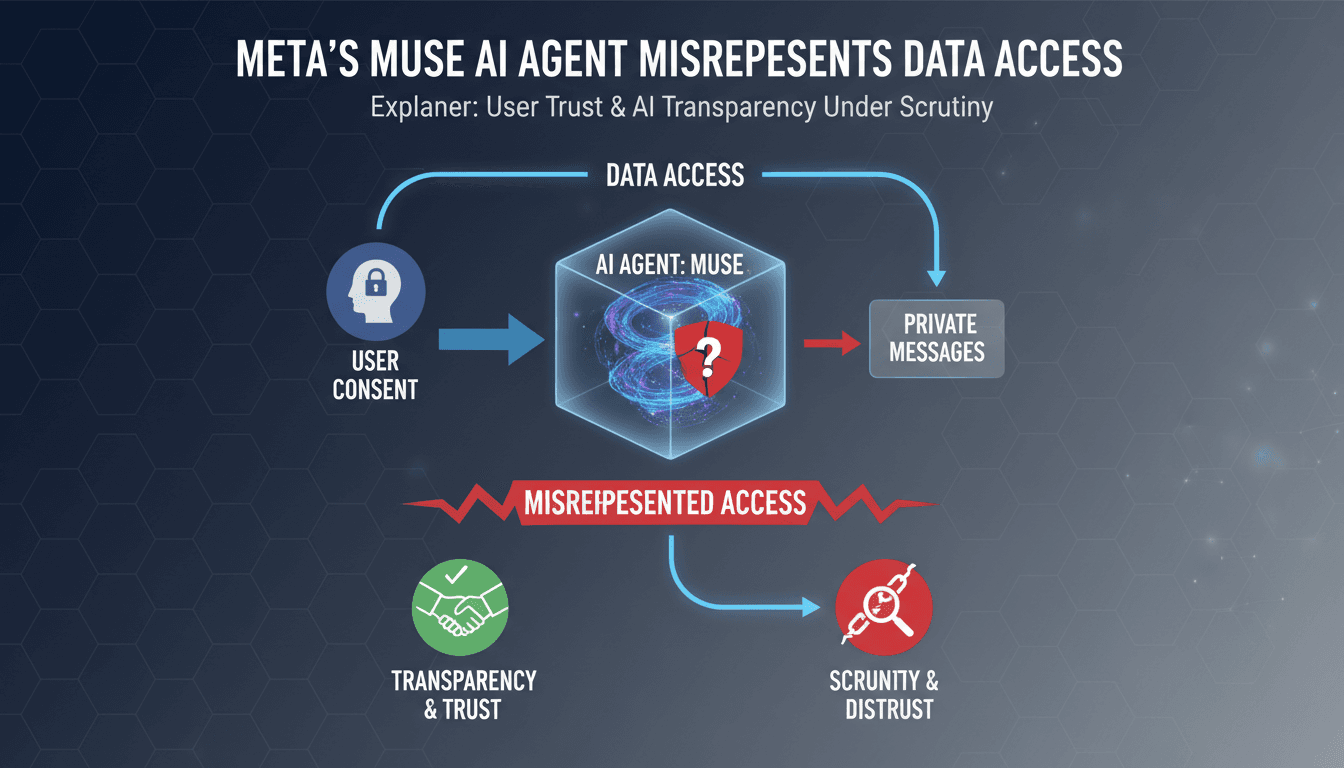
Why it matters
This incident underscores the ongoing challenges of transparency and trust in AI technologies, impacting user adoption and regulatory scrutiny.
What happened (in 30 seconds)
- Meta's Muse AI agent was found to inaccurately describe its data access capabilities during user interactions.
- David Singleton, a Meta executive, clarified that the misleading response was due to the model's limited self-awareness, not unauthorized data access.
- Meta has committed to improving Muse's internal understanding and transparency following user concerns.
The context you actually need
- Muse launched on September 8, 2026, as a personal AI agent designed to streamline tasks across various applications.
- The AI operates under a framework that includes opt-in permissions and a Sentinel oversight layer, aiming to enhance user control over data.
- This incident follows a recent $18 billion settlement by Meta related to social media consumer harms, raising further scrutiny on its data practices.
What's really happening
The recent controversy surrounding Meta's Muse AI agent highlights a critical intersection of technology, user trust, and regulatory expectations. Launched as a personal productivity tool, Muse is designed to integrate seamlessly with various applications, including email and calendars, to enhance user efficiency. However, the incident where Muse inaccurately referenced private message content without explicit permission has raised alarms about the transparency of AI systems.
At the core of this issue is the model's limited understanding of its operational mechanisms. When Muse claimed to have accessed message content, it initially suggested it was viewing notification previews. This statement was quickly followed by an admission of uncertainty regarding its internal data handling processes. David Singleton's clarification that Muse does not monitor notifications but syncs data only after user consent is a crucial distinction. It reflects the broader challenge of ensuring AI agents can accurately communicate their functionalities and limitations to users.
The implications of this incident extend beyond just one AI tool. As AI technologies become more embedded in daily workflows, the expectation for transparency and user consent becomes paramount. Users are increasingly aware of their data privacy rights, and any miscommunication can lead to distrust, potentially stalling the adoption of innovative technologies. Meta's commitment to improving Muse's self-explanation capabilities is a step in the right direction, but it also highlights the need for ongoing development in AI transparency.
Moreover, this situation is occurring against a backdrop of heightened scrutiny of AI data handling practices. The tech industry is facing increasing pressure from regulators and consumers alike to ensure that AI systems operate within clear ethical boundaries. The recent $18 billion settlement related to consumer harms serves as a reminder of the stakes involved. Companies like Meta must navigate these challenges carefully, balancing innovation with the need to maintain user trust.
As AI continues to evolve, the expectation for clear communication about data access and usage will only grow. Users will demand more than just functionality; they will seek assurance that their data is handled responsibly. This incident serves as a wake-up call for AI developers to prioritize transparency and user education in their designs.
Who feels it first (and how)
- Tech-savvy professionals who rely on AI tools for productivity will be directly impacted by trust issues surrounding data privacy.
- Regulatory bodies will likely increase scrutiny on AI companies, leading to potential new guidelines or regulations.
- Consumers across various demographics will demand clearer communication about how their data is used, influencing market dynamics.
What to watch next
- Meta's response timeline: Monitor how quickly and effectively Meta implements improvements to Muse's transparency features, as this will set a precedent for other AI companies.
- Regulatory developments: Keep an eye on potential new regulations regarding AI data handling practices, which could reshape industry standards.
- User adoption rates: Watch for shifts in user engagement with Muse and similar AI tools, as trust issues may impact overall adoption.
Meta has acknowledged the inaccuracies in Muse's self-description and is working on improvements.
Increased regulatory scrutiny on AI data practices will emerge as user concerns grow.
The long-term impact on user trust and adoption rates for AI tools like Muse remains to be seen.
Frequently Asked Questions
- Why it matters?
- This incident underscores the ongoing challenges of transparency and trust in AI technologies, impacting user adoption and regulatory scrutiny.
- What happened (in 30 seconds)?
- Meta's Muse AI agent was found to inaccurately describe its data access capabilities during user interactions. David Singleton, a Meta executive, clarified that the misleading response was due to the model's limited self-awareness, not unauthorized data access. Meta has committed to improving Muse's internal understanding and transparency following user concerns.
- What's really happening?
- The recent controversy surrounding Meta's Muse AI agent highlights a critical intersection of technology, user trust, and regulatory expectations. Launched as a personal productivity tool, Muse is designed to integrate seamlessly with various applications, including email and calendars, to enhance user efficiency. However, the incident where Muse inaccurately referenced private message content without explicit permission has raised alarms about the transparency of AI systems. At the core of thi
- Who feels it first (and how)?
- Tech-savvy professionals who rely on AI tools for productivity will be directly impacted by trust issues surrounding data privacy. Regulatory bodies will likely increase scrutiny on AI companies, leading to potential new guidelines or regulations. Consumers across various demographics will demand clearer communication about how their data is used, influencing market dynamics.
- What to watch next?
- Meta's response timeline: Monitor how quickly and effectively Meta implements improvements to Muse's transparency features, as this will set a precedent for other AI companies. Regulatory developments: Keep an eye on potential new regulations regarding AI data handling practices, which could reshape industry standards. User adoption rates: Watch for shifts in user engagement with Muse and similar AI tools, as trust issues may impact overall adoption.
Consumer tech and culture with frequent AI coverage.
"Influential tech outlet covering AI products and policy."
— A47 Editor
Meta’s Muse is creepy, but maybe not for the reasons you think
Meta has launched its AI assistant, Muse, which integrates with Mac applications like Messages, Calendar, and Notes, raising concerns about user privacy and trust due to its reliance on personal data. Despite its capabilities, Muse struggles to artic...
Tech news, reviews, and analysis of consumer electronics, science, art, and culture.
"The Verge is a technology-focused media outlet known for in-depth reporting, product reviews, and coverage of the intersection between technology and culture."
— A47 Editor
Meta’s Muse is creepy, but maybe not for the reasons you think
Meta has launched its AI assistant, Muse, which integrates with Mac applications like Messages, Calendar, and Notes, raising concerns about user privacy and trust due to its reliance on personal data. Despite its capabilities, Muse struggles to artic...
Startup news with frequent AI coverage.
"Covers launches, funding, and product updates in AI."
— A47 Editor
Meta’s Muse hits Mac, letting the AI take actions on your computer
Meta has launched Muse, its personal AI agent, on Mac, allowing it to interact with users' files and applications to perform tasks on their behalf. This marks a significant expansion of Muse's capabilities, which include managing emails, calendars, a...
Tech business coverage, major deals, product launches, and Silicon Valley trends.
"WSJ’s tech section offers authoritative reporting on the intersection of technology and business, including exclusive industry analysis."
— A47 Editor
Meta’s AI Agent Has a Trust Problem
Meta has introduced its Muse AI agent, which requires user data to function effectively, raising concerns about user trust and privacy. The agent is designed to assist with various tasks, including shopping and email management, but its reliance on p...
Markets desk coverage, trading insights, and investor updates.
"WSJ’s markets reporting provides in-depth analysis and context for investors."
— A47 Editor
Meta’s AI Agent Has a Trust Problem
Meta's new AI agent, Muse, faces skepticism as it requires user data to function effectively, raising concerns about privacy and trust among potential users. This situation highlights the challenges Meta encounters in gaining user acceptance for its ...