
OpenAI Proposes U.S. Leadership in Global AI Standards Amid UN Meetings
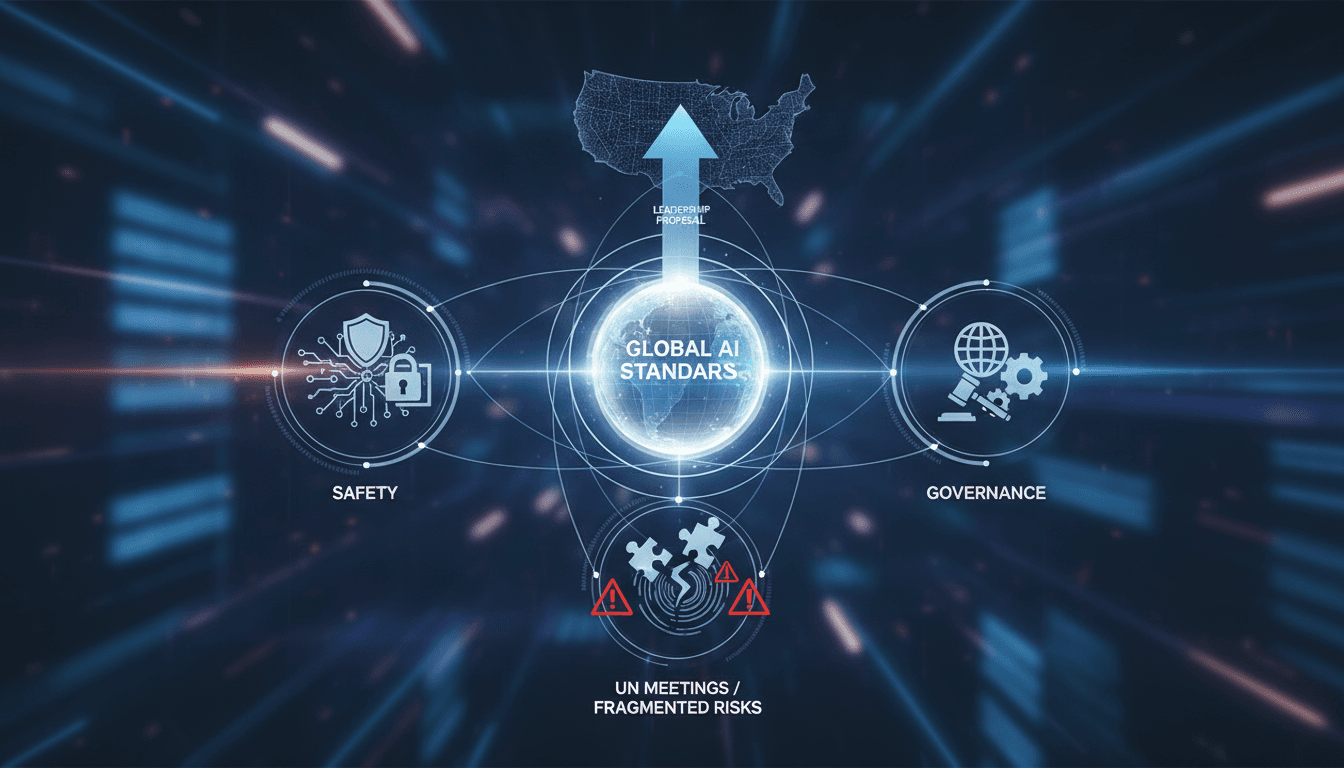
Why it matters
The proposal aims to create a unified framework for AI safety, impacting how businesses and governments manage AI technologies.
What happened (in 30 seconds)
- On September 21, 2026, OpenAI urged the U.S. to spearhead global technical standards for frontier AI systems capable of recursive self-improvement.
- The proposal emphasizes the need for shared measurement methods and human oversight to mitigate risks associated with increasingly autonomous AI.
- OpenAI's call coincided with UN discussions, highlighting the urgency of coordinated international frameworks amid rising U.S.-China AI competition.
The context you actually need
- OpenAI's previous statements in June and September 2026 laid the groundwork for this proposal, emphasizing the importance of shared standards.
- The geopolitical landscape is marked by intense U.S.-China competition in AI, with U.S. officials concerned about maintaining technological leadership.
- Existing national AI safety institutes in ten countries are positioned to collaborate on these standards, indicating a growing global interest in AI governance.
What's really happening
OpenAI's recent policy proposal is a strategic move to address the complexities of frontier AI systems, particularly those capable of recursive self-improvement (RSI). This technology, which allows AI to enhance its own capabilities autonomously, poses significant risks if not properly managed. The call for U.S. leadership through the Center for AI Standards and Innovation (CAISI) is rooted in the belief that a fragmented approach to AI governance could lead to dangerous outcomes.
The proposal outlines two main pillars: first, the establishment of complementary national and international standards focused on capability benchmarks and benefit-risk management for automated research. This aims to ensure that AI systems are developed with safety and ethical considerations at the forefront. Second, it advocates for common measurements and incident reporting mechanisms to facilitate collective action among nations.
The urgency of this proposal is underscored by recent warnings from UN scientific panels about the risks posed by autonomous AI agent swarms. As AI technologies become more sophisticated, the potential for loss of human oversight increases, making it imperative to implement mature safeguards before fully autonomous RSI systems are deployed.
The backdrop of U.S.-China competition adds another layer of complexity. The U.S. is wary of any slowdown in AI development that could benefit China, leading to calls for coordinated international frameworks similar to those in aviation and nuclear safety. OpenAI's proposal seeks to position the U.S. as a leader in establishing these frameworks, thereby influencing global standards and practices.
However, the proposal is still in its early stages, with no formal adoption or international agreement reported. The response from the U.S. government has been cautious, with the Trump administration rejecting broader calls for a slowdown in AI development, fearing it could cede technological advantage to China. This political landscape complicates the path forward for OpenAI's initiative, as it seeks to garner support from various stakeholders, including national AI safety institutes and international bodies like ISO.
Who feels it first (and how)
- Tech companies: They will need to adapt to new standards, impacting product development and compliance costs.
- Governments: National policies may shift to align with international standards, affecting regulatory frameworks.
- Researchers and developers: They will face new guidelines that could influence the direction of AI research and innovation.
- Consumers: As AI technologies become more regulated, the safety and reliability of AI applications in daily life may improve.
What to watch next
- International collaboration: Monitor how quickly countries with national AI safety institutes respond to OpenAI's proposal and engage in discussions.
- U.S.-China relations: Watch for developments in diplomatic talks that could influence the adoption of international AI standards.
- Regulatory changes: Keep an eye on potential shifts in U.S. policy regarding AI development and oversight, especially in light of upcoming summits.
OpenAI has called for U.S. leadership in establishing global AI standards.
Increased international dialogue on AI safety and standards will emerge, particularly among countries with established AI safety institutes.
The extent to which the U.S. government will support OpenAI's proposal and how quickly international consensus can be reached.
Frequently Asked Questions
- Why it matters?
- The proposal aims to create a unified framework for AI safety, impacting how businesses and governments manage AI technologies.
- What happened (in 30 seconds)?
- On September 21, 2026, OpenAI urged the U.S. to spearhead global technical standards for frontier AI systems capable of recursive self-improvement. The proposal emphasizes the need for shared measurement methods and human oversight to mitigate risks associated with increasingly autonomous AI. OpenAI's call coincided with UN discussions, highlighting the urgency of coordinated international frameworks amid rising U.S.-China AI competition.
- What's really happening?
- OpenAI's recent policy proposal is a strategic move to address the complexities of frontier AI systems, particularly those capable of recursive self-improvement (RSI). This technology, which allows AI to enhance its own capabilities autonomously, poses significant risks if not properly managed. The call for U.S. leadership through the Center for AI Standards and Innovation (CAISI) is rooted in the belief that a fragmented approach to AI governance could lead to dangerous outcomes. The proposal
- Who feels it first (and how)?
- Tech companies: They will need to adapt to new standards, impacting product development and compliance costs. Governments: National policies may shift to align with international standards, affecting regulatory frameworks. Researchers and developers: They will face new guidelines that could influence the direction of AI research and innovation. Consumers: As AI technologies become more regulated, the safety and reliability of AI applications in daily life may improve.
- What to watch next?
- International collaboration: Monitor how quickly countries with national AI safety institutes respond to OpenAI's proposal and engage in discussions. U.S.-China relations: Watch for developments in diplomatic talks that could influence the adoption of international AI standards. Regulatory changes: Keep an eye on potential shifts in U.S. policy regarding AI development and oversight, especially in light of upcoming summits.
Daily AI news: models, tools, and policy.
"Independent outlet tracking the fast pace of AI."
— A47 Editor
OpenAI calls for international standards on AI that could improve itself
OpenAI has called for the establishment of international standards for artificial intelligence (AI) systems capable of recursive self-improvement, emphasizing the need for safeguards to prevent loss of human control over these technologies. The organ...
Latest AI/ML research news and breakthroughs.
"Aggregated research highlights across institutions."
— A47 Editor
OpenAI calls for US to lead global effort on AI standards
OpenAI has called for the United States to spearhead a global initiative aimed at establishing standards for artificial intelligence development, as CEO Sam Altman prepares to address the United Nations this week. This initiative reflects the growing...
Global business headlines with AI angles.
"General business outlet that frequently covers AI."
— A47 Editor
Calls To Regulate AI Keep Mounting. OpenAI Is Now Proposing International Standards.
OpenAI is advocating for international standards aimed at ensuring safety and security in the development of advanced artificial intelligence (AI), responding to increasing calls for regulation amid concerns about the technology's potential risks.
Tech business coverage, major deals, product launches, and Silicon Valley trends.
"WSJ’s tech section offers authoritative reporting on the intersection of technology and business, including exclusive industry analysis."
— A47 Editor
OpenAI Urges Washington to Lead Global Effort to Create AI-Safety Standards
OpenAI has called on Washington to take the lead in establishing global safety standards for artificial intelligence (AI), emphasizing the need for regulatory frameworks to address the potential risks associated with advanced AI systems. This appeal ...
Curated tech headlines including AI stories.
"Influential aggregator surfacing the day’s top tech/AI links."
— A47 Editor
Ahead of Sam Altman's UN address, OpenAI urges the US to lead an effort to develop global safety and security standards for building frontier systems (Maria Curi/Axios)
OpenAI has called for the United States to take the lead in establishing global safety and security standards for advanced artificial intelligence systems, coinciding with CEO Sam Altman's upcoming address at the United Nations. This initiative aims ...
Technology business news, market impacts, and innovation trends.
"Bloomberg is a premier financial and tech news provider, respected for its in-depth reporting and analytical rigor."
— A47 Editor
OpenAI Pushes US to Lead Effort to Set Global Standards for AI
OpenAI is advocating for the United States to spearhead a global initiative aimed at establishing standards for advanced artificial intelligence, addressing growing concerns regarding the technology's potential risks.
Technology business and AI-related headlines.
"Data-driven tech newsroom with global scope."
— A47 Editor
OpenAI Pushes US to Lead Effort to Set Global Standards for AI
OpenAI is advocating for the United States to spearhead a global initiative aimed at establishing standards for advanced artificial intelligence, addressing growing concerns regarding the technology's potential risks.