
North Korean WaterPlum Group Compromises Over 30,000 Devices Globally with Malware Campaign
Why it matters
The WaterPlum campaign highlights the increasing sophistication of state-sponsored cyber threats, impacting global cybersecurity protocols.
What happened (in 30 seconds)
- Joint advisory issued on 18 September 2026 by Japan, the U.S., Germany, and Australia revealed a North Korean malware campaign.
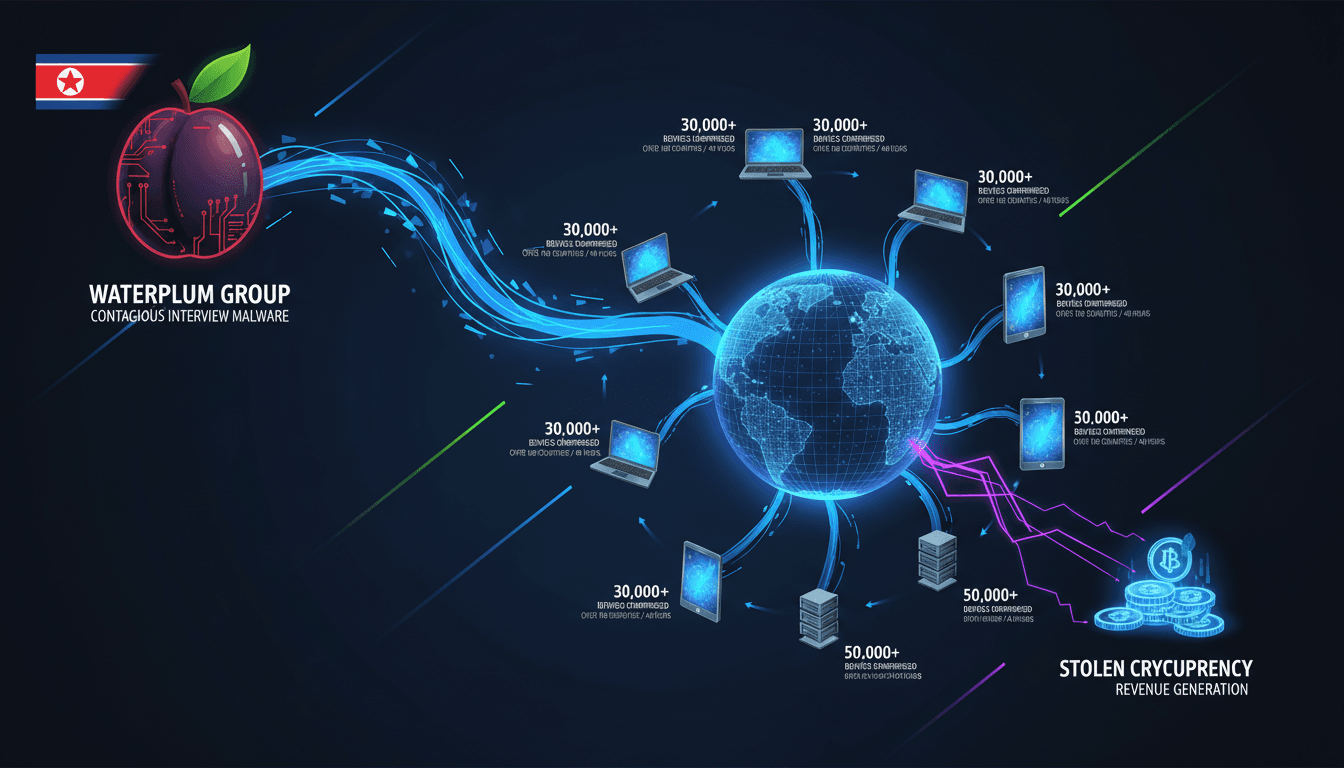
- Over 30,000 devices compromised globally through fake job interviews targeting IT professionals and cryptocurrency specialists.
- $10.71 million in cryptocurrency stolen from over 7,000 wallets, supporting North Korean state objectives.
The context you actually need
- North Korea's sanctions have driven the regime to rely on cyber operations for revenue generation and technology acquisition.
- The Contagious Interview campaign uses advanced social engineering tactics, including AI-generated personas, to lure victims.
- Malware types involved include BeaverTail and InvisibleFerret, which facilitate credential theft and remote access.
What's really happening
The North Korean WaterPlum group has been executing the Contagious Interview campaign since at least 2022, leveraging the global demand for IT and cryptocurrency expertise. This operation is not merely opportunistic; it is a calculated strategy aligned with North Korea's broader objectives to circumvent international sanctions. By creating fabricated identities on professional networking platforms like LinkedIn, the group applies for jobs or establishes fake companies that reach out to potential victims with enticing job offers.
Once a target engages in what they believe is a legitimate interview, they are often sent malicious code disguised as assessment tools or project files. This malware, delivered through common software development platforms like npm, installs various types of malware on the victim's device. The tools used in this campaign, such as OtterCookie and StoatWaffle, are designed to extract sensitive information, including login credentials and cryptocurrency wallet details.
The scale of this operation is staggering, with over 30,000 devices compromised across more than 100 countries. The joint advisory from multiple nations underscores the urgency of the situation, attributing the campaign to the 313 Bureau of North Korea's Department of Military Industry. This bureau is known for its focus on cyber operations, and the shared infrastructure with other schemes, such as the infiltration of remote IT workers using stolen identities, indicates a well-coordinated effort to bolster the regime's resources.
The implications of this campaign extend beyond immediate financial theft. It represents a significant threat to the integrity of global cybersecurity frameworks, as organizations must now contend with increasingly sophisticated tactics that blur the lines between legitimate recruitment processes and malicious intent. The advisory issued on 18 September 2026 serves as a wake-up call for businesses and individuals alike, emphasizing the need for vigilance and proactive measures to safeguard against such threats.
Who feels it first (and how)
- IT professionals: Targeted through fake job offers, risking device compromise and data theft.
- Cryptocurrency users: Vulnerable to credential theft and financial loss due to malware.
- Recruitment agencies: Must enhance verification processes to avoid falling victim to these tactics.
What to watch next
- Increased cybersecurity measures: Organizations may adopt stricter verification protocols for job applicants to mitigate risks.
- Evolving tactics: Watch for new malware types and social engineering techniques as the campaign adapts.
- Regulatory responses: Potential for new regulations or guidelines from governments to enhance cybersecurity in recruitment processes.
Over 30,000 devices compromised globally; North Korean involvement confirmed.
Continued evolution of tactics by cybercriminals; increased scrutiny on recruitment processes.
The full extent of financial losses and long-term impacts on cybersecurity policies.
Frequently Asked Questions
- Why it matters?
- The WaterPlum campaign highlights the increasing sophistication of state-sponsored cyber threats, impacting global cybersecurity protocols.
- What happened (in 30 seconds)?
- Joint advisory issued on 18 September 2026 by Japan, the U.S., Germany, and Australia revealed a North Korean malware campaign. Over 30,000 devices compromised globally through fake job interviews targeting IT professionals and cryptocurrency specialists. $10.71 million in cryptocurrency stolen from over 7,000 wallets, supporting North Korean state objectives.
- What's really happening?
- The North Korean WaterPlum group has been executing the Contagious Interview campaign since at least 2022, leveraging the global demand for IT and cryptocurrency expertise. This operation is not merely opportunistic; it is a calculated strategy aligned with North Korea's broader objectives to circumvent international sanctions. By creating fabricated identities on professional networking platforms like LinkedIn, the group applies for jobs or establishes fake companies that reach out to potential
- Who feels it first (and how)?
- IT professionals: Targeted through fake job offers, risking device compromise and data theft. Cryptocurrency users: Vulnerable to credential theft and financial loss due to malware. Recruitment agencies: Must enhance verification processes to avoid falling victim to these tactics.
- What to watch next?
- Increased cybersecurity measures: Organizations may adopt stricter verification protocols for job applicants to mitigate risks. Evolving tactics: Watch for new malware types and social engineering techniques as the campaign adapts. Regulatory responses: Potential for new regulations or guidelines from governments to enhance cybersecurity in recruitment processes.
Consumer tech news, reviews, and buying guides for gadgets and electronics.
"TechRadar is known for comprehensive buying advice, hardware reviews, and consumer tech news targeted at mainstream audiences."
— A47 Editor
North Korean 'Contagious Interview' gang hits 30,000 businesses across the world with malware following fake interviews
A North Korean cybercriminal group, dubbed the 'Contagious Interview' gang, has reportedly targeted over 30,000 businesses worldwide by deploying malware through fake job interviews. This scheme has allowed them to steal millions from unsuspecting vi...
Tech news, hardware, and AI tools coverage.
"PC/tech site increasingly covering AI hardware and apps."
— A47 Editor
Hackers use fake coding tests to infect 30,000 devices and steal $10 million in crypto
A group identified as WaterPlum, linked to North Korean hackers, has reportedly infected 30,000 devices by posing as recruiters and sending fake coding tests to web designers, software engineers, and cryptocurrency professionals. This scheme has resu...
Covers blockchain, cryptocurrency news, project analysis, and market insights.
"Cointelegraph is a leading crypto-focused media outlet known for timely news, analysis, and educational content related to blockchain and digital assets."
— A47 Editor
North Korean fake recruiters infect 30K devices, steal $10.7M in crypto
A North Korean cyber group known as WaterPlum has successfully targeted developers by offering fake job opportunities in the cryptocurrency, AI, and NFT sectors, leading to the infection of over 30,000 devices across more than 100 countries and the t...
English-language digital publication covering business, politics, technology, and current affairs.
"The Arabian Post mixes original and syndicated-style coverage with a broad regional and global business-news orientation."
— A47 Editor
WaterPlum compromises 30,000 devices through fake interviews
North Korean cyber operators, identified as WaterPlum, have compromised over 30,000 devices across more than 100 countries through fraudulent job interviews aimed at technology professionals. This campaign, also known as Contagious Interview, specifi...