
CXMT Begins Mass Production of Advanced G5 DRAM Technology
Why it matters
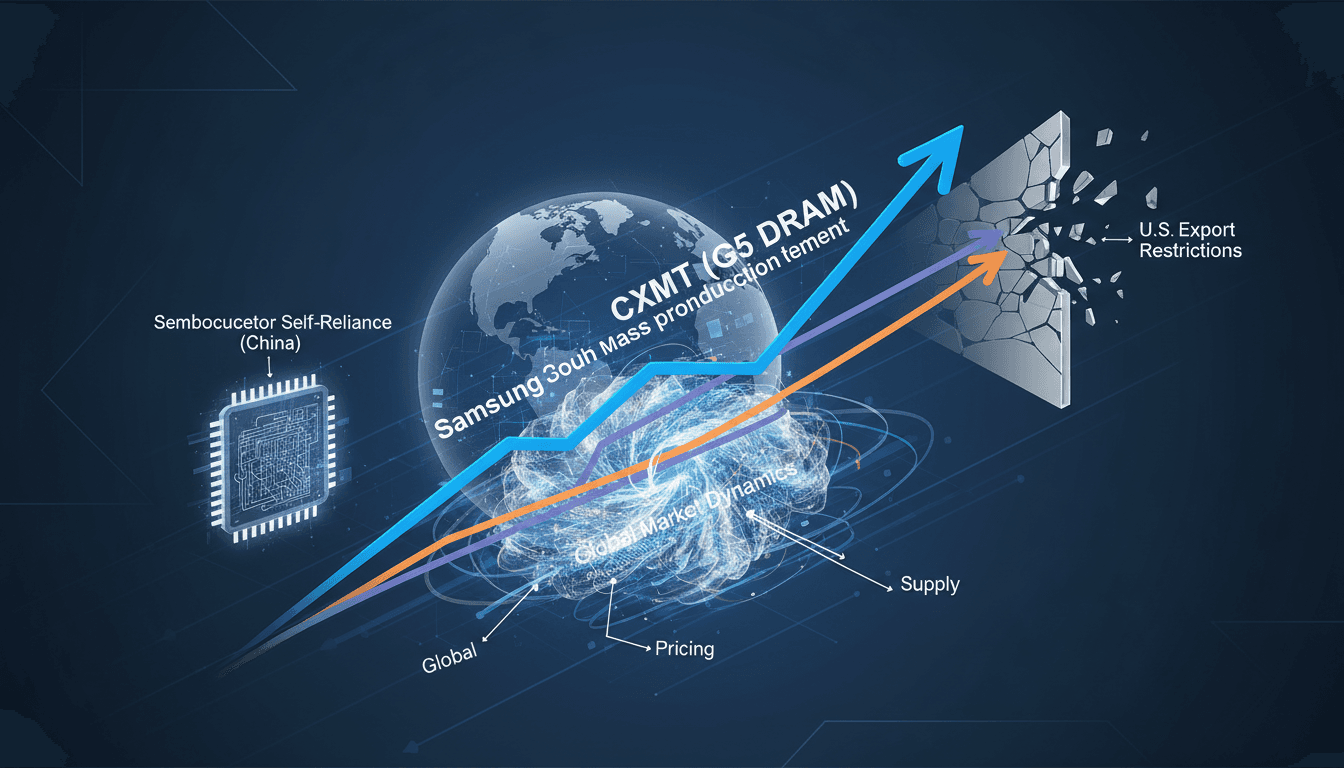
CXMT's advancements in DRAM technology intensify competition in the global memory market, potentially affecting pricing and availability for consumers.
What happened (in 30 seconds)
- CXMT announced the mass production of its fifth-generation DRAM G5 platform on September 20, 2026, at the World Manufacturing Convention in Hefei, China.
- The new platform offers 50% greater die-per-wafer density and 24Gb-per-die capacity, targeting mobile and portable devices.
- CXMT's market position has improved, making it the fourth-largest DRAM supplier globally, with a 9.5% share of the market.
The context you actually need
- China's semiconductor strategy has been driven by a need for self-reliance following U.S. export restrictions on advanced technology.
- CXMT's rapid growth has been fueled by domestic demand and significant capacity expansions in key locations like Hefei.
- The global memory market is dominated by major players like Samsung, SK hynix, and Micron, making CXMT's entry a notable shift in competitive dynamics.
What's really happening
On September 20, 2026, ChangXin Memory Technologies (CXMT) unveiled its fifth-generation DRAM technology platform, marking a significant milestone in China's semiconductor ambitions. The G5 platform is designed to enhance memory chip production efficiency and capacity, utilizing advanced manufacturing techniques such as self-aligned quadruple patterning. This innovation allows CXMT to achieve an 11.95nm active-area half-pitch and a 45:1 capacitor aspect ratio, resulting in a reduction of core cell array height to 6,762nm.
The implications of this development are profound. By delivering at least 50% more gross dies per wafer compared to its predecessor, CXMT is positioned to meet the growing demand for high-performance memory in smartphones and portable devices. This is particularly relevant as global consumer electronics continue to evolve, requiring more advanced memory solutions. The introduction of 24Gb LPDDR5X variants further underscores CXMT's commitment to pushing the boundaries of memory technology.
CXMT's rise to the fourth-largest DRAM supplier globally, with a 9.5% share of the market, reflects a broader trend of increasing competition in the semiconductor industry. This shift is not merely about market share; it represents a strategic move towards greater self-sufficiency in China's tech landscape. The ongoing geopolitical tensions and supply chain disruptions have prompted Chinese firms to accelerate their technological advancements, reducing reliance on foreign suppliers.
As CXMT ramps up production, the competitive landscape for memory chips is likely to shift. Major players like Samsung, SK hynix, and Micron will need to respond to CXMT's advancements, potentially leading to price adjustments and changes in supply strategies. This could have ripple effects throughout the tech industry, influencing everything from smartphone pricing to the availability of high-performance computing solutions.
Moreover, CXMT's success may encourage other Chinese semiconductor firms to invest in similar technologies, further enhancing the country's position in the global market. The implications extend beyond just memory chips; they touch on national security, economic independence, and the future of global tech supply chains.
Who feels it first (and how)
- Tech manufacturers: Companies producing smartphones and portable devices will need to adapt to new memory supply dynamics.
- Consumers: End-users may experience changes in pricing and availability of devices reliant on DRAM.
- Investors: Stakeholders in semiconductor firms will monitor CXMT's impact on market competition and pricing strategies.
What to watch next
- Pricing trends: Monitor how CXMT's increased production affects DRAM prices globally, particularly in consumer electronics.
- Capacity expansions: Watch for announcements from CXMT and competitors regarding new manufacturing facilities or technology investments.
- Market share shifts: Keep an eye on how CXMT's advancements influence the market shares of established players like Samsung and Micron.
CXMT has initiated mass production of its G5 DRAM platform.
Increased competition will lead to changes in pricing and supply strategies among major DRAM suppliers.
The long-term impact on global supply chains and consumer pricing remains to be seen.
Frequently Asked Questions
- Why it matters?
- CXMT's advancements in DRAM technology intensify competition in the global memory market, potentially affecting pricing and availability for consumers.
- What happened (in 30 seconds)?
- CXMT announced the mass production of its fifth-generation DRAM G5 platform on September 20, 2026, at the World Manufacturing Convention in Hefei, China. The new platform offers 50% greater die-per-wafer density and 24Gb-per-die capacity, targeting mobile and portable devices. CXMT's market position has improved, making it the fourth-largest DRAM supplier globally, with a 9.5% share of the market.
- What's really happening?
- On September 20, 2026, ChangXin Memory Technologies (CXMT) unveiled its fifth-generation DRAM technology platform, marking a significant milestone in China's semiconductor ambitions. The G5 platform is designed to enhance memory chip production efficiency and capacity, utilizing advanced manufacturing techniques such as self-aligned quadruple patterning. This innovation allows CXMT to achieve an 11.95nm active-area half-pitch and a 45:1 capacitor aspect ratio, resulting in a reduction of core ce
- Who feels it first (and how)?
- Tech manufacturers: Companies producing smartphones and portable devices will need to adapt to new memory supply dynamics. Consumers: End-users may experience changes in pricing and availability of devices reliant on DRAM. Investors: Stakeholders in semiconductor firms will monitor CXMT's impact on market competition and pricing strategies.
- What to watch next?
- Pricing trends: Monitor how CXMT's increased production affects DRAM prices globally, particularly in consumer electronics. Capacity expansions: Watch for announcements from CXMT and competitors regarding new manufacturing facilities or technology investments. Market share shifts: Keep an eye on how CXMT's advancements influence the market shares of established players like Samsung and Micron.
Tech news, hardware, and AI tools coverage.
"PC/tech site increasingly covering AI hardware and apps."
— A47 Editor
China's CXMT just entered mass production of memory chips that can rival Samsung's
ChangXin Memory Technologies (CXMT) has officially commenced mass production of its fifth-generation DRAM technology platform, marking a significant milestone in the company's efforts to enhance its competitiveness in the semiconductor market. This a...
Policy and strategy for digital leaders, including AI.
"Analyzes AI in the context of enterprise strategy."
— A47 Editor
CXMT begins mass production of fifth-generation DRAM platform in China
ChangXin Memory Technologies (CXMT) has commenced mass production of its fifth-generation DRAM technology platform, known as the G5 Platform, marking a significant milestone in the company's growth and technological advancement.
Curated tech headlines including AI stories.
"Influential aggregator surfacing the day’s top tech/AI links."
— A47 Editor
Chinese DRAM chipmaker CXMT says its new fifth-gen technology platform enters mass production and unveils two 24Gb LPDDR5X phone memory products built on it (Reuters)
Chinese DRAM chipmaker ChangXin Memory Technologies (CXMT) announced that its fifth-generation technology platform has entered mass production, unveiling two new 24Gb LPDDR5X memory products designed for smartphones. This development marks a signific...