
Meta Announces Lightweight VR Glasses for Spring 2027 Release
Why it matters
Meta's new VR glasses could shift consumer preferences towards lighter, more versatile devices in a competitive market.
What happened (in 30 seconds)
- Meta announced its new VR glasses on September 23, 2026, during the Meta Connect event.
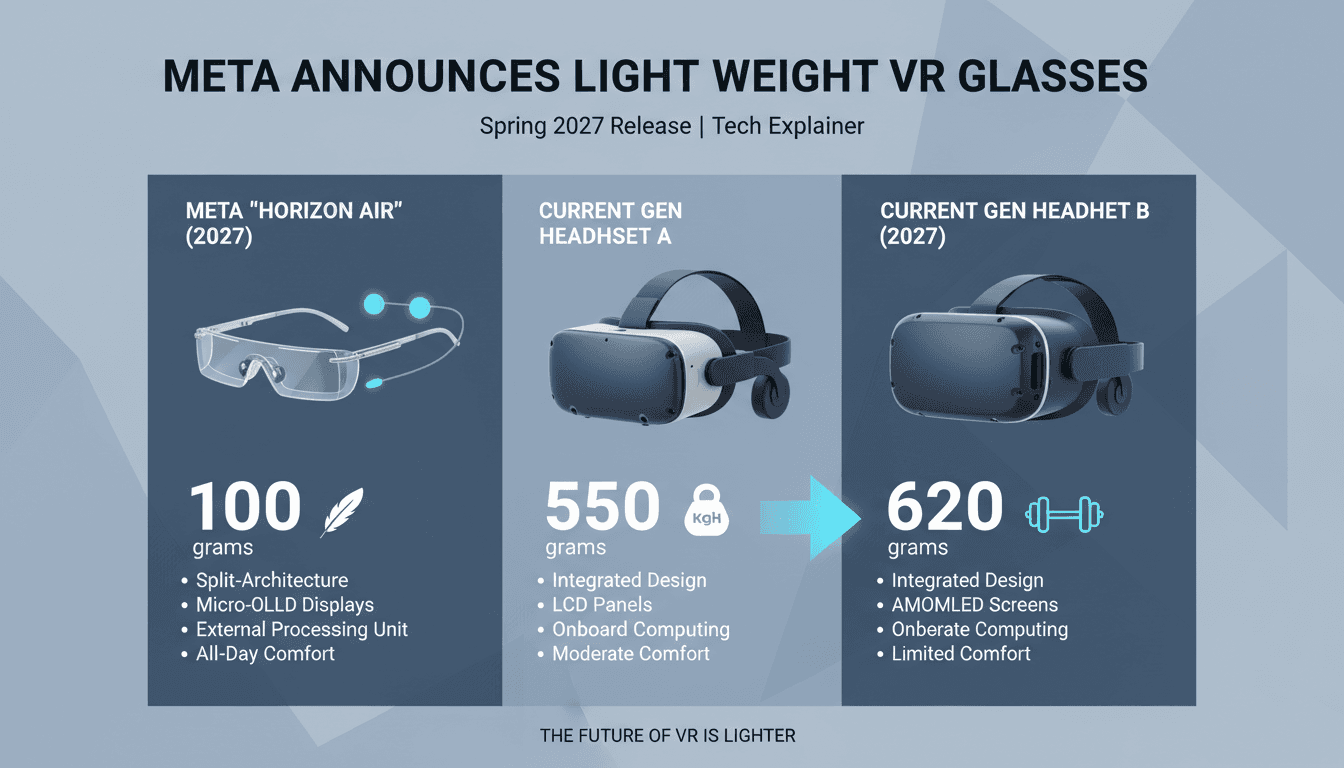
- The glasses weigh only 100 grams, significantly lighter than the Quest 3, which weighs 515 grams.
- They feature a split-architecture design, with processing housed in a separate puck, enhancing comfort for extended use.
The context you actually need
- Meta has evolved its VR hardware since the Oculus Quest era, focusing on reducing weight and improving accessibility.
- The split-architecture design addresses user complaints about headset comfort, allowing for longer usage without fatigue.
- Competition is fierce with products like Apple's Vision Pro, which is heavier and more expensive, potentially influencing market dynamics.
What's really happening
Meta's announcement of its split-architecture VR glasses marks a significant evolution in the virtual reality landscape. By introducing a device that weighs only 100 grams, Meta aims to address one of the most persistent complaints from users: headset weight and comfort during prolonged use. The glasses feature micro-OLED displays, sensors, and speakers integrated into the lightweight frames, while the compute, battery, and storage components are housed in a separate puck weighing approximately 300 grams. This design allows for a more comfortable experience, particularly for users who engage in extended media consumption, gaming, or productivity tasks.
The decision to externalize processing and battery components is a strategic move to differentiate Meta's offering from competitors like Apple's Vision Pro, which is not only heavier but also comes with a significantly higher price tag of $3,499. By positioning the new VR glasses at $1,299.99, Meta is targeting a broader audience, potentially shifting consumer expectations towards more affordable and lighter VR devices.
However, this innovation comes with trade-offs. The narrower field of view, a consequence of the split design, may not appeal to all users, particularly those accustomed to the immersive experiences offered by heavier headsets. Additionally, the glasses support eye, hand, and voice input without mandatory controllers, which could enhance usability but also raises questions about the accuracy and responsiveness of these input methods compared to traditional controllers.
Meta's partnerships for content, including IMAX Enhanced media and Disney+ 3D offerings, further enhance the appeal of the glasses, positioning them as a versatile tool for entertainment and productivity. As the VR market continues to evolve, Meta's approach could set a new standard for what consumers expect from VR devices, particularly in terms of comfort and usability.
Who feels it first (and how)
- Gamers: Looking for lighter, more comfortable headsets for extended play sessions.
- Media consumers: Interested in immersive experiences without the bulk of traditional headsets.
- Tech enthusiasts: Eager to explore the latest innovations in VR technology.
- Developers: Who may need to adapt their applications to leverage the new input methods and capabilities.
What to watch next
- Consumer feedback: Early reviews and user experiences will reveal how well the glasses perform in real-world scenarios.
- Market response: Competitors may adjust their strategies in response to Meta's pricing and design innovations.
- Content partnerships: The success of the glasses will depend on the quality and quantity of available content, particularly immersive experiences.
Meta's VR glasses will launch in spring 2027 at a price of $1,299.99.
The glasses will attract attention from gamers and media consumers looking for lighter alternatives.
How the trade-offs in design will affect user satisfaction and market adoption.
Frequently Asked Questions
- Why it matters?
- Meta's new VR glasses could shift consumer preferences towards lighter, more versatile devices in a competitive market.
- What happened (in 30 seconds)?
- Meta announced its new VR glasses on September 23, 2026, during the Meta Connect event. The glasses weigh only 100 grams, significantly lighter than the Quest 3, which weighs 515 grams. They feature a split-architecture design, with processing housed in a separate puck, enhancing comfort for extended use.
- What's really happening?
- Meta's announcement of its split-architecture VR glasses marks a significant evolution in the virtual reality landscape. By introducing a device that weighs only 100 grams, Meta aims to address one of the most persistent complaints from users: headset weight and comfort during prolonged use. The glasses feature micro-OLED displays, sensors, and speakers integrated into the lightweight frames, while the compute, battery, and storage components are housed in a separate puck weighing approximately
- Who feels it first (and how)?
- Gamers: Looking for lighter, more comfortable headsets for extended play sessions. Media consumers: Interested in immersive experiences without the bulk of traditional headsets. Tech enthusiasts: Eager to explore the latest innovations in VR technology. Developers: Who may need to adapt their applications to leverage the new input methods and capabilities.
- What to watch next?
- Consumer feedback: Early reviews and user experiences will reveal how well the glasses perform in real-world scenarios. Market response: Competitors may adjust their strategies in response to Meta's pricing and design innovations. Content partnerships: The success of the glasses will depend on the quality and quantity of available content, particularly immersive experiences.
News in science and technology, with a focus on consumer and innovation stories.
"Popular Science simplifies complex scientific topics for general audiences and celebrates innovation."
— A47 Editor
Meta’s new $1,300 VR Glasses will weigh less than a stick of butter when they hit the market in 2027
Meta is set to launch a new virtual reality headset priced at $1,300, which will be significantly lighter than previous models, weighing just 100 grams. This new VR glasses are expected to hit the market in 2027, showcasing a major advancement in des...
Consumer tech and culture with frequent AI coverage.
"Influential tech outlet covering AI products and policy."
— A47 Editor
Meta Connect 2026: The 7 biggest announcements
At the annual Meta Connect showcase, Meta unveiled several new wearables, prominently featuring the Meta VR Glasses, which integrate virtual reality technology into a lightweight smart glasses design. The event also highlighted new screen-free smart ...
Tech news, reviews, and analysis of consumer electronics, science, art, and culture.
"The Verge is a technology-focused media outlet known for in-depth reporting, product reviews, and coverage of the intersection between technology and culture."
— A47 Editor
Meta Connect 2026: The 7 biggest announcements
At the annual Meta Connect showcase, Meta unveiled several new wearables, prominently featuring the Meta VR Glasses, which integrate virtual reality technology into a lightweight smart glasses design. The event also highlighted new screen-free smart ...
Technology business and AI-related headlines.
"Data-driven tech newsroom with global scope."
— A47 Editor
Meta Launches $1,299 VR Headset That Look Like Glasses to Rival Apple Vision Pro
Meta Platforms Inc. has launched a new virtual-reality headset priced at $1,299, designed to compete with Apple's Vision Pro. This product aims to offer a more affordable and compact alternative in the growing VR market, potentially attracting a wide...