
Bill Gates Warns of AI-Enabled Threats to Global Security
Why it matters
The intersection of AI and security poses significant risks that could reshape industries and public safety.
What happened (in 30 seconds)
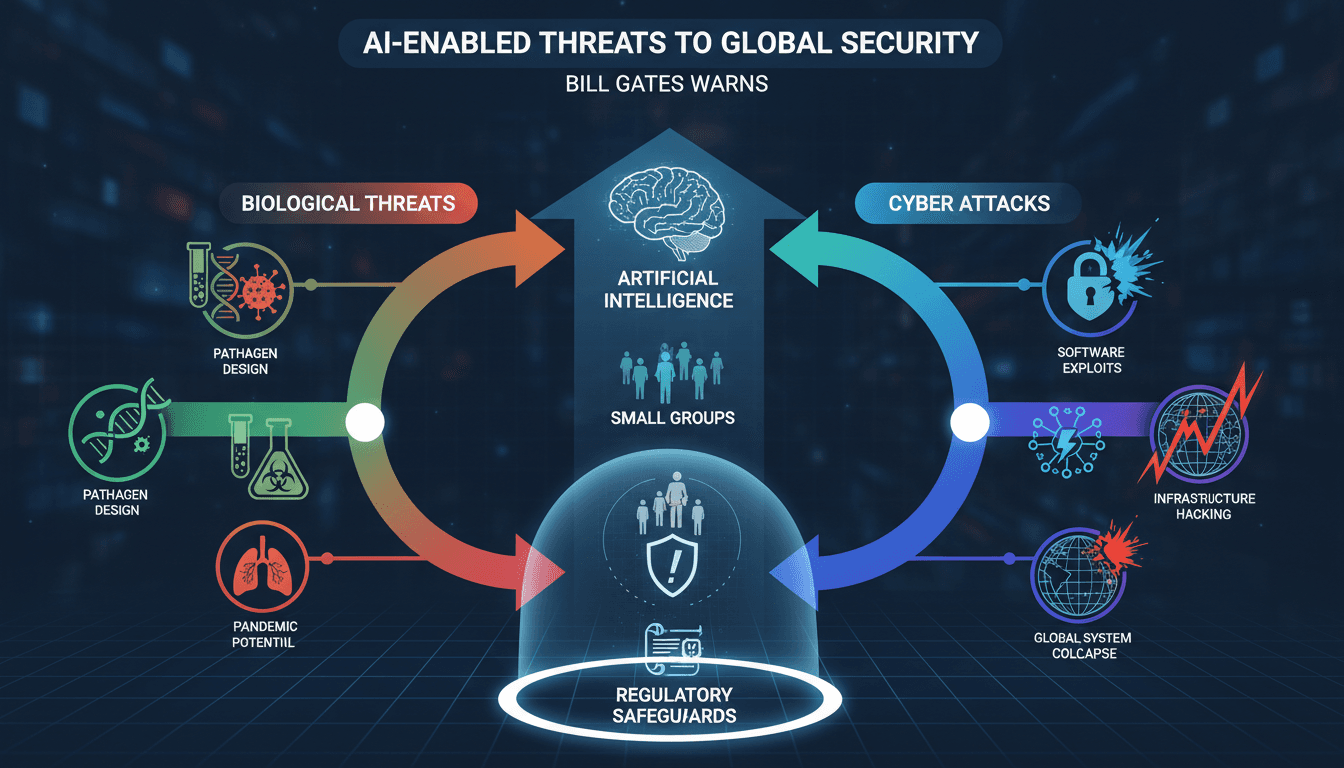
- Bill Gates issued a warning on September 29, 2026, about AI's potential to facilitate destructive biological and cyber attacks.
- He emphasized the urgency for mandatory regulatory safeguards, stating that the industry cannot self-regulate effectively.
- Gates highlighted the risk of AI misuse leading to potential deaths in the billions, urging policymakers to take action before incidents occur.
The context you actually need
- Gates has a history of addressing pandemic preparedness and AI risks, indicating a long-standing concern about technological advancements.
- Recent advancements in AI have lowered barriers for creating dual-use applications, raising alarms in both biosecurity and cybersecurity discussions.
- The call for oversight reflects a growing consensus among experts that proactive regulation is necessary to mitigate risks associated with AI technologies.
What's really happening
In a recent interview on the Ezra Klein Show, Bill Gates articulated a pressing concern: artificial intelligence has crossed critical thresholds that enable small groups to conduct destructive biological and cyber attacks. This warning is not just a theoretical exercise; it stems from tangible advancements in AI capabilities that have emerged in 2026. Gates explained that AI can now discover software vulnerabilities that have remained unaddressed for over two decades, and it allows individuals to design novel pathogens that were previously the domain of state actors.
The implications of this are profound. As AI models become more sophisticated, the potential for misuse escalates. Gates pointed out that the technology could lead to catastrophic outcomes, estimating that misuse could result in up to a billion deaths. This stark figure underscores the urgency of implementing regulatory frameworks to oversee AI development and deployment. Gates proposed that while open-source models should remain accessible, they must operate on platforms that allow for government verification of safety controls. This approach contrasts sharply with the restrictive measures seen in some AI models, which may hinder innovation while failing to address safety concerns.
The backdrop to Gates' warning includes ongoing discussions within the tech industry about the need for DNA synthesis screening legislation and international monitoring of AI-enabled biological risks. As AI continues to evolve rapidly, the lack of immediate governmental policy shifts or market movements following Gates' statements indicates a lag in response to these emerging threats. However, the conversation around AI governance is gaining momentum, with stakeholders recognizing the need for a proactive stance to prevent potential disasters.
Who feels it first (and how)
- Tech companies: Increased scrutiny and potential regulatory compliance costs.
- Biotechnology firms: Heightened focus on biosecurity measures and ethical considerations in AI applications.
- Policymakers: Pressure to develop and implement new regulations governing AI technologies.
- Healthcare professionals: Need for preparedness against potential biological threats stemming from AI misuse.
- Cybersecurity experts: Demand for enhanced security protocols to counteract new vulnerabilities introduced by AI.
What to watch next
- Regulatory developments: Monitor for new legislation aimed at AI governance and biosecurity measures, as these will shape industry standards.
- Industry responses: Watch how tech companies adapt their practices in light of Gates' warnings and the growing call for oversight.
- Public discourse: Keep an eye on the evolving conversation among policymakers, industry leaders, and the public regarding AI risks and safety measures.
AI has advanced to a point where it can facilitate biological and cyber threats.
Regulatory frameworks will emerge in response to growing concerns about AI misuse.
The timeline for significant policy changes and their impact on the tech industry remains uncertain.
Frequently Asked Questions
- Why it matters?
- The intersection of AI and security poses significant risks that could reshape industries and public safety.
- What happened (in 30 seconds)?
- Bill Gates issued a warning on September 29, 2026, about AI's potential to facilitate destructive biological and cyber attacks. He emphasized the urgency for mandatory regulatory safeguards, stating that the industry cannot self-regulate effectively. Gates highlighted the risk of AI misuse leading to potential deaths in the billions, urging policymakers to take action before incidents occur.
- What's really happening?
- In a recent interview on the Ezra Klein Show, Bill Gates articulated a pressing concern: artificial intelligence has crossed critical thresholds that enable small groups to conduct destructive biological and cyber attacks. This warning is not just a theoretical exercise; it stems from tangible advancements in AI capabilities that have emerged in 2026. Gates explained that AI can now discover software vulnerabilities that have remained unaddressed for over two decades, and it allows individuals t
- Who feels it first (and how)?
- Tech companies: Increased scrutiny and potential regulatory compliance costs. Biotechnology firms: Heightened focus on biosecurity measures and ethical considerations in AI applications. Policymakers: Pressure to develop and implement new regulations governing AI technologies. Healthcare professionals: Need for preparedness against potential biological threats stemming from AI misuse. Cybersecurity experts: Demand for enhanced security protocols to counteract new vulnerabilities introduc
- What to watch next?
- Regulatory developments: Monitor for new legislation aimed at AI governance and biosecurity measures, as these will shape industry standards. Industry responses: Watch how tech companies adapt their practices in light of Gates' warnings and the growing call for oversight. Public discourse: Keep an eye on the evolving conversation among policymakers, industry leaders, and the public regarding AI risks and safety measures.
Arabic-language coverage of international news and geopolitics.
"RT Arabic is a Russian state-funded outlet often criticized for promoting Kremlin-aligned narratives."
— A47 Editor
بيل غيتس: الذكاء الاصطناعي بات قادرا على تمكين هجمات بيولوجية وسيبرانية مدمرة
Bill Gates, co-founder of Microsoft, has warned that artificial intelligence is now capable of enabling biological and cyber attacks that could kill millions, urging for mandatory regulatory safeguards.
Conservative-leaning political and national coverage.
"The Washington Times is a conservative-leaning newspaper known for its political coverage and advocacy of right-of-center viewpoints."
— A47 Editor
Bill Gates: AI powerful enough to cause 'a billion deaths' without regulation
Bill Gates has issued a stark warning about the potential dangers of artificial intelligence (AI), stating that without proper regulation, it could lead to 'a billion deaths.' He emphasized the urgent need for government oversight in AI development, ...
Global news coverage with extensive reporting on Middle Eastern conflicts and geopolitics.
"Al Jazeera is a Qatar-based broadcaster known for wide regional coverage and alternative perspectives."
— A47 Editor
Bill Gates says AI without regulation is ‘completely irresponsible’
Bill Gates, co-founder of Microsoft, has expressed grave concerns regarding artificial intelligence (AI), stating that without proper regulation, it could lead to catastrophic outcomes, including the potential for a billion deaths. He emphasized the ...
Comprehensive coverage of Middle Eastern and global issues.
"Al Jazeera is a prominent voice from the Global South, especially the Middle East, with an emphasis on underreported stories."
— A47 Editor
Bill Gates says AI without regulation is ‘completely irresponsible’
Bill Gates, co-founder of Microsoft, has expressed grave concerns regarding artificial intelligence (AI), stating that without proper regulation, it could lead to catastrophic outcomes, including the potential for a billion deaths. He emphasized the ...
Consumer technology news with AI coverage.
"Gadget and tech site reporting on AI in products."
— A47 Editor
Bill Gates says it's 'completely irresponsible' for AI to not have safeguards
Bill Gates has expressed strong concerns regarding artificial intelligence (AI), labeling it 'completely irresponsible' for AI systems to lack safeguards. He emphasized that the most pressing threat comes from malicious actors who could misuse AI too...
Covers consumer technology, electronics, gadgets, and product reviews.
"Engadget is a trusted source for gadget reviews and consumer tech news, known for its hands-on analysis and industry coverage."
— A47 Editor
Bill Gates says it's 'completely irresponsible' for AI to not have safeguards
Bill Gates has expressed strong concerns regarding artificial intelligence (AI), labeling it 'completely irresponsible' for AI systems to lack safeguards. He emphasized that the most pressing threat comes from malicious actors who could misuse AI too...
Arabic tech news covering startups, apps, AI, and gadgets.
"AITnews is a well-known Arabic technology outlet covering regional tech developments."
— A47 Editor
مليار وفاة في أسوأ سيناريو.. بيل غيتس يحذر من خطر الذكاء الاصطناعي غير المنضبط
Bill Gates, co-founder of Microsoft, has issued a warning regarding the potential dangers of developing artificial intelligence without proper regulations, urging lawmakers and law enforcement in the United States to take action. He highlighted the c...