
Meta Launches Enterprise Platform to Monetize AI Investments
Why it matters
Meta's pivot to enterprise solutions signals a significant shift in the tech landscape, potentially altering competitive dynamics in AI services.
What happened (in 30 seconds)
- On September 28, 2026, Meta Platforms launched the Meta Enterprise Platform, aimed at monetizing its AI infrastructure investments.
- Mark Zuckerberg announced the initiative, positioning it as a new revenue stream beyond advertising, with Chirantan "CJ" Desai appointed as Chief Enterprise Platform Officer.
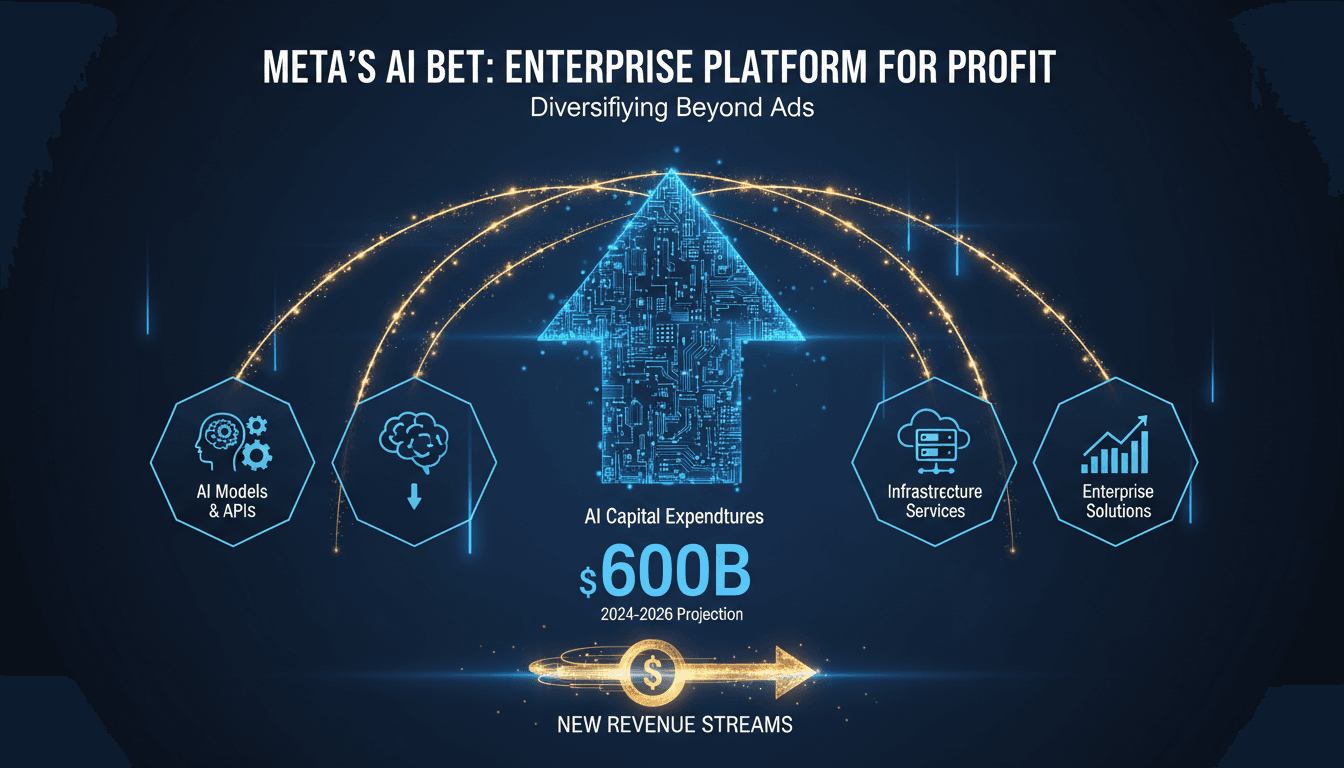
- Projected spending on AI by Meta is expected to reach $600 billion over the next two years, raising questions about ROI and long-term monetization strategies.
The context you actually need
- Meta has ramped up capital expenditures on AI infrastructure, forecasting annual spending between $130–145 billion for 2026.
- Previous AI tools released by Meta include business agents for WhatsApp, Instagram, and Messenger, as well as the Muse coding platform.
- Investor scrutiny has intensified regarding Meta's ability to generate revenue from its AI investments, prompting the launch of the enterprise division.
What's really happening
Meta's launch of the Meta Enterprise Platform is a strategic response to both internal and external pressures. With annual capital expenditures on AI projected to reach between $130 billion and $145 billion in 2026, the company is under significant scrutiny from investors who are questioning the return on these substantial investments. The core advertising business has historically funded these expenditures, but as the market evolves, Meta is seeking new revenue streams to justify its spending.
The new platform aims to provide businesses and developers with access to Meta's advanced AI models, agents, APIs, and infrastructure services. This move not only diversifies Meta's revenue sources but also positions the company as a key player in the enterprise AI market, which is expected to grow rapidly in the coming years. By leveraging its existing AI tools, such as the Muse coding platform and business agents for popular messaging apps, Meta is attempting to create a comprehensive technology stack that can cater to various enterprise needs.
Chirantan "CJ" Desai, the newly appointed Chief Enterprise Platform Officer, brings a wealth of experience from his previous role as CEO of MongoDB. His leadership is expected to drive the platform's development and market penetration. The initial focus on existing AI tools suggests that Meta is not starting from scratch; rather, it is building on its previous investments and innovations.
However, the success of the Meta Enterprise Platform will depend on several factors, including the ability to attract enterprise clients, the competitive landscape, and the overall demand for AI solutions. As businesses increasingly seek to integrate AI into their operations, Meta's offerings could become highly relevant. Yet, the company must also navigate challenges such as pricing, customer support, and the need for continuous innovation to stay ahead of competitors like Microsoft and Google, who are also heavily invested in AI technologies.
In summary, the launch of the Meta Enterprise Platform is a calculated move to address investor concerns while tapping into the growing demand for AI solutions in the enterprise sector. The implications of this shift could reverberate throughout the tech industry, influencing how businesses approach AI adoption and integration.
Who feels it first (and how)
- Tech companies looking to integrate AI solutions into their operations will benefit from new tools and services.
- Developers will have access to advanced APIs and models, potentially enhancing their projects and applications.
- Investors will closely monitor Meta's ability to generate revenue from this new division, impacting stock performance.
What to watch next
- Adoption rates of the Meta Enterprise Platform among businesses will indicate its market acceptance and potential success.
- Competitive responses from other tech giants like Microsoft and Google, who may accelerate their own enterprise AI offerings.
- Financial performance of Meta's new division in the upcoming quarters, which will reveal the effectiveness of this strategic pivot.
Meta has launched the Meta Enterprise Platform to monetize its AI investments.
The platform will attract interest from businesses seeking AI solutions, impacting the competitive landscape.
The long-term financial success of the platform and its ability to generate substantial revenue remains uncertain.
Frequently Asked Questions
- Why it matters?
- Meta's pivot to enterprise solutions signals a significant shift in the tech landscape, potentially altering competitive dynamics in AI services.
- What happened (in 30 seconds)?
- On September 28, 2026, Meta Platforms launched the Meta Enterprise Platform, aimed at monetizing its AI infrastructure investments. Mark Zuckerberg announced the initiative, positioning it as a new revenue stream beyond advertising, with Chirantan "CJ" Desai appointed as Chief Enterprise Platform Officer. Projected spending on AI by Meta is expected to reach $600 billion over the next two years, raising questions about ROI and long-term monetization strategies.
- What's really happening?
- Meta's launch of the Meta Enterprise Platform is a strategic response to both internal and external pressures. With annual capital expenditures on AI projected to reach between $130 billion and $145 billion in 2026, the company is under significant scrutiny from investors who are questioning the return on these substantial investments. The core advertising business has historically funded these expenditures, but as the market evolves, Meta is seeking new revenue streams to justify its spending.
- Who feels it first (and how)?
- Tech companies looking to integrate AI solutions into their operations will benefit from new tools and services. Developers will have access to advanced APIs and models, potentially enhancing their projects and applications. Investors will closely monitor Meta's ability to generate revenue from this new division, impacting stock performance.
- What to watch next?
- Adoption rates of the Meta Enterprise Platform among businesses will indicate its market acceptance and potential success. Competitive responses from other tech giants like Microsoft and Google, who may accelerate their own enterprise AI offerings. Financial performance of Meta's new division in the upcoming quarters, which will reveal the effectiveness of this strategic pivot.
Consumer technology news with AI coverage.
"Gadget and tech site reporting on AI in products."
— A47 Editor
Meta is starting an enterprise business to justify its massive AI spending
Meta has announced the initiation of an enterprise business aimed at selling its artificial intelligence products and services to other companies, a strategic move to justify its substantial investments in AI technology. This development comes as the...
Daily AI news: models, tools, and policy.
"Independent outlet tracking the fast pace of AI."
— A47 Editor
Meta wants to turn Muse into a moneymaker by selling AI services to businesses
Meta has launched the Meta Enterprise Platform, a new business unit aimed at selling AI tools, including its AI agent Muse, to companies. This initiative is part of Meta's strategy to monetize its AI technologies and expand its market presence.
Tech business coverage, major deals, product launches, and Silicon Valley trends.
"WSJ’s tech section offers authoritative reporting on the intersection of technology and business, including exclusive industry analysis."
— A47 Editor
Meta Seeks Payoff From AI Spending With New Push for Business Customers
Meta is intensifying its efforts to monetize its substantial investments in artificial intelligence (AI) by targeting business customers with new tools and services. This strategy aims to leverage the company's advancements in AI technology to enhanc...
Daily AI news: models, tools, and policy.
"Independent outlet tracking the fast pace of AI."
— A47 Editor
Goldman Sachs expects Big Tech to spend $1.2 trillion on AI infrastructure by 2027, dwarfing Wall Street estimates
Goldman Sachs has projected that major tech companies, including Amazon, Alphabet, Microsoft, Oracle, and Meta, will invest a staggering $1.2 trillion in AI infrastructure by 2027, significantly surpassing Wall Street's estimates. This investment is ...