
Robinhood Introduces AI Agents for Automated Trading at HOOD Summit 2026
Why it matters
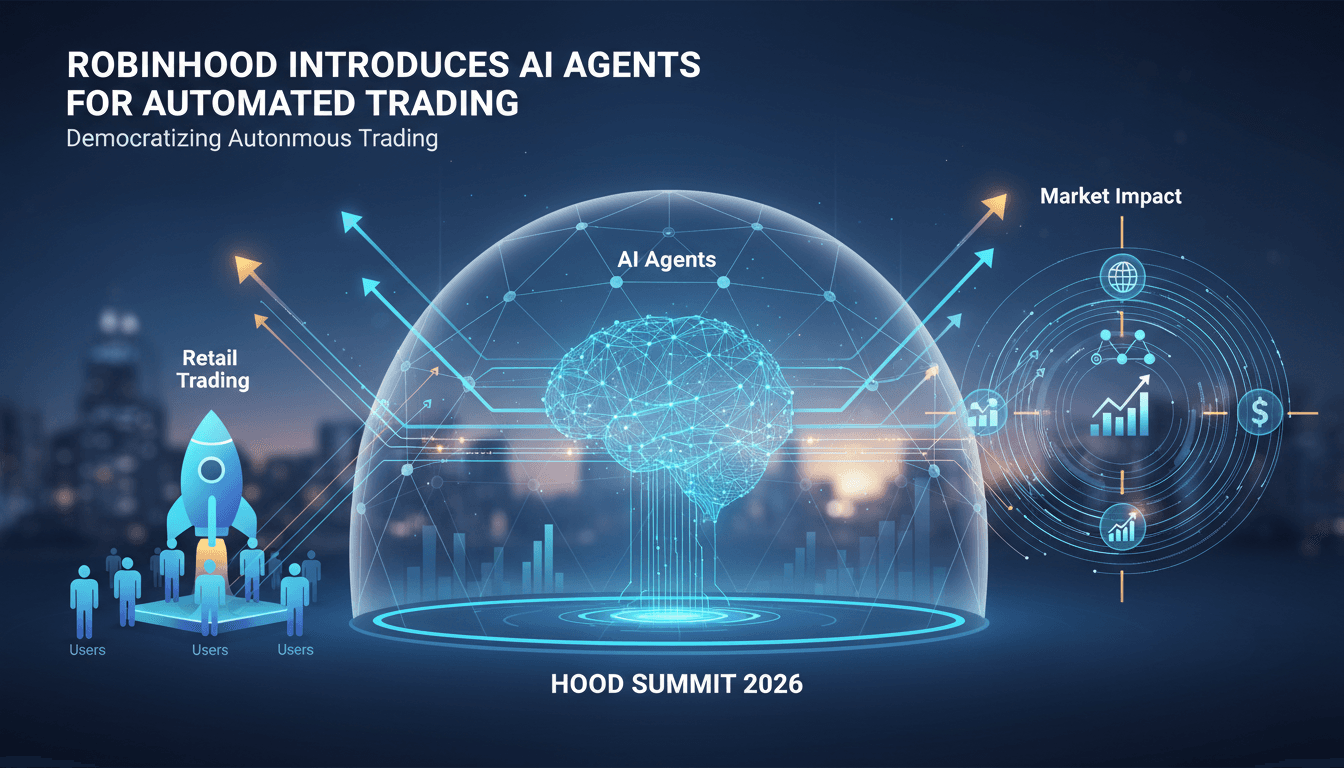
This innovation democratizes access to sophisticated trading strategies, potentially reshaping retail investing.
What happened (in 30 seconds)
- Robinhood launched its Robinhood Agents platform on September 29, 2026, at the HOOD Summit in Houston.
- Users can create AI agents for market analysis and trade execution with customizable limits and approval settings.
- The rollout begins with select customers and summit attendees, expanding randomly in the coming weeks.
The context you actually need
- Previous launch: In May 2026, Robinhood introduced Agentic Trading, allowing third-party AI agents to connect via the Model Context Protocol (MCP).
- User engagement: Over 150,000 customers opened agentic trading accounts since May, with agents utilizing Robinhood tools nearly 30 million times daily.
- Market trends: The rise of autonomous AI systems in finance reflects a growing interest in automated trading solutions among retail investors.
What's really happening
Robinhood's introduction of AI agents marks a significant shift in how retail investors can engage with the stock market. By embedding AI capabilities directly into its app, Robinhood is lowering the barrier to entry for users who may not have the technical skills to develop their own trading algorithms. This move is part of a broader trend in the financial services industry, where automation and AI are increasingly being integrated into trading platforms to enhance user experience and efficiency.
The Robinhood Agents platform allows users to create personalized trading agents by simply naming them and setting up dedicated accounts. Users can select from various AI models, including those from OpenAI and Anthropic, and define trading limits with approval toggles. This flexibility means that even novice traders can harness advanced market analysis and strategy development without needing to understand the underlying technology.
The introduction of continuous 'Loops' for ongoing strategy monitoring further enhances the platform's capabilities, allowing users to automate recurring actions based on market conditions. This feature is particularly appealing for active traders who want to capitalize on market movements without constant oversight.
The implications of this launch extend beyond individual users. As more retail investors adopt AI-driven trading strategies, the overall market dynamics may shift. Increased participation from retail traders could lead to greater volatility, as automated trading systems react to market changes in real-time. Additionally, this trend may prompt traditional financial institutions to adapt their offerings, potentially leading to a more competitive landscape.
Moreover, Robinhood's focus on accessibility aligns with the growing demand for user-friendly financial tools. As the platform rolls out these features, it could attract a broader audience, including those who have previously been hesitant to engage in trading due to perceived complexity. This democratization of trading technology could empower a new generation of investors, reshaping the financial landscape.
Who feels it first (and how)
- Retail investors: Individuals looking for simplified trading solutions will benefit from AI-driven strategies.
- Tech-savvy traders: Those familiar with AI will leverage the platform for advanced trading tactics.
- Financial institutions: Competitors may need to innovate to keep pace with Robinhood's offerings.
- Regulators: Increased retail trading activity may prompt scrutiny and potential regulatory responses.
What to watch next
- User adoption rates: Monitor how quickly users embrace AI agents and the impact on trading volumes.
- Market volatility: Watch for changes in market behavior as more retail investors engage in automated trading.
- Regulatory developments: Keep an eye on any regulatory responses to the rise of AI in trading, which could shape future operations.
Robinhood has launched AI agents for trading, enhancing user accessibility.
Increased retail trading activity will lead to greater market volatility and competition among trading platforms.
The long-term regulatory implications of widespread AI use in trading remain uncertain.
Frequently Asked Questions
- Why it matters?
- This innovation democratizes access to sophisticated trading strategies, potentially reshaping retail investing.
- What happened (in 30 seconds)?
- Robinhood launched its Robinhood Agents platform on September 29, 2026, at the HOOD Summit in Houston. Users can create AI agents for market analysis and trade execution with customizable limits and approval settings. The rollout begins with select customers and summit attendees, expanding randomly in the coming weeks.
- What's really happening?
- Robinhood's introduction of AI agents marks a significant shift in how retail investors can engage with the stock market. By embedding AI capabilities directly into its app, Robinhood is lowering the barrier to entry for users who may not have the technical skills to develop their own trading algorithms. This move is part of a broader trend in the financial services industry, where automation and AI are increasingly being integrated into trading platforms to enhance user experience and efficienc
- Who feels it first (and how)?
- Retail investors: Individuals looking for simplified trading solutions will benefit from AI-driven strategies. Tech-savvy traders: Those familiar with AI will leverage the platform for advanced trading tactics. Financial institutions: Competitors may need to innovate to keep pace with Robinhood's offerings. Regulators: Increased retail trading activity may prompt scrutiny and potential regulatory responses.
- What to watch next?
- User adoption rates: Monitor how quickly users embrace AI agents and the impact on trading volumes. Market volatility: Watch for changes in market behavior as more retail investors engage in automated trading. Regulatory developments: Keep an eye on any regulatory responses to the rise of AI in trading, which could shape future operations.
Market-moving headlines impacting equities, bonds, and related risk assets.
"Real-time catalysts and volatility drivers across indices and sectors."
— A47 Editor
Robinhood unveils AI agents for automated trading
Robinhood has unveiled AI-powered trading agents aimed at automating trading for its millions of users, marking a significant advancement in the brokerage's offerings. This development is part of a broader strategy to enhance user engagement and stre...
Markets desk coverage, trading insights, and investor updates.
"WSJ’s markets reporting provides in-depth analysis and context for investors."
— A47 Editor
Robinhood’s Next Big Bet: AI Bots That Trade While You Sleep
Robinhood has announced the introduction of AI-powered trading agents designed to automate trading for its users, marking a significant advancement in its service offerings. This initiative aims to enhance user engagement by allowing individual inves...
Covers blockchain, cryptocurrency news, project analysis, and market insights.
"CoinDesk is a well-established cryptocurrency and blockchain news provider, offering comprehensive insights, market data, and industry research."
— A47 Editor
Robinhood adds AI agents, perps and weekend trading in push to win active traders
Robinhood has announced the expansion of its trading hours and the introduction of AI agents, leveraged crypto products, and automated trading tools to attract more active investors. This strategic move aims to enhance user engagement and capitalize ...
Corporate leadership, finance, technology, and market trends.
"Fortune covers financial trends, leadership, and innovation with a pragmatic editorial approach."
— A47 Editor
Robinhood just rolled out trading agents to millions—and investing may never be the same
Robinhood has introduced trading agents powered by OpenAI and Anthropic, now available to millions of users, marking a significant shift in how retail investors can engage with the market. This rollout aims to enhance user experience by providing adv...