
OpenAI Launches ChatGPT Space and Collaborative Tools to Compete with Microsoft Office
Why it matters
OpenAI's shift towards independent productivity tools signals a significant disruption in the office software market, challenging established giants like Microsoft and Google.
What happened (in 30 seconds)
- OpenAI launched ChatGPT Space, Pages, and collaborative slides at its DevDay 2026 conference in San Francisco.
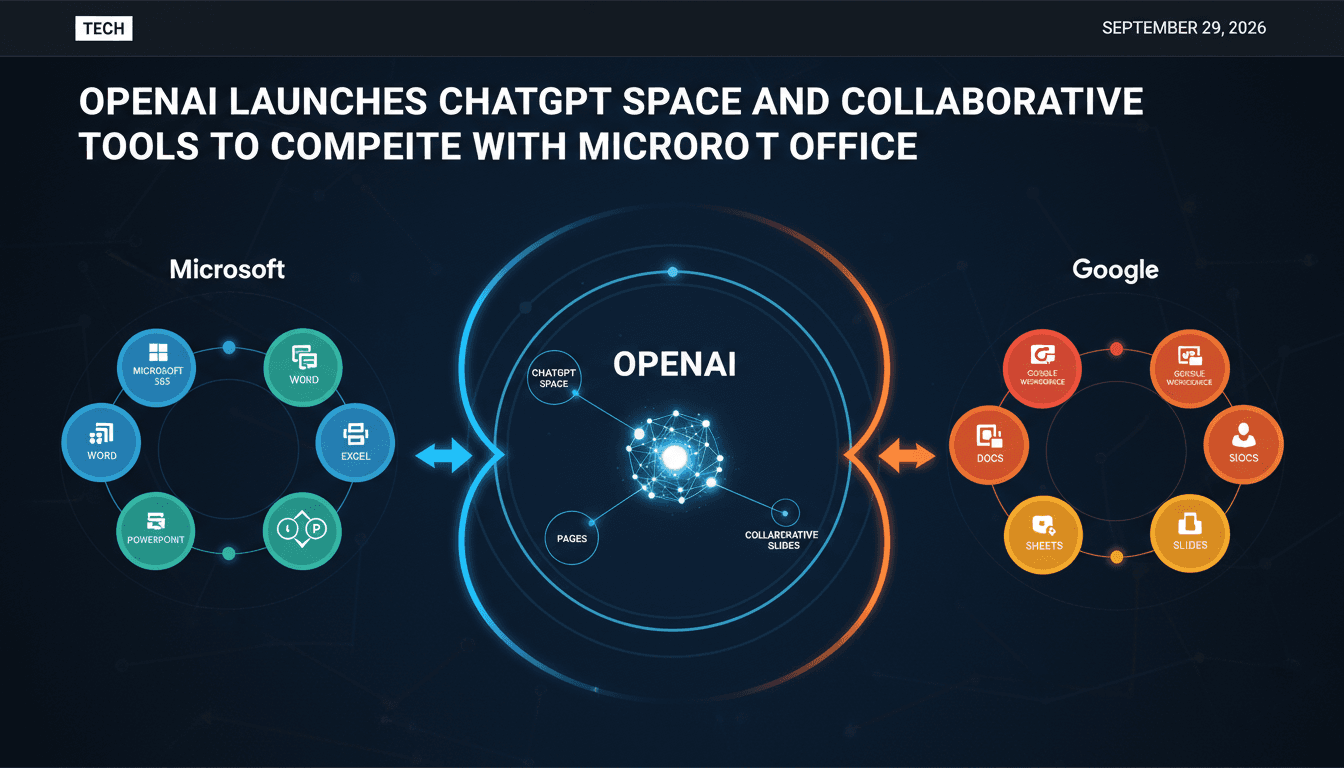
- These tools enable shared workspaces and AI-assisted document creation, directly competing with Microsoft Office and Google Workspace.
- The integration of AI agents (Dots) aims to enhance productivity by streamlining team workflows.
The context you actually need
- OpenAI's partnership with Microsoft has historically provided cloud infrastructure and investment, but recent developments indicate a strategic pivot towards independent offerings.
- Demand for AI in workplaces has surged, driven by the need for more efficient productivity tools amid geopolitical and market pressures.
- Competitors like Salesforce have already begun integrating AI into their platforms, intensifying the race for dominance in the productivity software space.
What's really happening
At the heart of OpenAI's recent announcements is a clear intention to carve out a distinct identity in the productivity software market. The launch of ChatGPT Space, Pages, and collaborative slides represents a strategic departure from its previous reliance on Microsoft, where it had been a key partner. This shift is not merely about introducing new features; it reflects a broader trend in which AI is becoming an integral part of workplace productivity.
The introduction of ChatGPT Space as a shared workspace replaces the earlier Library feature, allowing teams to collaborate seamlessly with AI agents known as Dots. This innovation is designed to enhance teamwork and streamline workflows, making it easier for users to engage with AI in real-time. Pages, which supports editable documents with features like charts and images, further empowers users to create and collaborate without the constraints of traditional office software.
The collaborative slides feature, set to roll out soon, allows users to create presentations using natural language, a significant leap forward in user experience. This capability not only simplifies the presentation creation process but also integrates multi-user and agent editing, making it a powerful tool for teams. The rollout of these features is targeted at Pro, Business, and Enterprise plans, indicating OpenAI's focus on professional users who demand advanced capabilities.
As OpenAI positions itself against Microsoft and Google, the implications for the market are profound. Analysts are already noting the potential disruption to traditional office suites, as enterprise users gain immediate access to these innovative tools. The integration of Dots agents with existing platforms like Slack and Teams further enhances the appeal of OpenAI's offerings, suggesting a future where AI is a standard component of workplace productivity.
This evolution is driven by a combination of technological advancements and changing user expectations. As businesses increasingly seek out AI solutions to improve efficiency and collaboration, OpenAI's new tools are well-positioned to meet this demand. The competitive landscape is shifting, and OpenAI's proactive approach could redefine how organizations leverage AI in their daily operations.
Who feels it first (and how)
- Enterprise users: Immediate access to new tools enhances productivity and collaboration.
- Project managers: Benefit from streamlined workflows and improved team communication.
- Small businesses: Gain access to advanced AI tools that were previously only available to larger organizations.
- Tech-savvy professionals: Early adopters of AI tools will leverage these innovations to gain a competitive edge.
What to watch next
- Adoption rates of OpenAI's tools: Monitoring how quickly businesses integrate these new features will indicate their impact on the market.
- Competitor responses: Watch for how Microsoft and Google adapt their offerings in response to OpenAI's advancements.
- User feedback and engagement: Understanding how users interact with these tools will provide insights into their effectiveness and areas for improvement.
OpenAI has launched new productivity tools aimed at competing with Microsoft Office and Google Workspace.
Increased competition in the productivity software market will lead to rapid innovation and feature enhancements.
The long-term impact on user behavior and workplace dynamics as AI tools become more integrated into daily tasks.
Frequently Asked Questions
- Why it matters?
- OpenAI's shift towards independent productivity tools signals a significant disruption in the office software market, challenging established giants like Microsoft and Google.
- What happened (in 30 seconds)?
- OpenAI launched ChatGPT Space, Pages, and collaborative slides at its DevDay 2026 conference in San Francisco. These tools enable shared workspaces and AI-assisted document creation, directly competing with Microsoft Office and Google Workspace. The integration of AI agents (Dots) aims to enhance productivity by streamlining team workflows.
- What's really happening?
- At the heart of OpenAI's recent announcements is a clear intention to carve out a distinct identity in the productivity software market. The launch of ChatGPT Space, Pages, and collaborative slides represents a strategic departure from its previous reliance on Microsoft, where it had been a key partner. This shift is not merely about introducing new features; it reflects a broader trend in which AI is becoming an integral part of workplace productivity. The introduction of ChatGPT Space as a sh
- Who feels it first (and how)?
- Enterprise users: Immediate access to new tools enhances productivity and collaboration. Project managers: Benefit from streamlined workflows and improved team communication. Small businesses: Gain access to advanced AI tools that were previously only available to larger organizations. Tech-savvy professionals: Early adopters of AI tools will leverage these innovations to gain a competitive edge.
- What to watch next?
- Adoption rates of OpenAI's tools: Monitoring how quickly businesses integrate these new features will indicate their impact on the market. Competitor responses: Watch for how Microsoft and Google adapt their offerings in response to OpenAI's advancements. User feedback and engagement: Understanding how users interact with these tools will provide insights into their effectiveness and areas for improvement.
Startup news with frequent AI coverage.
"Covers launches, funding, and product updates in AI."
— A47 Editor
OpenAI takes on Microsoft with the launch of what feels a whole lot like ChatGPT’s own office suite
OpenAI has launched a new suite of office features that closely resembles an office suite integrated with ChatGPT, marking a significant step in its competition with traditional software companies like Microsoft. This development was announced during...
Daily AI news: models, tools, and policy.
"Independent outlet tracking the fast pace of AI."
— A47 Editor
OpenAI's reveals a new ChatGPT that looks less like a chatbot and more like an operating system
OpenAI unveiled significant updates to ChatGPT during its DevDay event, transforming it from a traditional chatbot into a more comprehensive operating system. The new features include shared workspaces, collaborative documents, an open plugin system,...
News and guidance for IT pros on AI adoption.
"Enterprise-focused tips, explainers, and news for professionals."
— A47 Editor
OpenAI ‘o’ Leak: What We Know About ChatGPT’s Always-On Assistant Before DevDay
OpenAI is reportedly testing an always-on ChatGPT assistant named 'o,' with leaked references suggesting potential email functionality and integration with ChatGPT Pro. This development comes ahead of the company's upcoming DevDay event, where furthe...