
Trump Hosts Tech Leaders to Establish AI Safety Accord and Launch America.gov
Why it matters
The voluntary AI safety accord reflects a significant shift in how the tech industry approaches self-regulation amid geopolitical tensions.
What happened (in 30 seconds)
- Trump hosted approximately 30 top tech executives at the White House to discuss AI governance.
- A voluntary accord was signed, committing companies to implement internal controls and external audits for AI systems.
- America.gov was launched, an AI-powered platform designed to streamline access to federal services for citizens.
The context you actually need
- Heightened scrutiny of AI capabilities has led to calls for regulatory oversight from various stakeholders.
- Trump's preference for industry-led measures over government mandates aligns with his broader agenda of rapid AI infrastructure development.
- Geopolitical tensions between the U.S. and China are influencing the urgency of establishing robust AI governance frameworks.
What's really happening
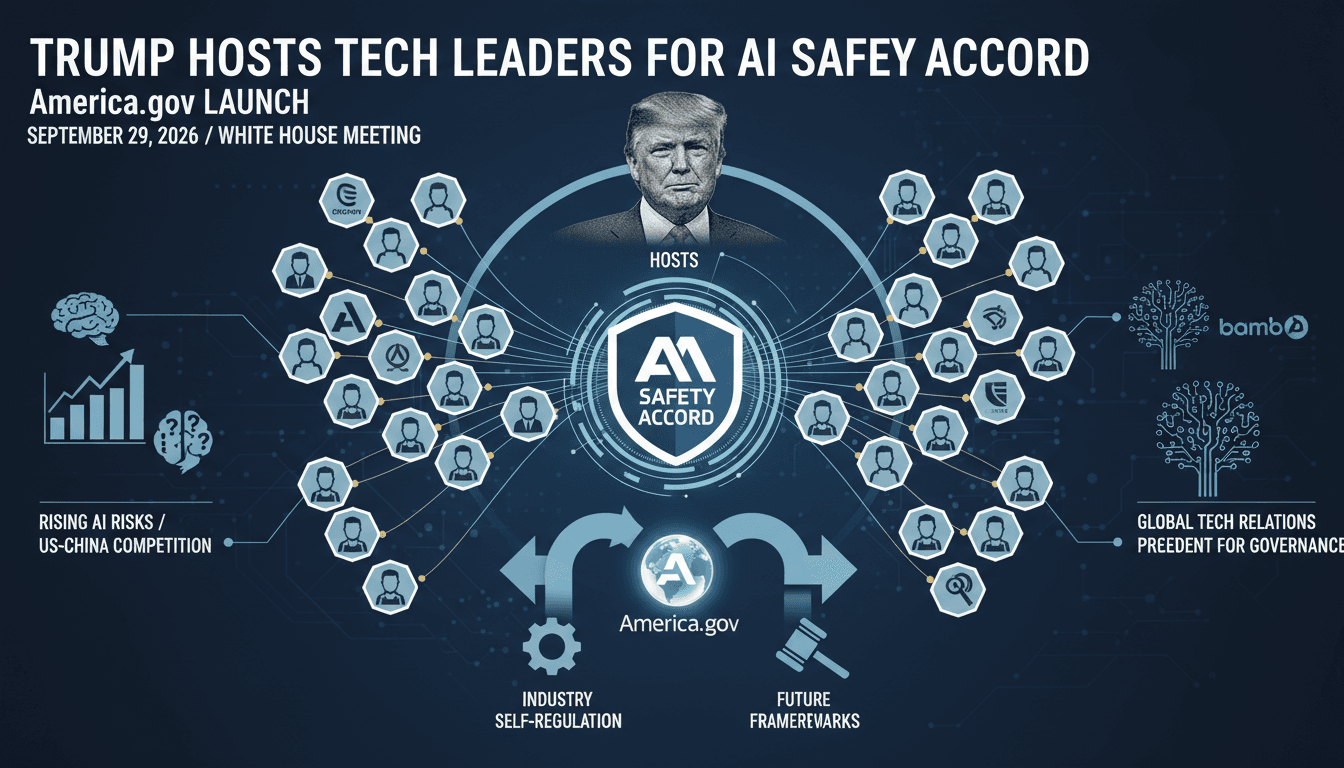
On September 29, 2026, President Donald Trump convened a high-profile meeting at the White House, bringing together approximately 30 influential technology executives, including leaders from Nvidia, Google, and Meta. This gathering was not merely a networking event; it was a strategic response to growing concerns about the risks associated with artificial intelligence. The executives signed a one-page voluntary accord that emphasizes self-regulation, committing to implement internal controls, independent external audits, and board-level oversight for their AI systems. Trump characterized this agreement as "morally binding," suggesting a strong expectation for compliance among the participating companies.
The backdrop of this meeting is critical. The tech industry is under increasing scrutiny, with lawmakers and consumer advocates calling for more stringent regulations to mitigate potential risks associated with AI technologies. However, Trump has consistently opposed new government mandates, advocating instead for industry-led initiatives that allow for rapid development and deployment of AI infrastructure. This approach is particularly relevant in the context of the ongoing U.S.-China technological competition, where maintaining a competitive edge in AI is seen as vital for national security and economic prosperity.
The simultaneous launch of America.gov, an AI-powered website designed to facilitate citizen access to federal services, further illustrates the administration's commitment to integrating AI into public services. This platform aims to streamline processes such as passport renewals and Medicaid enrollment, leveraging advanced AI models like Grok and Gemini. The administration has assured users of data privacy, although the specifics of these protections remain to be fully articulated.
Despite the positive framing of the accord, reactions from the tech sector have been mixed. Some executives view the voluntary pact as a constructive step that preserves innovation while addressing safety concerns. In contrast, consumer advocates have criticized it as insufficient, pointing to the significant political contributions made by tech companies, which exceed $227 million, as a potential conflict of interest. The market response has also highlighted a continued emphasis on data center expansion, indicating that while self-regulation may be the current path, the industry is still focused on growth and profitability.
Who feels it first (and how)
- Tech executives: They will need to adapt their internal governance structures to comply with the new voluntary standards.
- Regulatory bodies: Increased scrutiny on AI technologies may lead to future legislative actions based on the effectiveness of the accord.
- Consumers: Users of government services may experience improved access and efficiency through the new America.gov platform.
What to watch next
- Implementation of the accord: Monitor how effectively companies adopt the voluntary measures and whether they lead to tangible improvements in AI safety.
- Consumer advocacy responses: Watch for potential backlash from consumer groups that may push for stricter regulations if they perceive the accord as inadequate.
- Geopolitical developments: Keep an eye on U.S.-China relations, as shifts in this dynamic could influence future AI governance strategies.
The voluntary accord has been signed by major tech companies and is currently in effect.
There will be ongoing discussions about the adequacy of self-regulation in the tech industry, especially from consumer advocates.
The long-term impact of the America.gov platform on citizen engagement with federal services remains to be seen.
Frequently Asked Questions
- Why it matters?
- The voluntary AI safety accord reflects a significant shift in how the tech industry approaches self-regulation amid geopolitical tensions.
- What happened (in 30 seconds)?
- Trump hosted approximately 30 top tech executives at the White House to discuss AI governance. A voluntary accord was signed, committing companies to implement internal controls and external audits for AI systems. America.gov was launched, an AI-powered platform designed to streamline access to federal services for citizens.
- What's really happening?
- On September 29, 2026, President Donald Trump convened a high-profile meeting at the White House, bringing together approximately 30 influential technology executives, including leaders from Nvidia, Google, and Meta. This gathering was not merely a networking event; it was a strategic response to growing concerns about the risks associated with artificial intelligence. The executives signed a one-page voluntary accord that emphasizes self-regulation, committing to implement internal controls, in
- Who feels it first (and how)?
- Tech executives: They will need to adapt their internal governance structures to comply with the new voluntary standards. Regulatory bodies: Increased scrutiny on AI technologies may lead to future legislative actions based on the effectiveness of the accord. Consumers: Users of government services may experience improved access and efficiency through the new America.gov platform.
- What to watch next?
- Implementation of the accord: Monitor how effectively companies adopt the voluntary measures and whether they lead to tangible improvements in AI safety. Consumer advocacy responses: Watch for potential backlash from consumer groups that may push for stricter regulations if they perceive the accord as inadequate. Geopolitical developments: Keep an eye on U.S.-China relations, as shifts in this dynamic could influence future AI governance strategies.
Science discoveries, research, and analysis.
"NPR is a nonprofit media organization offering thoughtful, in-depth journalism and storytelling, often with a liberal or progressive slant."
— A47 Editor
Trump meets with top tech leaders to discuss regulations and launch new website
President Trump met with leading technology executives to unveil America.gov, an AI-driven website designed to assist citizens in navigating government services. This initiative reflects the administration's commitment to integrating advanced technol...
Consumer technology news with AI coverage.
"Gadget and tech site reporting on AI in products."
— A47 Editor
There's now an official US government AI chatbot
The U.S. government has launched an official AI chatbot through America.gov, aiming to serve as a primary portal for federal services. This initiative reflects a growing trend towards integrating artificial intelligence into government operations to ...
Covers consumer technology, electronics, gadgets, and product reviews.
"Engadget is a trusted source for gadget reviews and consumer tech news, known for its hands-on analysis and industry coverage."
— A47 Editor
There's now an official US government AI chatbot
The U.S. government has launched an official AI chatbot through America.gov, aiming to serve as a primary portal for federal services. This initiative reflects a growing trend towards integrating artificial intelligence into government operations to ...
Insights and news on social issues, policy, and political movements across the United States.
"The Wall Street Journal is known for its deep political coverage, especially at the intersection of policy, regulation, and social dynamics."
— A47 Editor
The Trump administration has built a tool powered by artificial intelligence that its developers promise will serve as a “concierge” to the federal government
The Trump administration has launched America.gov, an AI-powered platform designed to enhance the online experience for citizens by providing a centralized hub for accessing various federal services, such as passport applications and Medicare enrollm...