
OpenAI Expands ChatGPT Lockdown Mode to Millions of Users
Here's what it means for you.
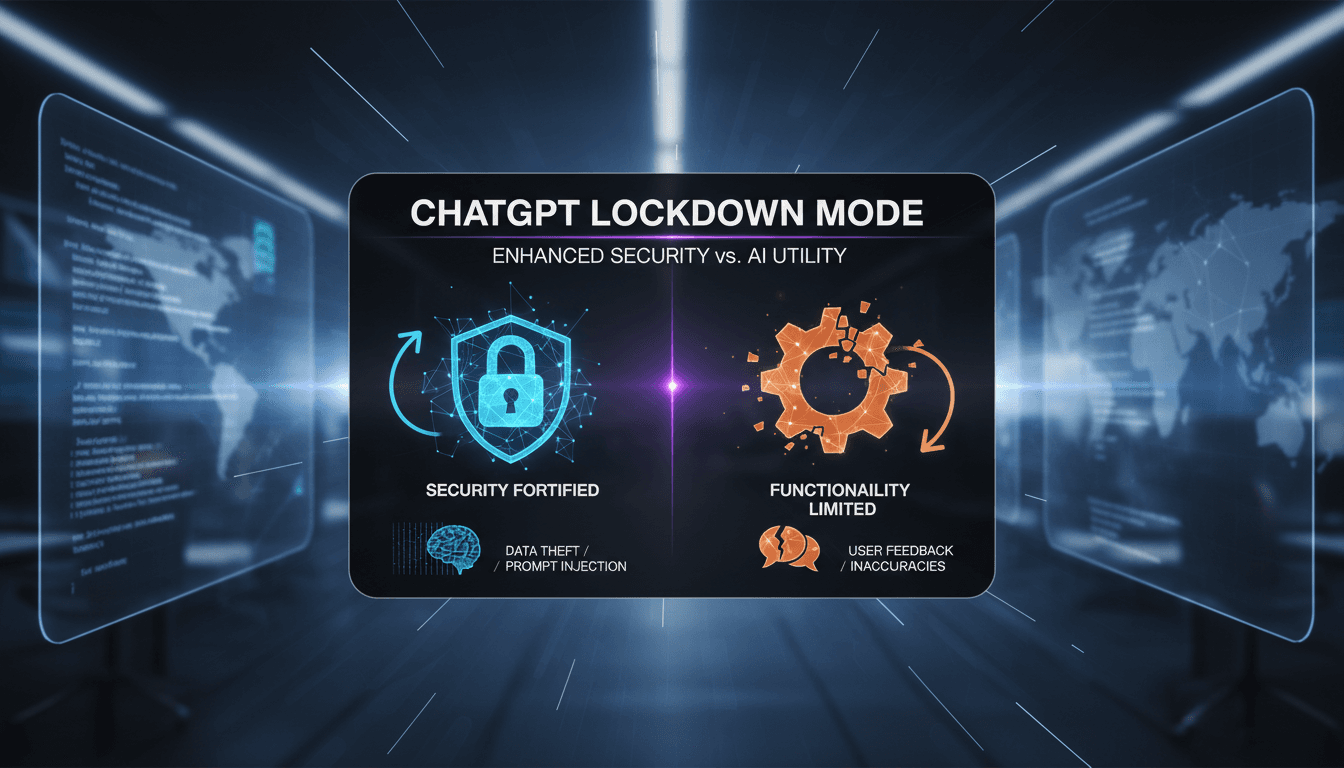
OpenAI's expansion of ChatGPT's Lockdown Mode signifies a pivotal shift in user data security, addressing rising concerns over data theft and prompt injection. As millions of users gain access to this enhanced security feature, the implications for functionality and user experience will be closely monitored. While the initiative aims to protect sensitive information, it may also limit access to certain online resources, prompting users to adapt to these changes. The rollout reflects OpenAI's commitment to safeguarding user data, yet it raises questions about the balance between security and usability. Stakeholders will need to evaluate the effectiveness of these measures as user feedback becomes available.
What happened
OpenAI has officially expanded its ChatGPT Lockdown Mode to millions of eligible users, enhancing security against data theft and prompt injection. This new mode restricts access to web-connected tools, which may limit users' ability to utilize certain online resources. The initiative is part of OpenAI's broader strategy to bolster user safety in an increasingly digital landscape.
The expansion was announced on June 8, 2026, marking a significant step in the company's ongoing efforts to protect user data. Alongside this rollout, OpenAI is also working on improving ChatGPT's memory capabilities, which could introduce new challenges related to the accuracy of information provided to users.
The Context
Lockdown Mode is designed to mitigate risks associated with data theft and prompt injection, two growing concerns in the realm of AI interactions. By limiting access to web-connected tools, OpenAI aims to create a more secure environment for users, although this may come at the cost of reduced functionality. The timing of this expansion is crucial, as it responds to increasing scrutiny over data privacy and security in AI applications.
As OpenAI enhances its security features, the implications for user experience and trust in AI tools will be significant. Stakeholders, including users and developers, will need to navigate the trade-offs between enhanced security and potential limitations in functionality. The ongoing developments in ChatGPT's memory capabilities will also play a critical role in shaping user interactions with the platform.
Takeaway
As OpenAI continues to enhance its security features, users should remain vigilant about the potential limitations in functionality that may arise from the Lockdown Mode. Monitoring user feedback will be essential to assess the effectiveness of these security measures and their impact on overall user experience. Additionally, updates regarding ChatGPT's memory capabilities will be crucial in understanding how these changes affect the accuracy of responses.
The landscape of AI tools is evolving, and the balance between security and usability will be a key focus moving forward. Stakeholders should keep an eye on how these developments influence user trust and engagement with AI technologies.
News and guidance for IT pros on AI adoption.
"Enterprise-focused tips, explainers, and news for professionals."
— A47 Editor
OpenAI Expands ChatGPT Lockdown Mode to Millions of Eligible Users
OpenAI has announced the expansion of ChatGPT's Lockdown Mode to millions of eligible users, a feature designed to limit web-connected tools and mitigate risks associated with prompt injection and data leakage. This move aims to enhance user security...